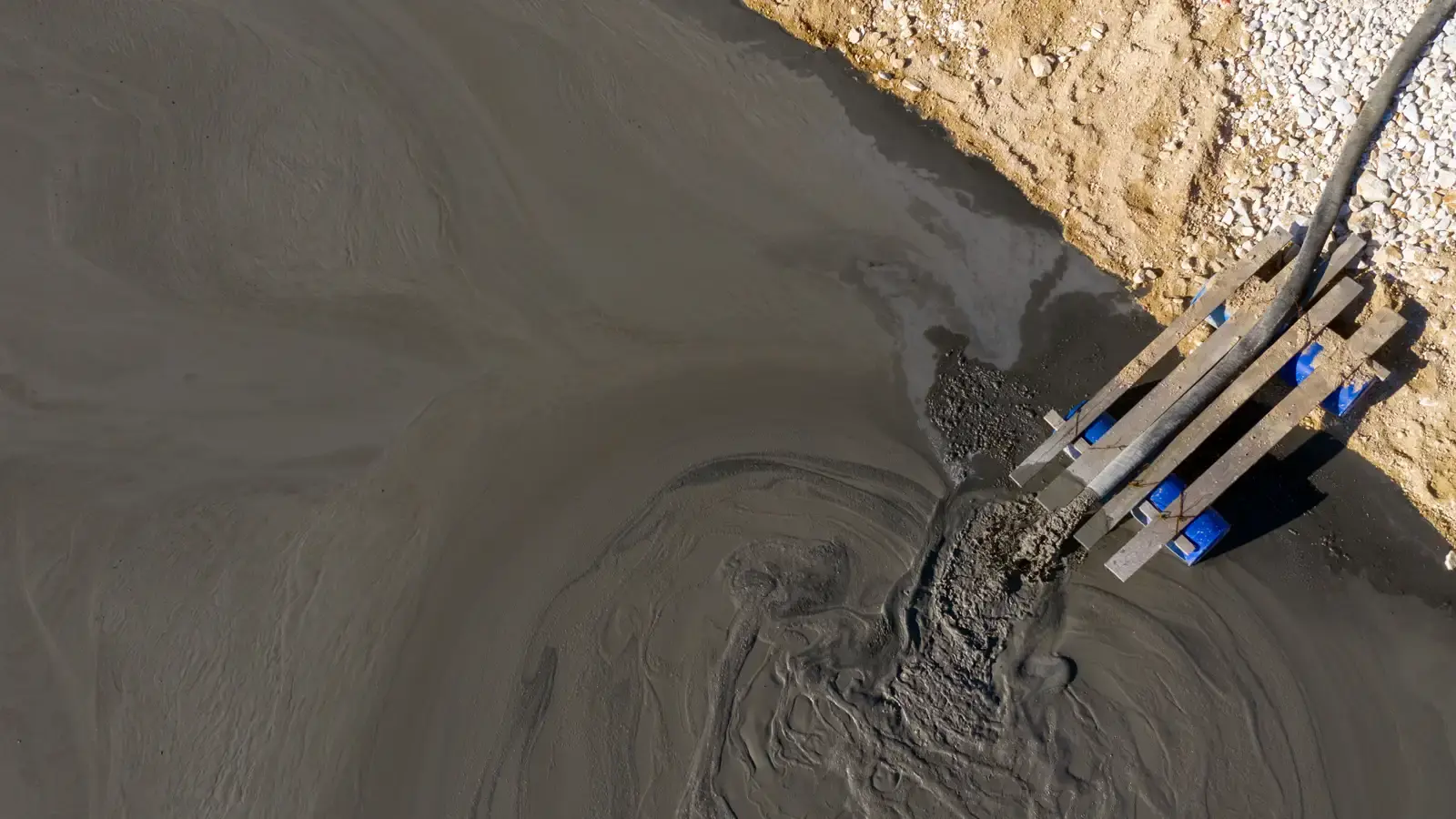
Mine process ponds rarely lose capacity overnight. They lose it slowly, as fines, tailings, sand, silt, clay, and process solids settle across the bottom. At first, it is just a little less storage. Then pumps run longer. Water management gets tighter. Production teams start working around pond limits instead of running through them.

That is usually when dredging becomes urgent. The challenge is that many mines cannot simply drain the pond, bring in heavy excavation equipment, and stop process water movement while sediment is removed. The pond is part of the operation.
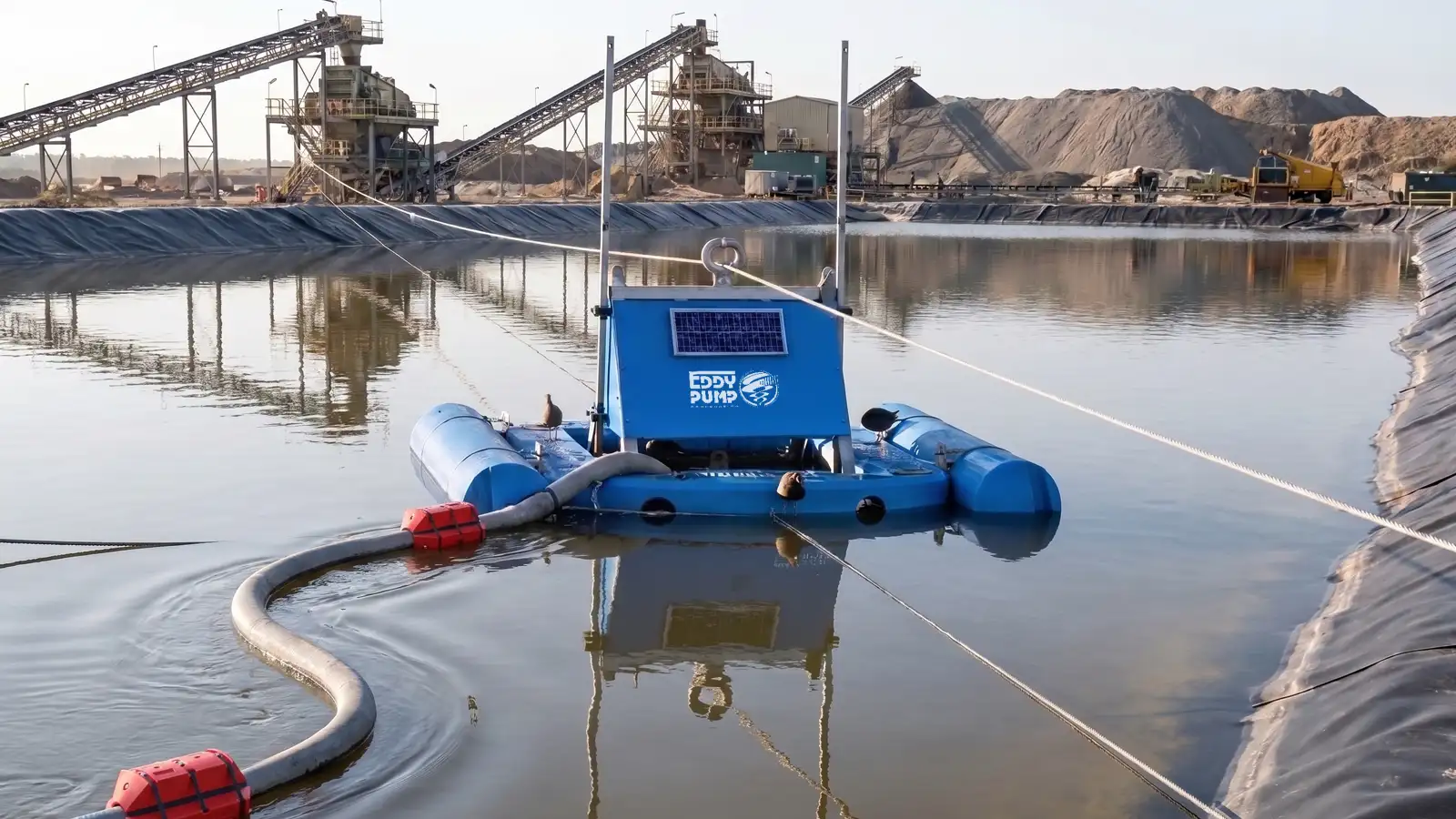
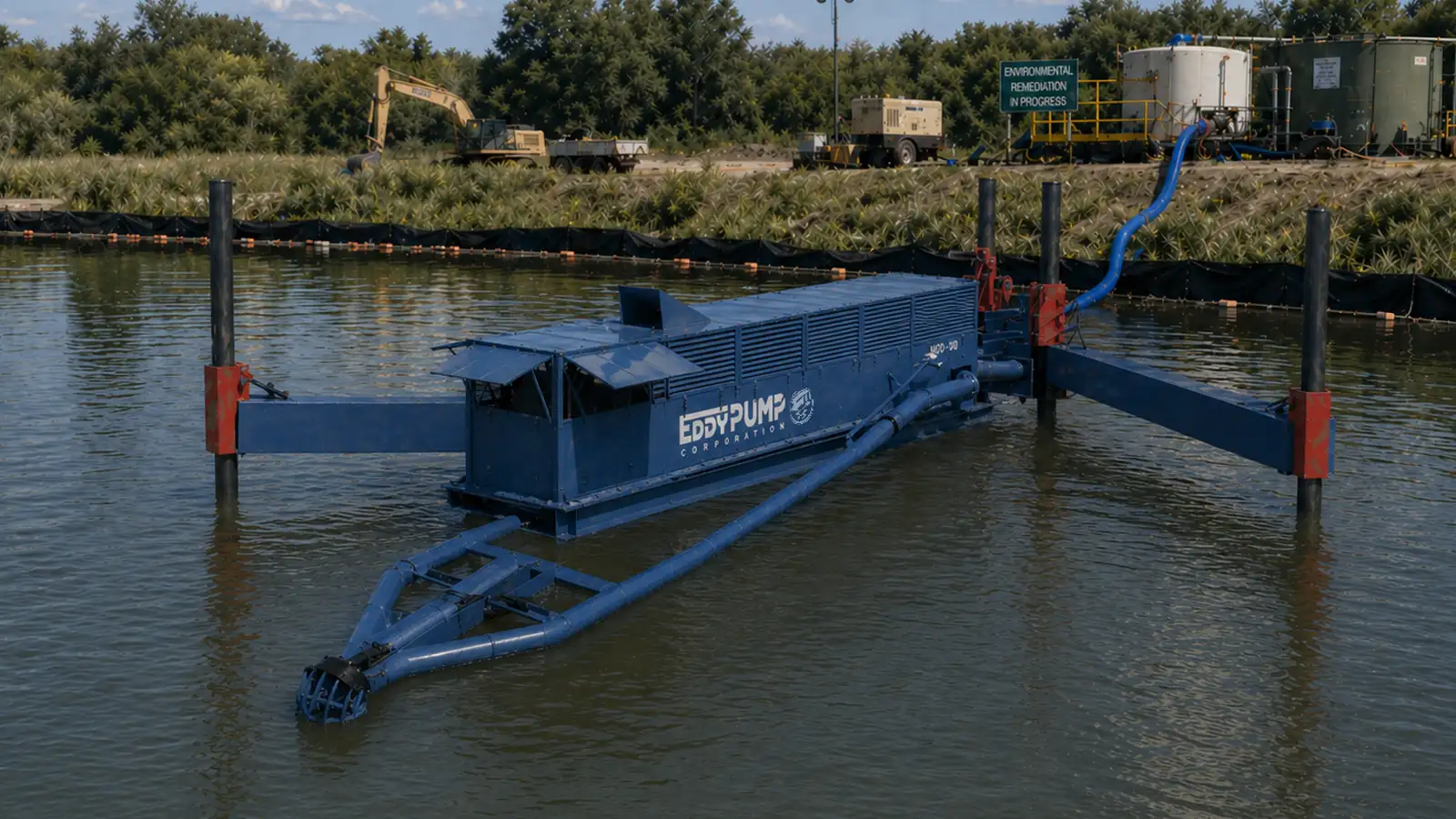
Floating dredge systems give mining operations another path. They remove sediment directly from the water, pump the slurry through a discharge line, and help restore pond capacity while the site continues to operate. The right system depends on the pond size, liner type, sediment depth, solids concentration, discharge distance, power source, and production target.
For mine process ponds, tailings ponds, settling basins, and lined containment ponds, EDDY Pump offers multiple dredging configurations including the Dredge Sled, ModDredge, Mini Auger ModDredge, Cable-Deployed Dredge Pumps, Subdredge systems, and liner-safe dredging options.
|
Answer-First Summary A floating dredge system helps a mine process pond by removing settled tailings, sediment, and slurry from the pond bottom without draining the pond. The system floats or operates from a floating platform, uses a high-solids dredge pump to move material through a discharge line, and can be configured for shallow ponds, lined ponds, deep ponds, confined access, remote operation, or long-distance slurry transfer. |
Key Takeaways
- Floating dredge systems help remove sediment from mine process ponds without fully draining the pond or shutting down the water-management system.
- The right dredge configuration depends on pond depth, liner protection, sediment type, discharge distance, site access, power availability, and production target.
- Dredge Sled and Mini Auger ModDredge options are strong paths for shallow, confined, or liner-sensitive ponds where controlled bottom contact matters.
- ModDredge and Subdredge systems fit larger, deeper, or higher-production pond dredging applications where remote operation and precision matter.
- Long discharge lines may require booster pumps to maintain slurry velocity and keep solids from settling in the pipeline.
- Final selection should be based on actual slurry data, not only pond size or pump discharge diameter.

Why Mine Process Ponds Accumulate Sediment
Mine process ponds collect the material that does not stay suspended forever: tailings, fines, sand, silt, clay, scale, and process solids. As water velocity slows inside the pond, heavier particles settle first, while finer material may spread across a wider area and create soft, sticky, or compacted layers over time.
That buildup reduces active storage volume. It can also change the pond hydraulics, reduce settling efficiency, increase pump runtime, make water-management decisions tighter, and eventually force emergency dredging at the worst possible time.
The real problem is not only the sediment. It is the operational impact of losing pond capacity while the mine still needs the pond to support water circulation, process recovery, tailings handling, or environmental control.
Why Land-Based Sediment Removal Often Creates More Disruption
Land-based excavation can work in some ponds, especially when the pond is dry, shallow, accessible, and unlined. But many mine process ponds do not fit that simple scenario.
- Draining the pond can interrupt process water management or require temporary bypass storage.
- Excavators may not reach the center of the pond without mats, access roads, or shoreline preparation.
- Mechanical excavation can disturb liners, embankments, or soft pond bottoms.
- Truck handling adds traffic, labor, fuel, and additional material transfer steps.
- Emergency sediment removal usually costs more than planned maintenance dredging.
A floating dredge system changes that workflow. Instead of reaching from the bank, the dredge goes to the sediment. Instead of hauling wet material repeatedly, the system pumps slurry through a discharge line to a settling pond, dewatering area, containment cell, processing area, or other approved destination.
What Is a Floating Dredge System?
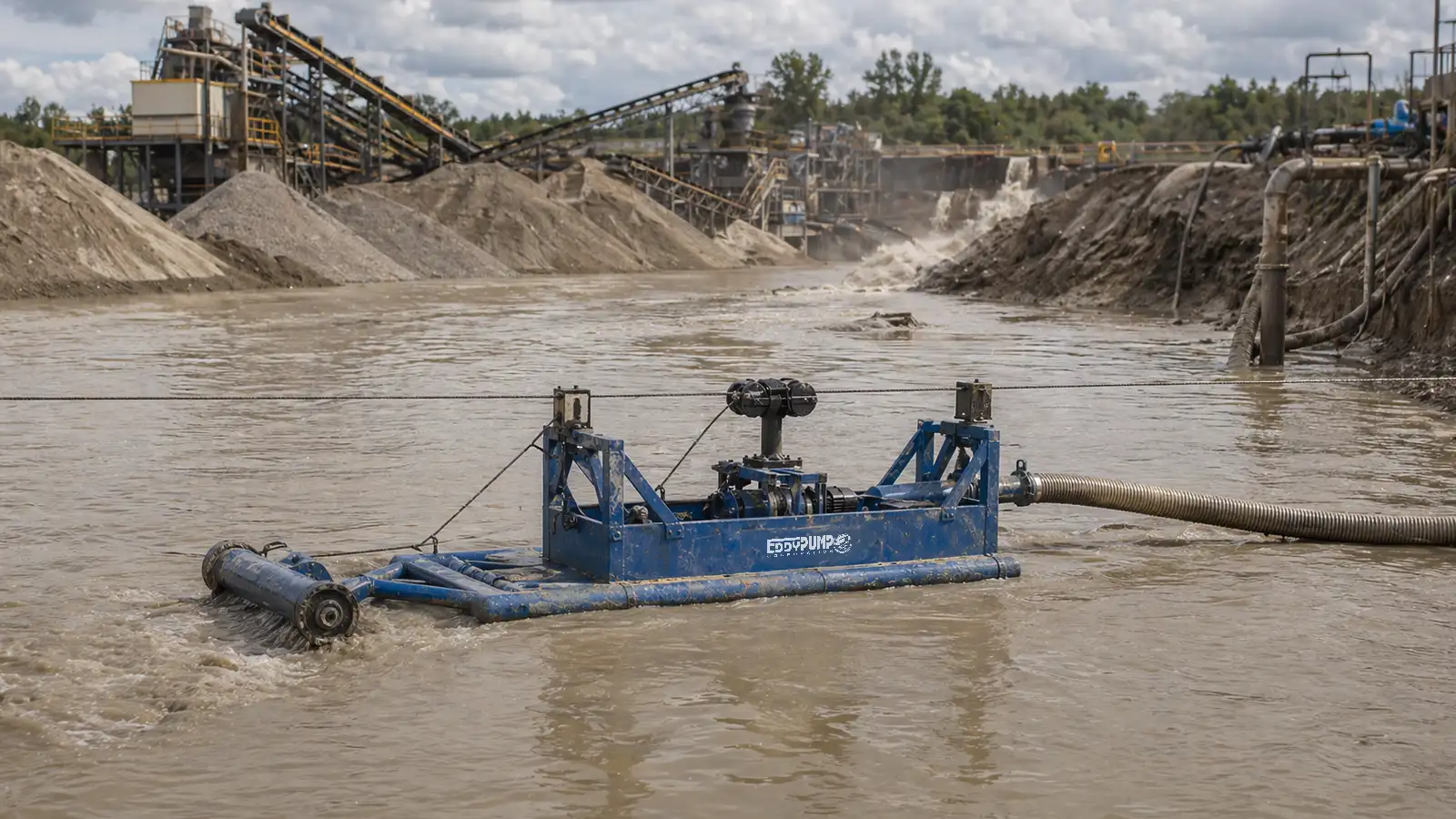
A floating dredge system is a water-based sediment removal system that operates from the pond surface or from a floating platform. It uses a dredge pump, intake or agitation method, discharge hose or pipe, positioning system, and power package to remove settled material from the pond bottom.
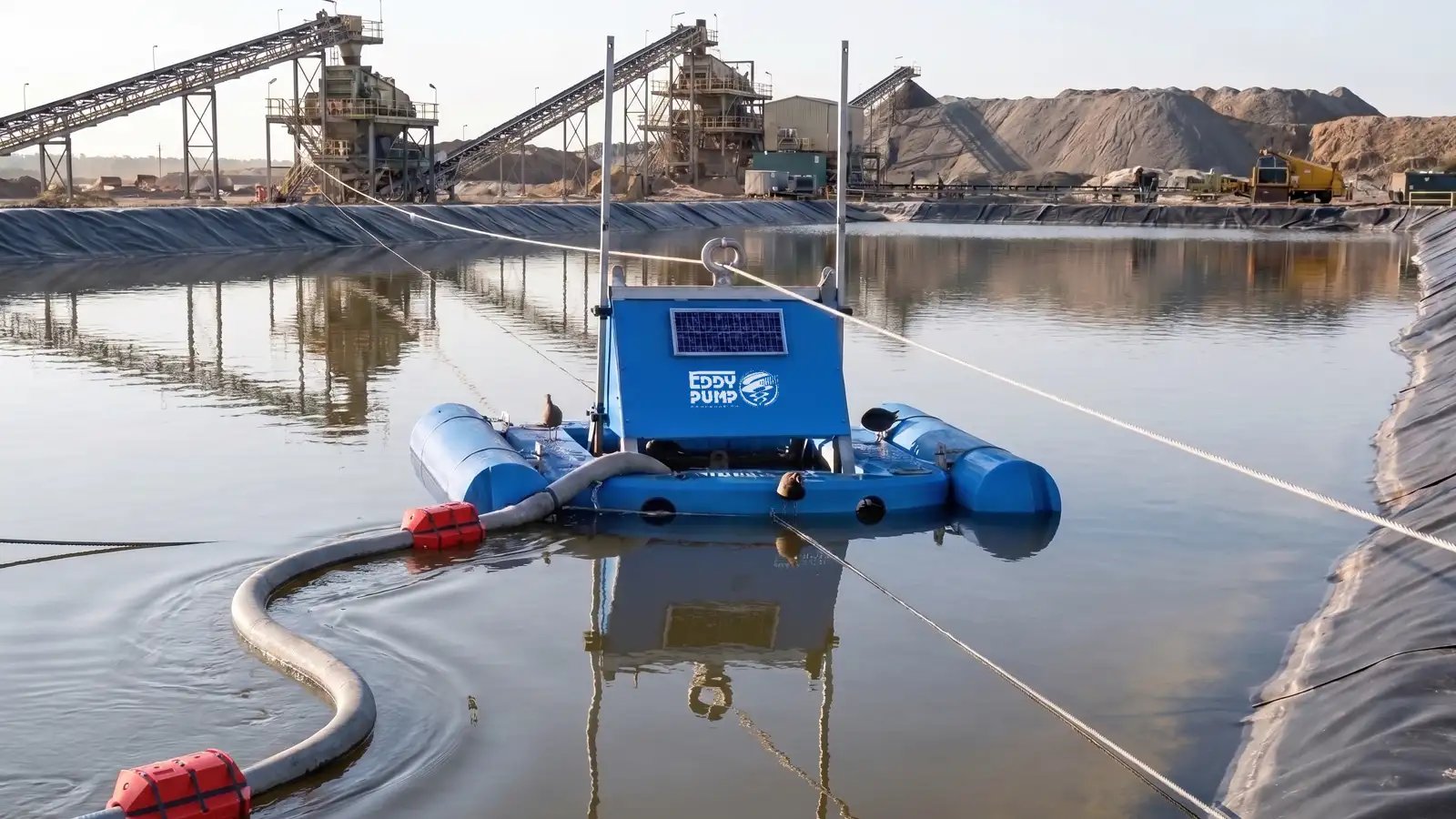
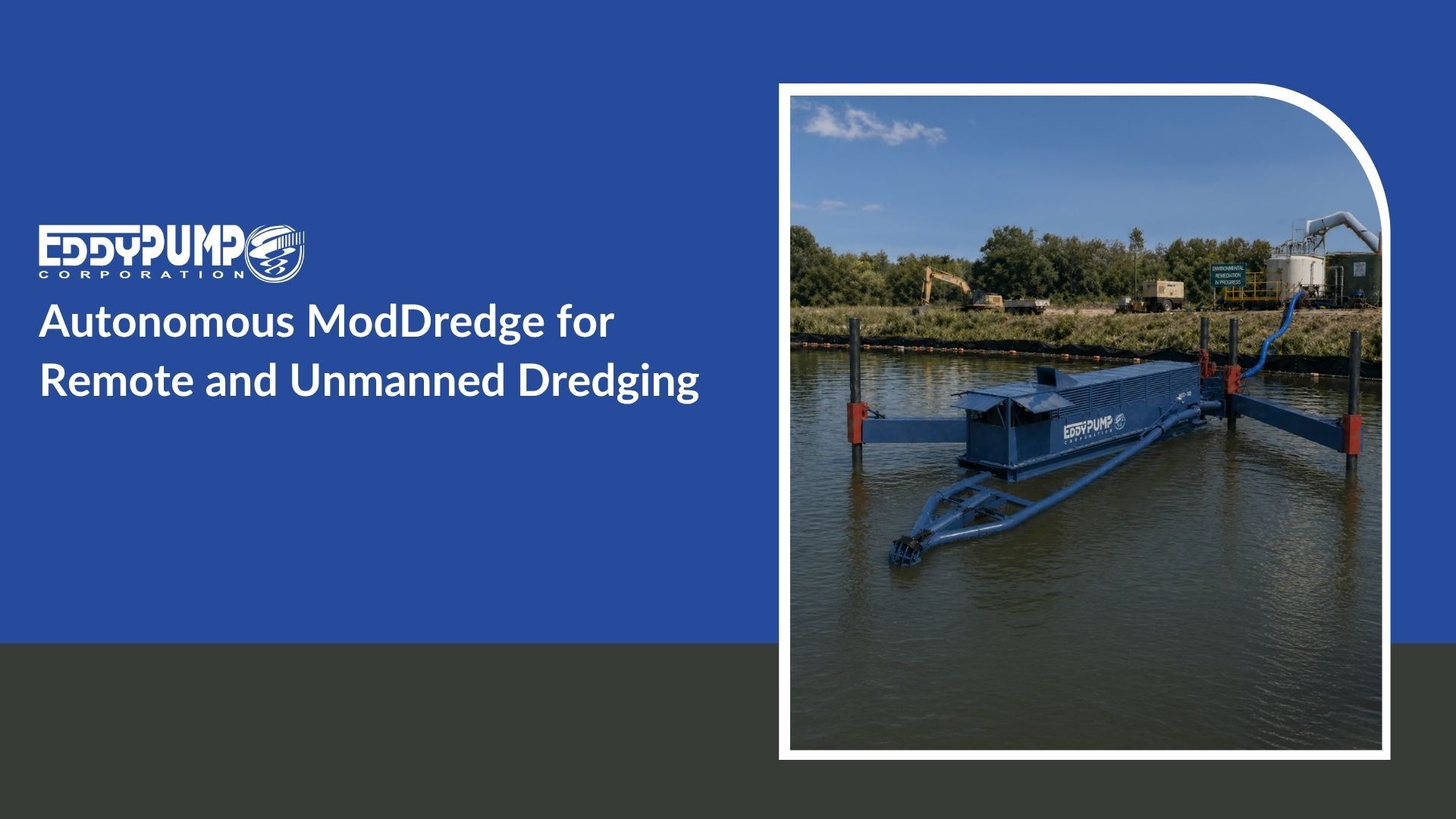
Some floating dredges are small, low-profile systems for lined ponds and lagoons. Others are modular dredges built for higher production in large tailings ponds. The best choice depends on whether the site needs gentle liner-safe removal, high-volume production, deep deployment, remote operation, or a long discharge pipeline.
Which Floating Dredge System Fits the Pond?
|
Pond Condition / Project Need |
Best Starting Point |
Why It Fits |
|
Shallow pond, lagoon, or basin with settled sludge or tailings |
Dredge Sled |
Low-profile system that glides along the bottom and is commonly used where controlled, liner-conscious dredging matters. |
|
Large mine tailings pond or high-production sediment removal project |
ModDredge |
Modular floating dredge platform available across larger pump sizes, with remote operation and strong high-solids dredging capability. |
|
Lined pond, confined basin, or sensitive bottom where agitation must be controlled |
Mini Auger ModDredge or liner-safe dredge option |
Designed for compact, controlled, liner-safe dredging in lined ponds, lagoons, canals, and tailings ponds. |
|
Deep pond, pit, berth, or hard-to-reach zone where a crane or A-frame is available |
Cable-Deployed Dredge Pump |
Pump can be lowered directly into the sediment zone, with water jetting or agitation options for compacted material. |
|
Restricted access, precision dredging, remote work, or greater depth |
Subdredge / remote-operated dredge |
Remote-operated submersible system for controlled sediment removal where access, depth, or safety limits conventional equipment. |
|
Long discharge run, elevation change, or high-friction slurry pipeline |
Skid-Mounted Booster Pump |
Adds head support to maintain slurry velocity and reduce settling risk in long pipeline systems. |
Helpful next step: Start with the pond condition, not the product name. A lined pond, deep pond, high-production tailings pond, and long-distance discharge project may all need different equipment even if they are all called process pond dredging.
How Floating Dredges Reduce Disruption to Mining Operations
Floating dredges reduce disruption because they can often work while the pond remains in service. That does not mean the dredge ignores safety, permitting, water-quality control, or process limits. It means the project can often be phased, isolated, and managed without turning sediment removal into a full site shutdown.
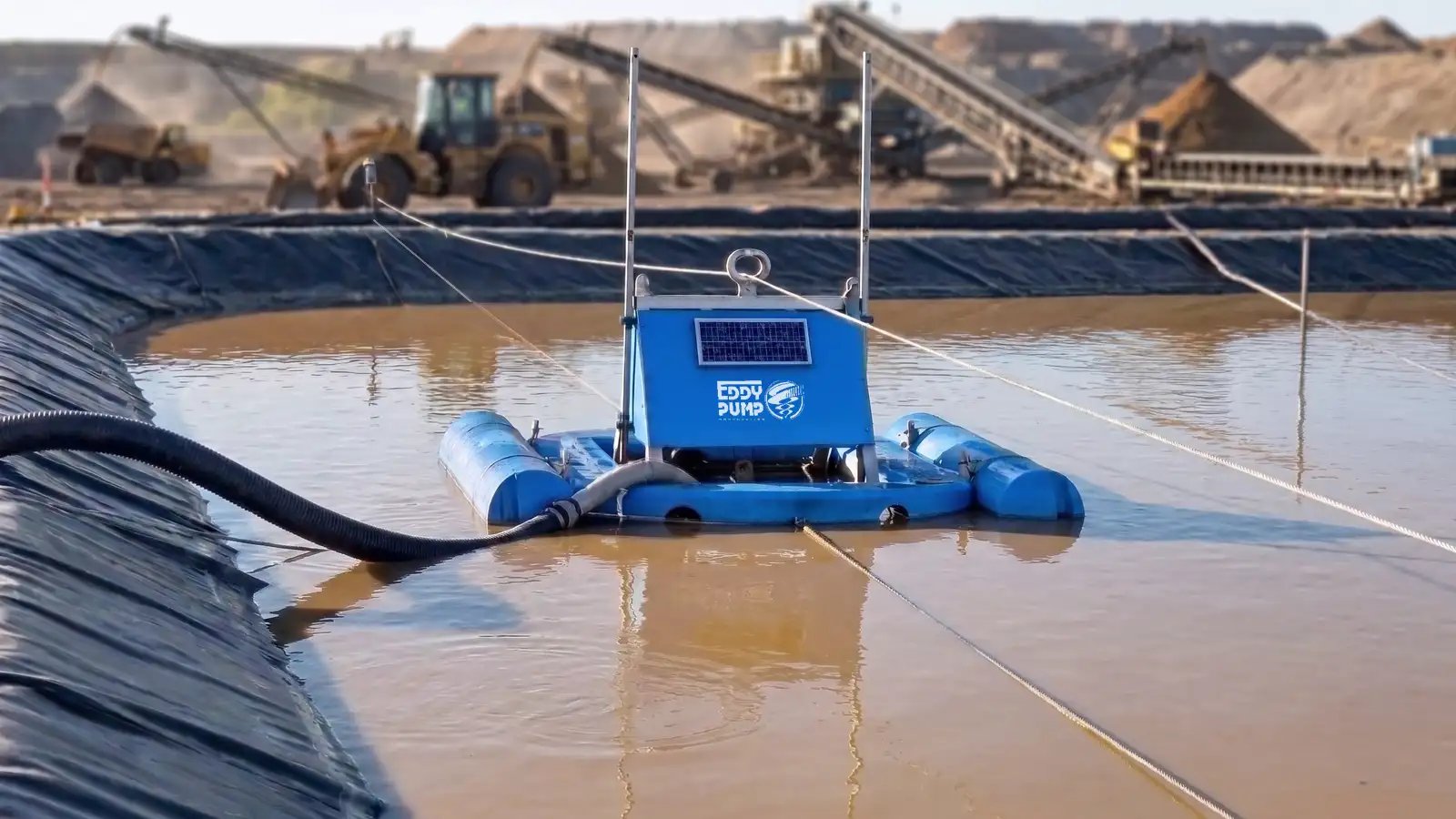
- The pond does not always need to be drained before sediment removal starts.
- The dredge can target accumulation zones instead of excavating the whole pond at once.
- Pipeline transport reduces trucking and repeated material handling around the pond.
- Remote or automated options can reduce the number of people working near the water.
- Planned maintenance dredging can restore capacity before sediment becomes an emergency.
How Controlled Dredging Protects Liners and Pond Bottoms
Many mine process ponds and tailings ponds use clay, poly, or concrete liners to help control seepage and protect groundwater. A dredging method that damages the liner can create a much larger problem than the sediment it removed.
That is why liner-safe selection matters. The goal is to remove the accumulated solids while controlling bottom contact, suction position, agitation, and turbidity.
EDDY Pump offers liner-safe dredging equipment options for ponds, lagoons, basins, and hard-to-reach areas where the liner or bottom surface must be protected. These options can include sled-style frames, wheels, cable deployment, controlled suction, and remote operation depending on the selected configuration.
How Floating Dredges Handle High-Solids Mine Slurry
Mining ponds rarely contain a clean, consistent material. One area may be soft fines. Another may contain compacted tailings, sand, clay, scale, gravel, or debris. The pump has to handle the solids, but the complete system must also keep the slurry moving through the pipeline.
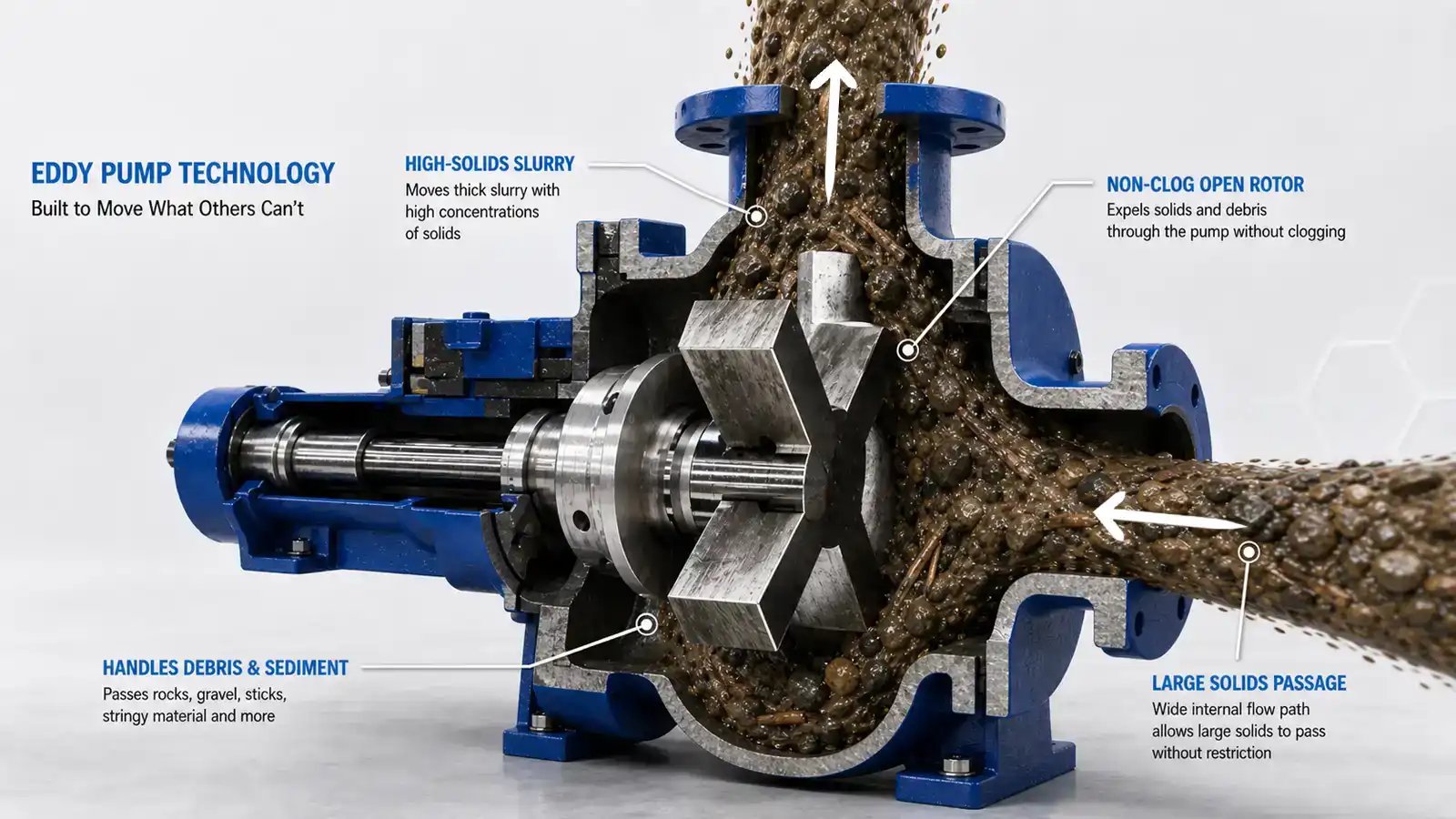
This is where pump design, agitation, and system sizing matter. EDDY Pump dredge systems are built around high-solids slurry pumping. Current EDDY pages commonly position dredge pumps for 40-70% solids by weight, application dependent. That does not mean every material will pump at the top of that range. Sticky clay, red mud, mature fine tailings, or paste-like material may require a viscosity and yield-stress review before final selection.
For granular or mineral solids such as sand, aggregate, and selected tailings, higher solids by weight may be realistic when the material remains flowable and the pipeline velocity is correct. For sticky or cohesive materials, the same percentage by weight may behave very differently. The answer is not a generic pump size. It is a project-specific duty point.
How to Size a Floating Dredge for a Mine Process Pond
A floating dredge should be sized around the full pond and pipeline problem. Undersizing extends the project and may leave sediment behind. Oversizing can add cost, power demand, and handling complexity without solving the real issue.
|
Information Needed |
Why It Matters |
|
Pond dimensions and dredging depth |
Defines the reachable work area, required deployment method, and estimated sediment volume. |
|
Sediment depth by zone |
Shows where production dredging is needed versus spot cleaning. |
|
Material type and particle size |
Determines pump size, solids passage, agitation method, and wear package. |
|
Slurry density and percent solids |
Controls power requirement, pump curve correction, production estimate, and pipeline behavior. |
|
Viscosity / stickiness |
Important for clay, red mud, thick tailings, and paste-like materials that may not behave like sand slurry. |
|
Liner type and bottom restrictions |
Determines whether a liner-safe sled, wheels, cable deployment, or low-contact system is needed. |
|
Discharge distance and elevation |
Controls total dynamic head, friction loss, booster requirement, and pipeline velocity. |
|
Power availability |
Determines whether electric, diesel, hydraulic, HPU-powered, or mixed power is the best fit. |
|
Destination for dredged material |
Affects pipeline route, dewatering, containment, geotube, settling pond, or processing plan. |
|
Operating schedule and staffing |
Helps decide between manual, remote-operated, and autonomous dredging options. |
For long pipeline runs, include booster review early. A dredge pump may remove the material well at the intake but still lose production if the discharge line cannot maintain velocity. Skid-mounted booster pumps can be added when distance, elevation, pipe friction, slurry density, or terminal pressure exceeds the efficient range of the primary dredge pump.
Floating Dredge System Planning Checklist
- Map the pond and identify sediment accumulation zones.
- Confirm whether the pond is lined and what bottom contact is allowed.
- Sample the sediment for particle size, specific gravity, abrasiveness, viscosity, and chemistry.
- Define the target production rate in cubic yards per hour or project completion timeline.
- Identify the discharge location, pipeline route, pipe size, distance, elevation change, and bends.
- Confirm electric, diesel, hydraulic, or HPU power availability.
- Decide whether the system needs manual, remote, autonomous, or low-crew operation.
- Review environmental, turbidity, disposal, and water-management requirements before mobilization.
- Request a project-specific pump curve and dredge configuration from EDDY Pump.
Where EDDY Pump Fits in the Mine Pond Sediment Removal Journey
A mining operation may start the conversation by saying, “We need to dredge a pond.” But the better question is: what kind of pond, what kind of sediment, and what does the site need the dredge to do?
EDDY Pump supports that journey with multiple equipment paths rather than a single generic dredge. Shallow lined pond? Start with Dredge Sled or Mini Auger ModDredge. Large tailings pond? Review ModDredge. Deep or hard-to-reach area? Look at cable-deployed or Subdredge systems. Long discharge? Add booster review. Unclear duty point? Start with a custom pump curve.
To prepare for that review, send EDDY Pump your material description, solids size, percent solids, slurry density, pond depth, production target, discharge distance, pipe size, elevation change, power source, and liner requirements. Request a custom pump curve or talk to EDDY Pump engineering before choosing the final system.
Frequently Asked Questions
What is a floating dredge system for mine process ponds?
A floating dredge system is a water-based dredging setup that removes tailings, sediment, sludge, sand, silt, and slurry from a mine process pond without requiring the entire pond to be drained. It typically includes a dredge pump, float or platform, positioning method, power package, agitation or intake tool, and discharge pipeline.
Can a floating dredge remove sediment while the pond stays in service?
Often, yes. Many floating dredge systems can remove material while the pond remains partially or fully filled. The actual operating plan depends on water-management requirements, liner protection, turbidity limits, discharge location, and site safety rules.
Which EDDY Pump system is best for a shallow lined pond?
The Dredge Sled, Mini Auger ModDredge, or other liner-safe dredge options are usually the best starting points for shallow lined ponds because they are designed for controlled bottom contact and sediment removal without aggressive mechanical excavation.
Which system is best for a large mine tailings pond?
For larger ponds or higher production targets, ModDredge or Subdredge systems may be better starting points. The right model depends on pump size, solids handling, depth, distance, liner requirements, power, and automation needs.
Can floating dredges handle high-solids mine tailings?
Yes, when the pump, power source, intake, pipeline, and discharge plan are selected for the actual slurry. EDDY Pump dredge systems are built for high-solids slurry, but the achievable solids concentration depends on particle size, density, viscosity, material feed, pipe size, total dynamic head, and available power.
Can a floating dredge protect pond liners?
Yes, if the equipment is configured for liner-safe dredging. Liner-safe options may use sled frames, wheels, gliding contact, cable deployment, or controlled suction to remove material without cutting into clay, poly, or concrete liners.
When does a mine pond dredging project need a booster pump?
A booster pump should be reviewed when discharge distance, elevation change, pipe friction, slurry density, or required terminal pressure exceeds what the primary dredge pump can handle efficiently. Booster support helps maintain slurry velocity so solids do not settle in the pipeline.
What information is needed to size a floating dredge system?
Start with pond dimensions, water depth, sediment depth, material type, maximum particle size, percent solids, slurry density, viscosity, discharge distance, elevation change, pipe size, liner type, power source, and target production rate.
Plan the Right Floating Dredge System for Your Mine Pond
The best floating dredge system is not the largest one on paper. It is the one matched to your pond, your sediment, your liner, your discharge distance, and your production goal.
Share your process pond details with EDDY Pump. The engineering team can review the sediment type, solids concentration, pump size, dredge configuration, pipeline route, booster requirement, and power package so the system is built around your actual conditions.
Request a Mine Pond Dredging Review | Request a Custom Pump Curve | Call 619-404-1916