Key Takeaways: Dredging Equipment for Mine Canals
- The right dredging equipment depends on your canal's sediment type, solids concentration, access constraints, and production targets.
- Cutterhead dredges work well for compacted sediment, while excavator-mounted pumps offer mobility for narrow or irregular canal sections.
- Pump selection matters more than dredge type because the wrong pump causes clogs, wear, and unplanned downtime.
- EDDY Pump systems handle high-solids slurry up to 70% solids by weight, reducing clogging and extending wear part life in abrasive mining environments.
- Matching your dredging system to field conditions, not just flow rate specs, protects your production schedule and lowers total cost of ownership.
Why Mine Canal Sediment Removal Matters
Mine canals collect sediment. That's not a design flaw; it's a physical reality. Runoff carries sand, silt, tailings fines, and process residue into drainage and diversion channels. Over time, that material settles, reduces canal capacity, and restricts water flow.

When canal capacity drops, you face two problems at once. First, reduced flow can back up water into process areas or fail to divert it from active pits. Second, deferred sediment removal compounds the problem because the longer material sits, the more compacted it becomes.
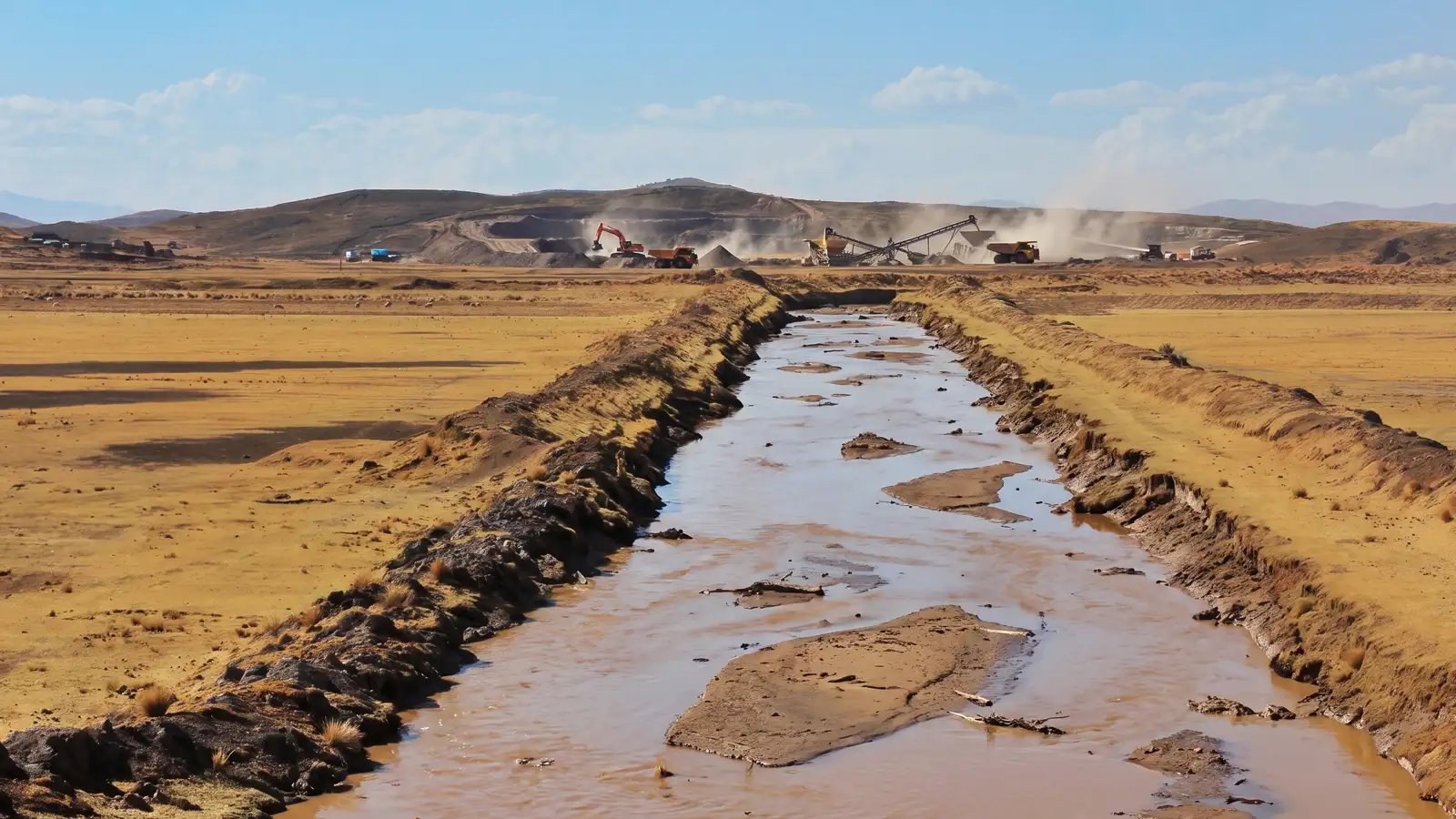
Selecting the right dredging equipment for mine canal sediment removal is not just a procurement decision. It's an operational decision that affects production continuity, maintenance burden, and long-term site management.
What Makes Mine Canal Dredging Different From Other Dredging Applications?
Mining environments are harsher than typical dredging applications. The material you're moving isn't just sand or silt. It often includes abrasive particles from ore processing, high-density solids, and oversized debris that standard equipment wasn't built to handle.
Canal geometry adds another layer of complexity. Mine canals are often narrow, have limited bank access, and may include bends, transitions, or sloped sections that restrict equipment positioning. Unlike open ponds or lagoons, canals demand equipment that can operate in tight spaces.
Flow disruption matters in mining. Many canals carry active water, process effluent, or drainage that can't be stopped during dredging. That means your dredging system needs to work while the canal is still flowing, not in dry or dewatered conditions.
Common Sediment Characteristics in Mine Canals
Before selecting equipment, characterize what you're pumping. The sediment profile in a mine canal typically includes:
- Abrasive particles: Sand, tailings, mill scale, and ore fines that accelerate pump wear.
- High solids concentration: Settled material often reaches 40% to 60% solids by weight, sometimes higher.
- Variable grain size: Fine silt mixed with gravel, rock fragments, or fibrous material.
- Compaction: Long-settled sediment becomes dense and difficult to agitate without mechanical assistance.
Each of these factors affects equipment selection, pump sizing, and dredging method. A system designed for loose sand won't perform well in compacted tailings.
Types of Dredging Equipment for Mine Canals
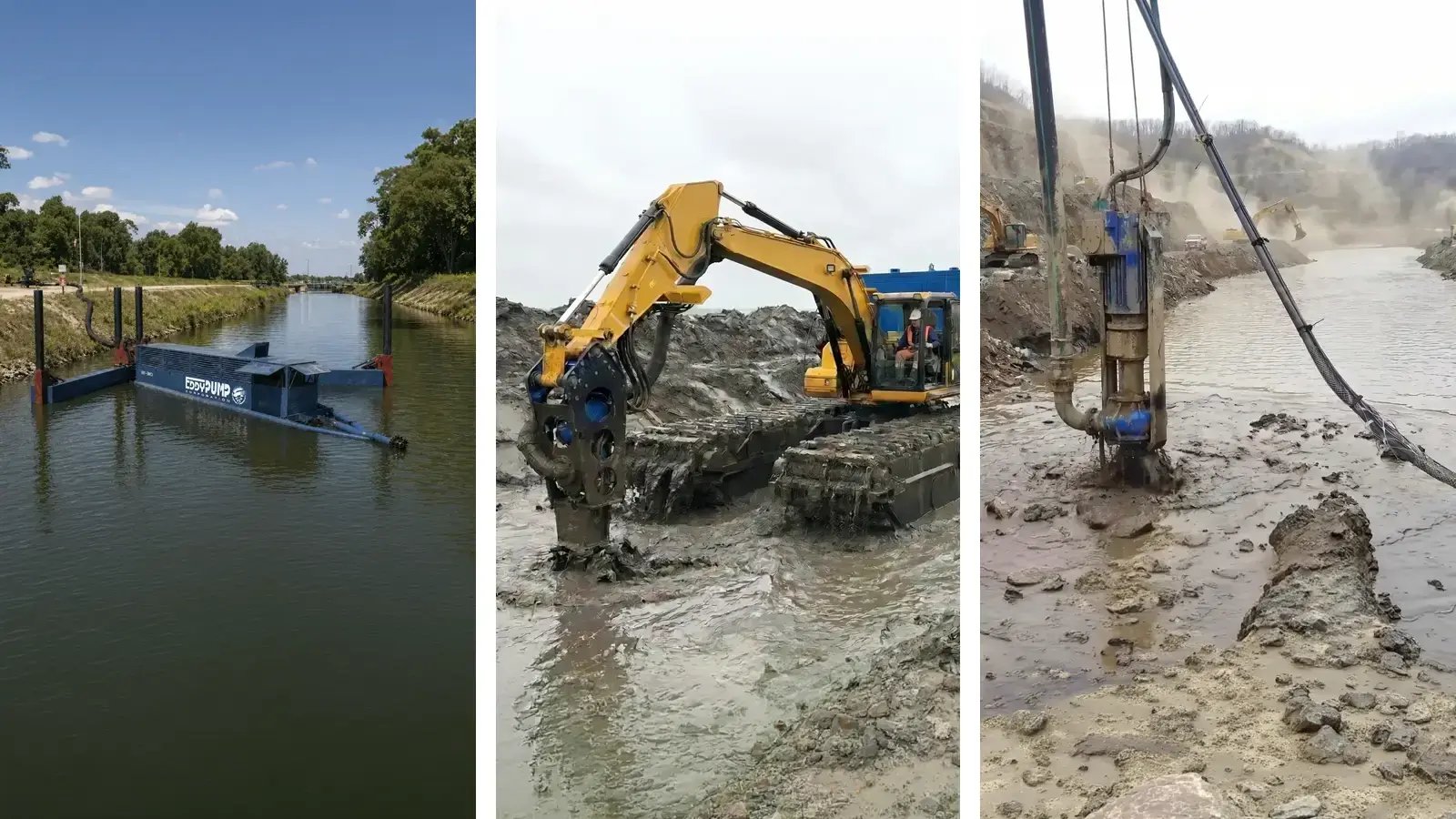
Three dredging configurations show up most often in mine canal applications: cutterhead dredges, excavator-mounted pumps, and cable-deployed systems. Each has trade-offs, and the right choice depends on the material, the canal geometry, and the production target.
Cutterhead Dredges
A cutterhead dredge uses a rotating cutter to break up compacted sediment before pumping. This approach works well when the material is dense, layered, or ceite too consolidated for suction alone.
Advantages of cutterhead systems include high production rates in compacted material and the ability to cut through consolidated sediment layers. The trade-off is that cutterheads require sufficient water depth and maneuvering room, which limits their use in narrow or shallow canal sections.
Excavator-Mounted Dredge Pumps
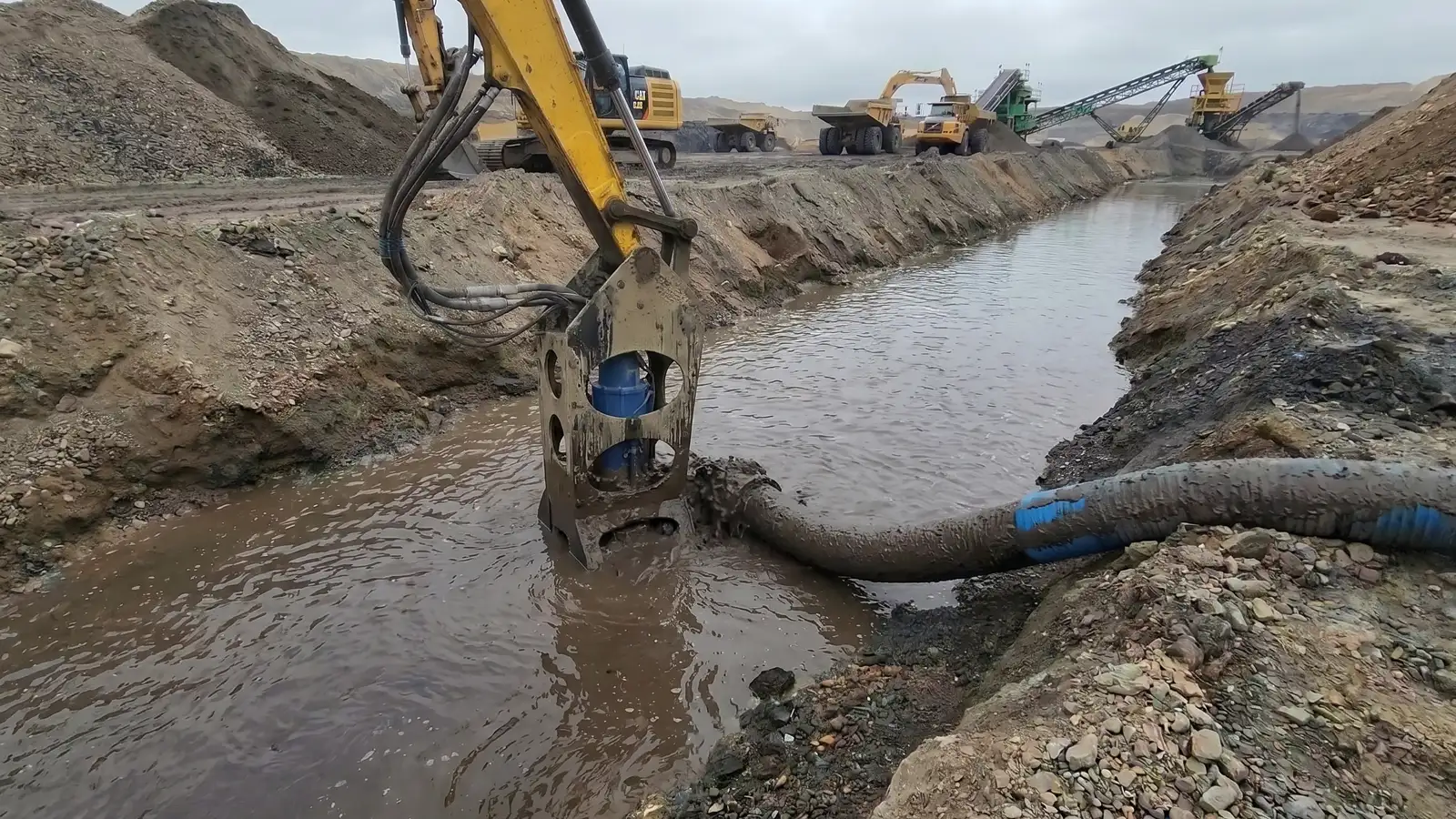
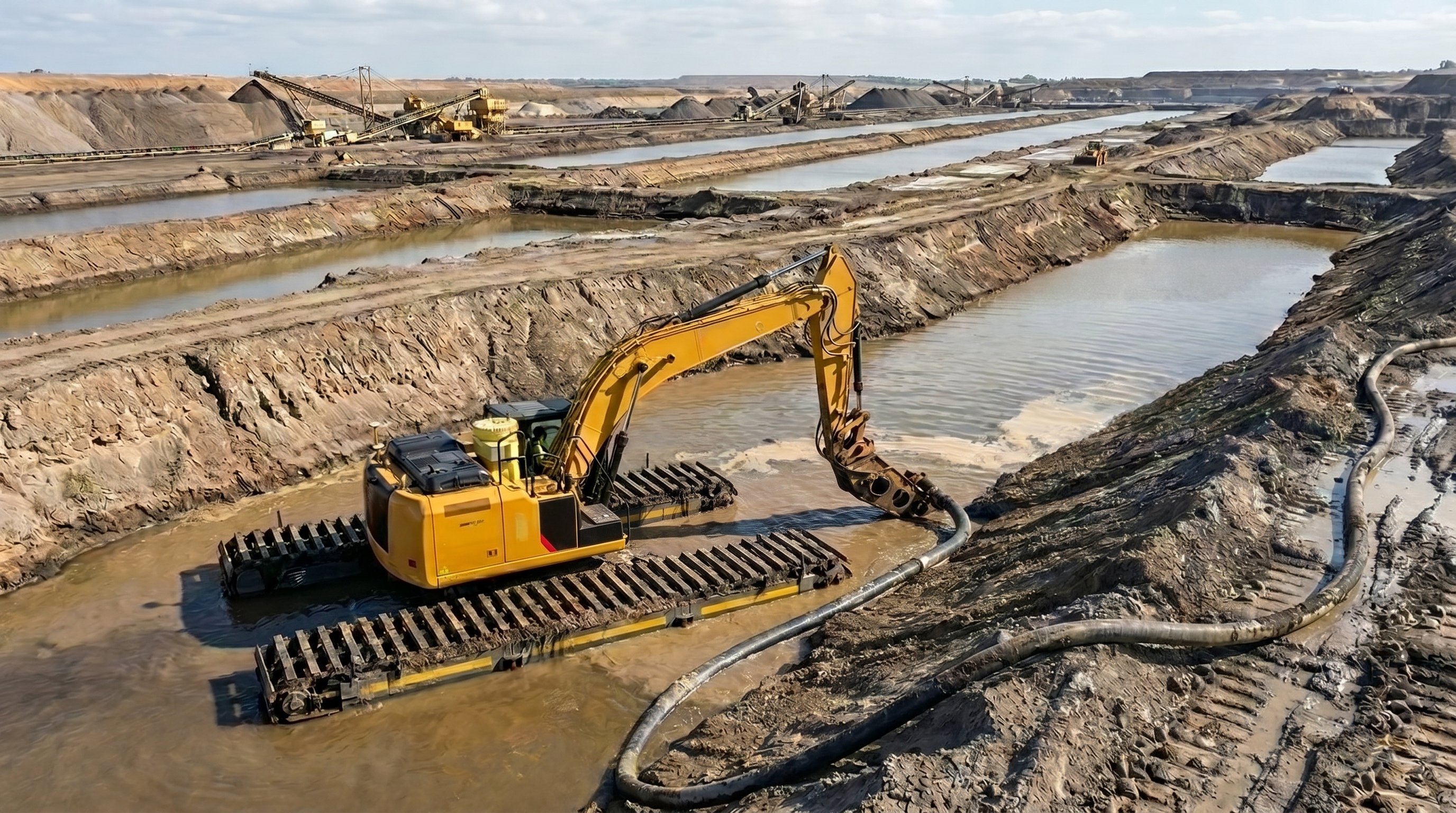
Excavator-mounted systems attach a dredge pump to the boom of a hydraulic excavator. This configuration offers mobility, precise positioning, and the ability to work in confined spaces where traditional dredges can't operate.
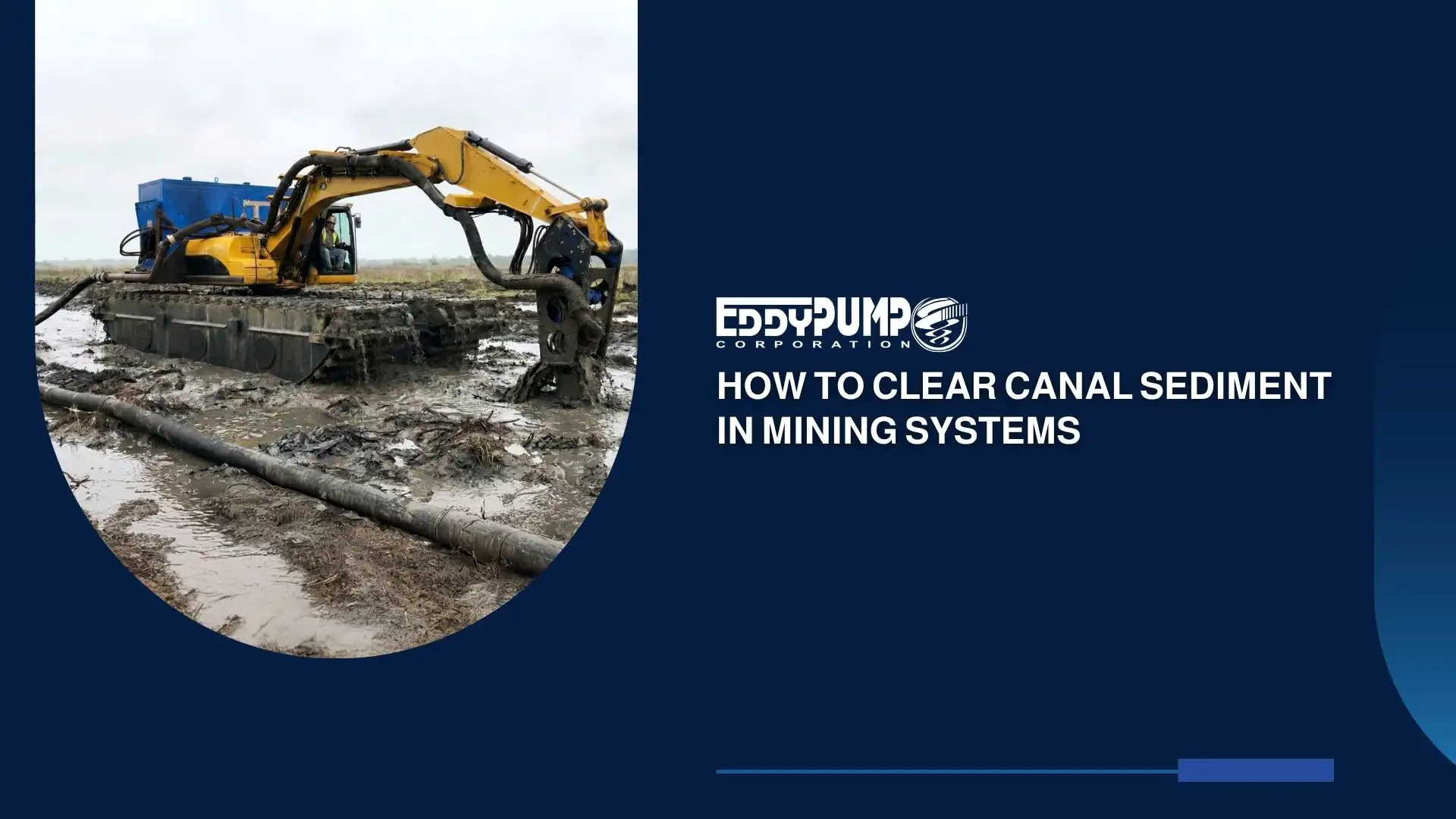
EDDY Pump's Excavator Pump Attachment uses the excavator's existing hydraulic power to drive a high-solids pump. This approach eliminates the need for a separate power unit and allows the operator to reposition quickly as sediment removal progresses along the canal.
When canal access is limited or the sediment profile varies along the channel, excavator-mounted systems often outperform fixed-position dredges. They also excel at reaching bank-side accumulations and tight corners.
Cable-Deployed Dredge Systems
Cable-deployed systems suspend a dredge pump or pump-and-cutter assembly from winch cables, allowing the unit to traverse the canal without requiring a floating platform. These systems work well in long, straight canal sections where the pump can travel the full length on a cable run.
The trade-off with cable-deployed systems is limited lateral control. If the canal has multiple bends or irregular bottom contours, repositioning the winch anchors takes time.
How to Evaluate Dredging Equipment for Your Mine Canal
Choosing dredging equipment starts with site data, not product specs. A pump rated for 5,000 GPM doesn't mean much if the system can't move your material at your site. Here's a practical evaluation framework.
Step 1: Characterize the Sediment
Before contacting equipment suppliers, gather the following information:
- Sediment type and source (tailings, ore fines, natural silt, construction debris)
- Percent solids by weight (measured, not estimated)
- Particle size distribution (d50 and maximum particle size)
- Abrasiveness (Mohs hardness, Miller number if available)
- Compaction level (loose, consolidated, or cemented)
This information determines pump type, materials of construction, and whether you need a cutting mechanism.
Step 2: Map the Canal Geometry
Survey the canal before selecting equipment. Key parameters include:
- Canal width and depth (including variations along the length)
- Bank access points and staging areas
- Bends, transitions, and obstructions
- Active water flow and discharge points
Narrow sections may eliminate cutterhead options. Limited bank access may favor excavator-mounted systems. Long, straight runs may make cable-deployed traversing cost-effective.
Step 3: Define Production Requirements
Production targets drive equipment sizing. Determine:
- Total sediment volume to remove (cubic yards or cubic meters)
- Target completion time (days, weeks, or ongoing maintenance schedule)
- Required throughput (cubic yards per hour or GPM of slurry)
Match these requirements to equipment capacity, but build in margin. Field conditions rarely match the idealized scenarios used to generate pump curves.
Step 4: Evaluate Pump Selection Criteria
The pump is the heart of any dredging system. A dredge can have the best cutter, the most stable platform, and the longest boom, but if the pump can't move the material, the system fails.
Key pump selection criteria for mine canal dredging include:
- Solids handling capacity: Can the pump pass your maximum particle size without clogging?
- Abrasion resistance: Will the wear parts survive your abrasive sediment?
- NPSH requirements: Does the pump work at your available suction head?
- Total dynamic head (TDH): Can the pump push slurry through your discharge pipeline?
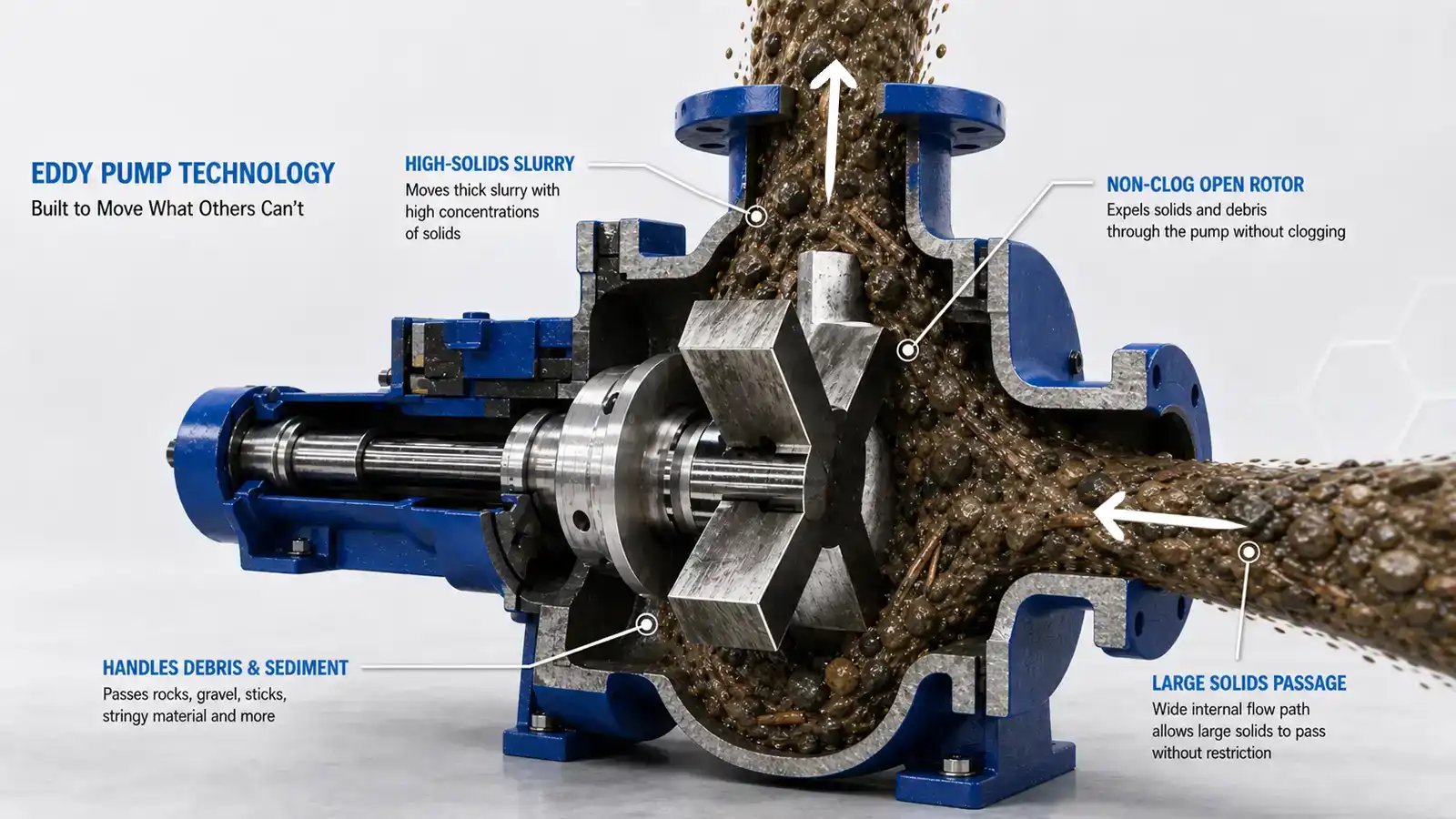
EDDY Pump's high-solids slurry pumps use a recessed rotor design that creates a synchronized eddy current rather than relying on close-tolerance impeller contact. This design passes oversized solids, handles high concentrations, and reduces wear compared to centrifugal pumps operating in abrasive slurry.
Why Pump System Fit Matters More Than Dredge Type
Many equipment selection conversations focus on the dredge platform: cutterhead versus excavator, floating versus cable-deployed. These choices matter, but they often receive disproportionate attention compared to pump selection.
The pump determines whether you actually move material. A cutterhead can break up sediment all day, but if the pump clogs, cavitates, or wears out, production stops. An excavator can position a dredge pump anywhere in the canal, but if the pump can't handle your solids concentration, you're still fighting downtime.
What Happens When Pumps Don't Match Field Conditions
Common failure modes in mine canal dredging include:
- Clogging: Oversized particles or fibrous material blocks the intake or impeller. Production stops while operators clear the blockage.
- Excessive wear: Abrasive sediment erodes impellers, volutes, and liners faster than expected. Maintenance intervals shorten and parts costs climb.
- Cavitation: Insufficient suction head causes vapor bubbles that damage pump internals and reduce flow.
- Underperformance: The pump delivers less flow or head than rated because the slurry is denser or more viscous than assumed.
Each of these conditions increases downtime, labor, and cost. Matching the pump to the actual material and conditions avoids these problems.
How EDDY Pump Systems Address Mine Canal Dredging Challenges
EDDY Pump builds dredging systems specifically for high-solids, abrasive applications where conventional pumps fall short. The design philosophy centers on moving difficult material reliably, not on optimizing efficiency curves for clean water.
Recessed Rotor and Open Volute Design
The EDDY Pump uses a recessed rotor that creates a powerful, synchronized eddy current inside the pump casing. Unlike centrifugal impellers that rely on high-speed blade contact with the fluid, the eddy current draws solids into the pump and passes them through an open volute with large internal clearances.
This design handles slurry up to 70% solids by weight, passes oversized particles that would clog conventional pumps, and reduces impeller-to-casing contact that accelerates wear in abrasive applications.
Reduced Clogging and Wear in Abrasive Slurry
Mine canal sediment is abrasive. Sand, tailings fines, and ore particles accelerate wear on pump internals. Centrifugal pumps designed for lower-solids applications often require frequent impeller and liner replacement when operating in abrasive slurry.
EDDY Pump's open flow path and recessed rotor geometry minimize internal wear because the rotor doesn't directly contact passing solids. This extends wear part life and reduces maintenance downtime in mining environments.
Excavator-Mounted and Dredge Sled Configurations
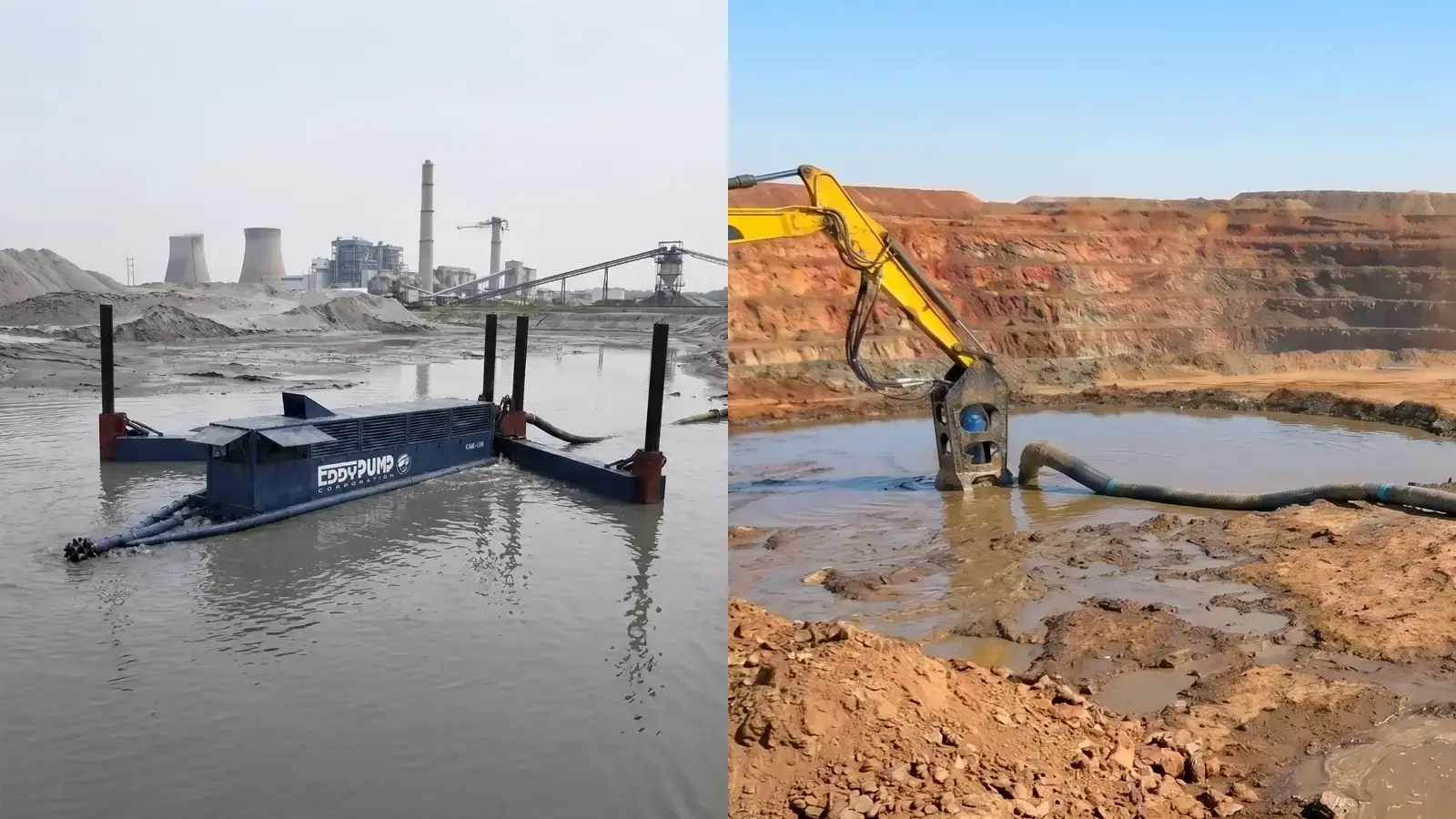
EDDY Pump offers systems configured for mine canal applications, including excavator pump attachments for mobile dredging and Dredge Sled systems for lagoon and pond applications where the pump slides along the bottom to remove settled material.
For narrow or irregular canals, the excavator-mounted configuration allows precise positioning without the maneuvering limitations of floating dredges.
Flow Disruption: Dredging While the Canal is Active
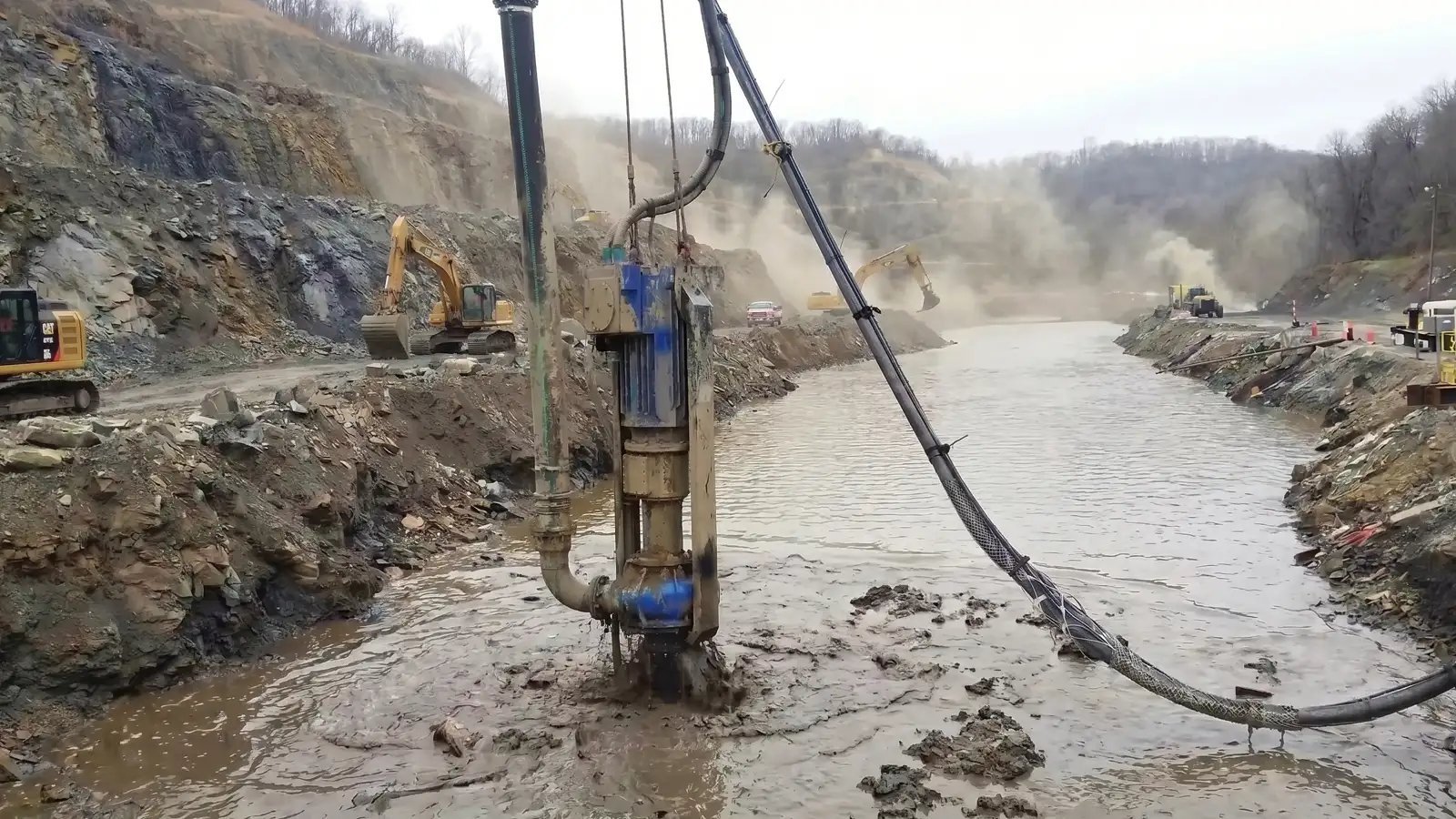
Many mine canals carry active water flow that can't be shut down during dredging. Diversion channels, process water returns, and drainage canals often operate continuously. Selecting equipment that can work in flowing conditions matters for operational continuity.
Managing Turbidity During Active Dredging
Dredging in an active canal stirs up sediment and increases turbidity downstream. Depending on where the canal discharges, this may require sediment control measures, timing adjustments, or phased dredging approaches.
Higher-efficiency pumps that capture more solids per gallon of slurry reduce the water-to-solids ratio being discharged, which can help manage downstream turbidity effects.
Maintaining Canal Function During Sediment Removal
Plan dredging operations to maintain canal function. This may mean working in sections, staging material for batch removal, or scheduling dredging during periods of lower flow.
Equipment mobility helps here. Excavator-mounted systems can reposition quickly if flow patterns shift or if a section needs to be cleared ahead of schedule.
Discharge Pipeline Considerations for Mine Canal Dredging
The dredging system doesn't end at the pump. The discharge pipeline transports slurry from the canal to a disposal or processing location. Pipeline selection affects system performance and total cost.
Pipeline Sizing and Material
Undersized pipelines increase friction losses and reduce throughput. Pipelines too large may allow solids to settle and plug the line. Size the pipeline to maintain adequate slurry velocity (typically 10 to 15 feet per second for abrasive slurry) without excessive pressure drop.
Material selection matters in abrasive applications. HDPE works for many slurries, but highly abrasive material may require rubber-lined steel or UHMW-lined pipe to control wear.
Pipeline Routing and Support
Plan the pipeline route from the dredging location to the discharge point. Consider:
- Elevation changes (affects total dynamic head)
- Bends and transitions (increase friction losses)
- Support requirements (floating sections, bank crossings)
- Access for flushing and maintenance
A pipeline that works on paper may not be practical if it requires crossing active haul roads, navigating steep grades, or spanning unsupported distances.
Maintenance Planning for Mine Canal Dredging Equipment
Dredging equipment operating in abrasive mine sediment requires proactive maintenance. Reactive maintenance, waiting for something to break, leads to unplanned downtime and emergency parts procurement.
Wear Part Inspection Schedule
Establish inspection intervals based on operating hours and material abrasiveness. Key components to monitor include:
- Pump impeller or rotor (check for erosion, pitting, or imbalance)
- Volute and casing liner (measure wall thickness at wear points)
- Suction and discharge seals
- Cutter teeth or agitator blades (if equipped)
- Hoses and pipeline connections (check for leaks, abrasion wear)
Spare Parts Inventory
Stock critical wear parts on-site. In mining operations, parts availability can mean the difference between a four-hour repair and a four-day shutdown waiting for delivery. For EDDY Pump systems, common spares include replacement rotors, casing liners, seals, and hose couplings.
Flushing and Storage Procedures
After each dredging session, flush the pump and pipeline with clean water to prevent solids from settling and hardening in the system. Settled slurry inside a pump casing can seize the rotor and require disassembly to clear.
If equipment will be idle for extended periods, drain all water to prevent freezing damage (in cold climates) and store in a protected location.
Total Cost of Ownership for Mine Canal Dredging Equipment
The cheapest dredging equipment to purchase is not always the cheapest equipment to own. Total cost of ownership (TCO) includes purchase price, operating costs, maintenance, downtime, and replacement intervals.
Factors That Drive TCO in Mining Applications
- Wear part life: Pumps that require frequent impeller replacement have higher parts and labor costs.
- Downtime: Unplanned shutdowns affect production beyond just the dredging operation.
- Fuel and power: Equipment efficiency affects operating costs over the system's life.
- Labor: Systems that require constant operator attention have higher crew costs.
- Parts availability: Specialty pumps with long lead times increase downtime risk.
Evaluating Equipment Beyond the Quote
When comparing dredging equipment options, ask suppliers about wear part life in applications similar to yours, availability of spare parts, and expected maintenance intervals. A pump with a higher purchase price but longer wear life and faster parts availability may have a lower TCO than a cheaper alternative.
In Conclusion: Selecting Dredging Equipment for Mine Canal Applications
Selecting dredging equipment for mine canal sediment removal comes down to matching the system to your specific conditions. Sediment type, solids concentration, canal geometry, access constraints, and production targets all factor into the decision.
The dredge platform matters, but the pump determines whether material actually moves. A system that clogs, wears prematurely, or can't handle your solids concentration will cost more in downtime and maintenance than the savings from a lower purchase price.
EDDY Pump designs dredging systems for high-solids, abrasive applications where conventional equipment falls short. If you're dredging mine canals and need equipment that can handle the material, contact EDDY Pump to discuss your application specifics and identify the right system for your site.
FAQs About Dredging Equipment for Mine Canals
What solids concentration can dredging equipment handle in mine canals?
Solids handling capacity varies by pump design. EDDY Pump systems handle slurry up to 70% solids by weight due to their recessed rotor and open volute design. Conventional centrifugal pumps typically operate best below 30% to 40% solids.
How do I choose between a cutterhead dredge and an excavator-mounted system?
The right choice depends on canal geometry and sediment characteristics. Cutterhead dredges excel in wide, deep sections with compacted sediment. Excavator-mounted systems offer mobility for narrow canals, irregular sections, and bank-side accumulations where maneuverability matters more than cutting power.
What maintenance does mine canal dredging equipment require?
Dredging equipment in abrasive mine sediment requires regular inspection of wear parts, including the pump rotor, casing liner, seals, and cutter teeth. EDDY Pump's design extends wear part life compared to conventional pumps, but inspection schedules should be based on operating hours and material abrasiveness.
Can dredging equipment operate while the mine canal is actively flowing?
Yes, most dredging systems can operate in active canals. Plan for sediment control measures downstream and consider phased dredging approaches to maintain canal function. Excavator-mounted systems offer flexibility to reposition as flow conditions change.
What affects the total cost of ownership for mine canal dredging equipment?
Total cost of ownership includes purchase price, wear part replacement, labor, downtime, fuel, and parts availability. EDDY Pump systems reduce TCO in abrasive applications by extending wear part life, minimizing clogging, and reducing unplanned maintenance compared to conventional pumps.