Mining dredging is rarely difficult because a site has sediment. Every mine has sediment, tailings, grit, fines, process water, stormwater runoff, and abrasive material that eventually settle where they should not.
The real challenge is removing that material without creating a bigger operational problem. A canal, pond, pit, sump, or tailings area may need to be cleaned, but production still needs water flow, access, safety, compliance, and uptime.
That is why mining dredging should not start with the question, “What pump size do we need?” It should start with a better question: “What is the material, where is it located, how far does it need to go, and how do we remove it without shutting down more of the site than necessary?”
EDDY Pump builds high-solids slurry pumps and dredging equipment for abrasive, high-density, and solids-heavy applications such as mining canals, tailings ponds, process water systems, settling basins, and industrial pits.

|
Answer-First Summary The main mining dredging challenges are sediment buildup, abrasive slurry, limited access, long discharge distances, clogging, equipment wear, water-management disruption, and environmental controls. The right solution depends on the material, solids size, slurry density, canal or pond geometry, available access, discharge distance, elevation change, and required production rate. EDDY Pump helps match the pump, dredge configuration, power package, pipeline, and booster support to the actual duty point so mines can remove sediment with less downtime and fewer equipment failures. |
Key Takeaways
- Mining dredging challenges are usually system problems, not just pump problems.
- Sediment buildup reduces canal capacity, limits water movement, increases flood risk, and can force emergency maintenance.
- Conventional equipment often struggles because mining slurry is abrasive, dense, variable, and difficult to access.
- The right EDDY Pump configuration may be an excavator attachment, self-priming excavator pump bucket, cable-deployed dredge pump, Dredge Sled, ModDredge, submersible slurry pump, or booster-supported pipeline.
- Final selection should be based on slurry density, solids concentration, particle size, discharge distance, elevation, pipe size, available power, and site access.
Why Mining Dredging Is Different from Standard Water Pumping
Clean water pumping is mainly about flow and head. Mining dredging adds several more variables at once: solids concentration, particle size, abrasion, compaction, viscosity, settling behavior, pipeline velocity, access limitations, and production windows.
A pump that looks acceptable on a clean-water curve may fail quickly when the material contains sand, gravel, clay, tailings, scale, sludge, or oversized debris. The issue is not only whether the pump turns on. The issue is whether the complete system can keep solids moving from the source to the discharge point without clogging, settling, or wearing out too quickly.
For mine tailings and sediment applications, EDDY Pump’s mining slurry pump solutions are positioned around high-solids transfer, abrasive material handling, and dredging support for difficult operating environments.
Challenge 1: Sediment Buildup Reduces Canal and Pond Capacity
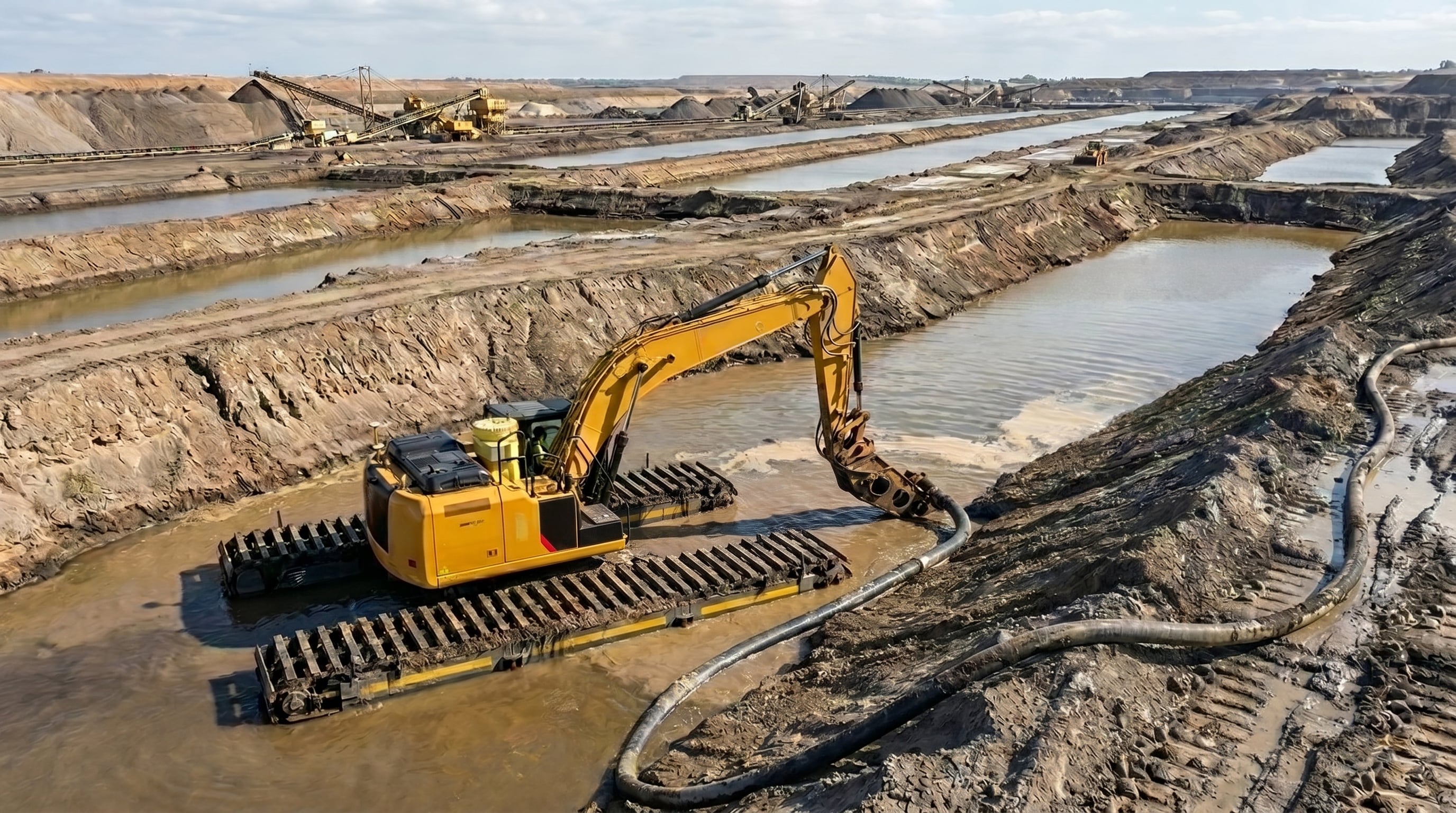
Mining canals, ditches, ponds, sumps, and basins are designed to move or hold water. Once sediment settles, the system slowly loses capacity. The channel becomes shallower, water velocity changes, pumps work harder, and the site becomes more exposed to flooding or process interruption.
The problem usually gets worse when it is delayed. Loose sediment can become compacted. Fine material can consolidate. Access can become more difficult. What could have been a planned maintenance project becomes an emergency dredging job.
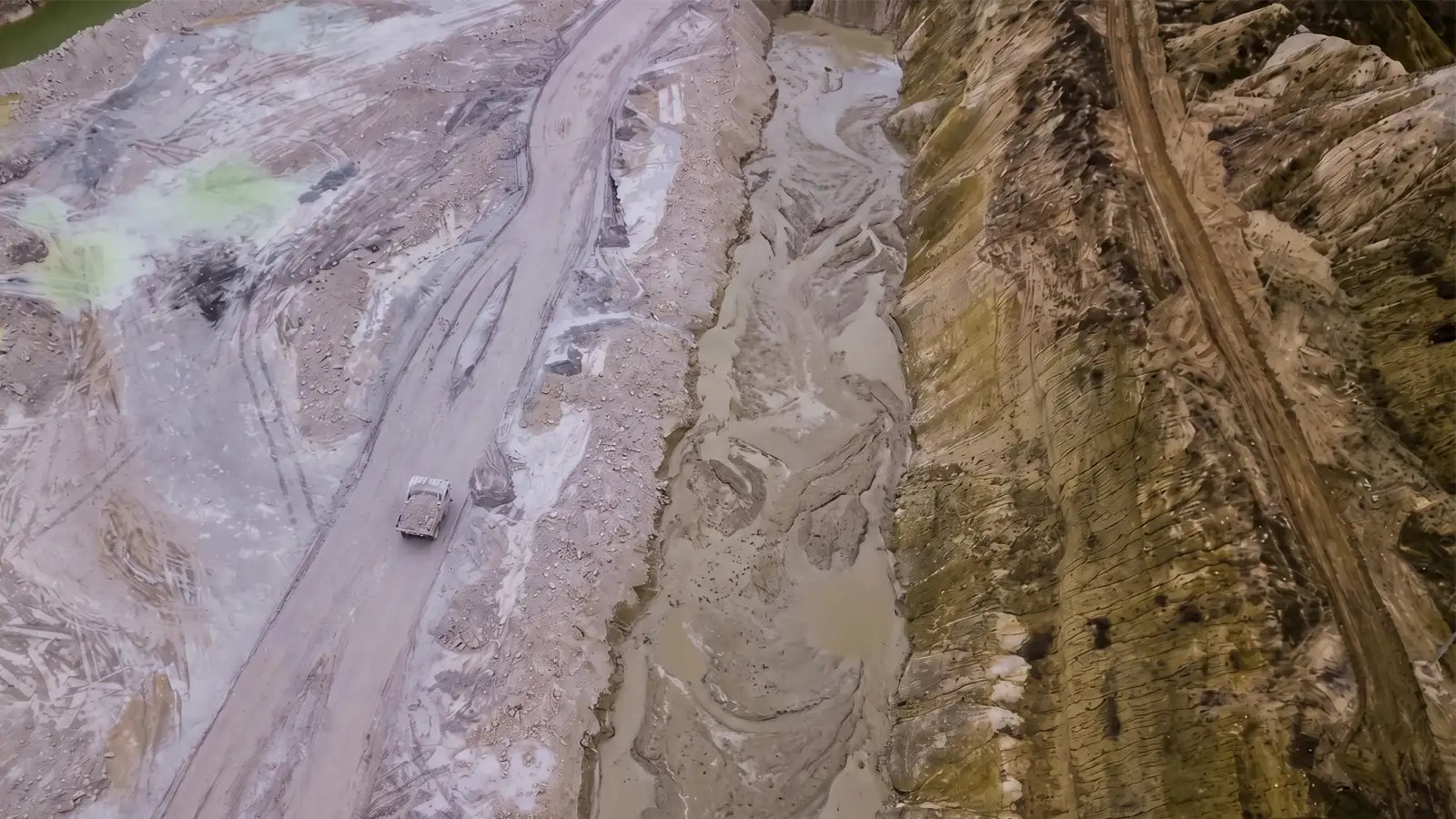
Mine drainage canals often require periodic sediment removal to restore flow capacity and reduce the risk of flooding, pump strain, and unplanned shutdowns. For a practical overview of planning access, selecting equipment, and clearing accumulated material, read our guide to mine drainage canal sediment removal.
Challenge 2: The Material Is Abrasive, Dense, and Inconsistent
Mining sediment is not one clean, predictable material. One section may contain fine tailings. Another may contain sand and grit. Another may include clay, scale, rocks, organics, or debris. That variability is where many standard pumps struggle.
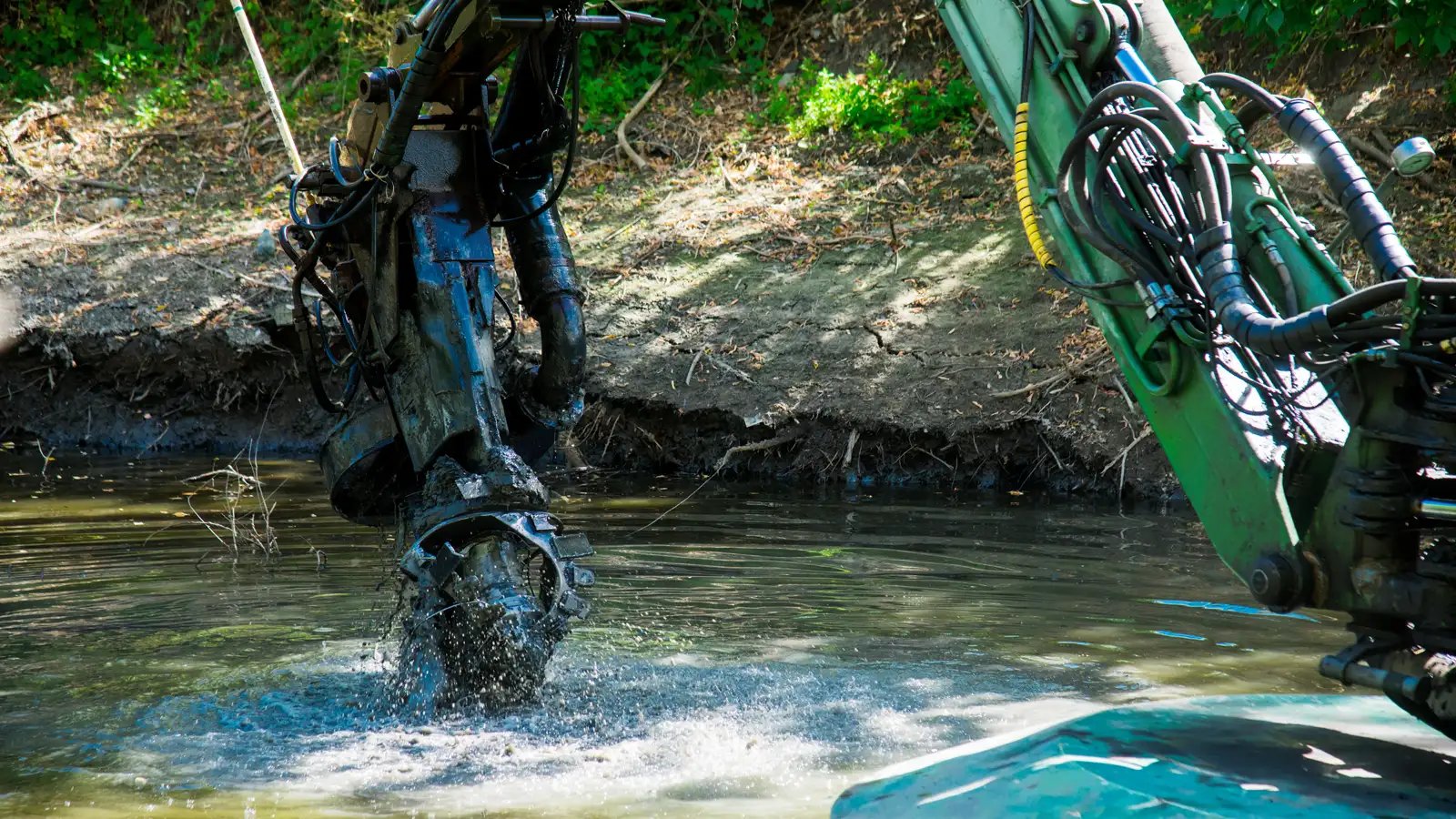
Abrasive solids wear impellers, casings, liners, hoses, elbows, seals, and valves. Large particles can clog equipment that was not designed for solids passage. Sticky or clay-rich material can increase viscosity and power demand. Coarse material can settle quickly if the pipeline velocity is too low.
This is where the EDDY Pump technology overview becomes important. The pump uses a recessed rotor and open internal flow path to help move abrasive, high-solids material with fewer tight passages where solids typically clog or bind.
Challenge 3: Standard Pumps Are Often Mismatched to the Job
The wrong pump can create more downtime than the dredging project itself. A standard dewatering pump may move water, but mine dredging requires the pump to move solids. If the pump cannot pass the material, maintain velocity, or handle the slurry density, the operation becomes a cycle of clogging, shutdowns, clearing, restarting, and repair.
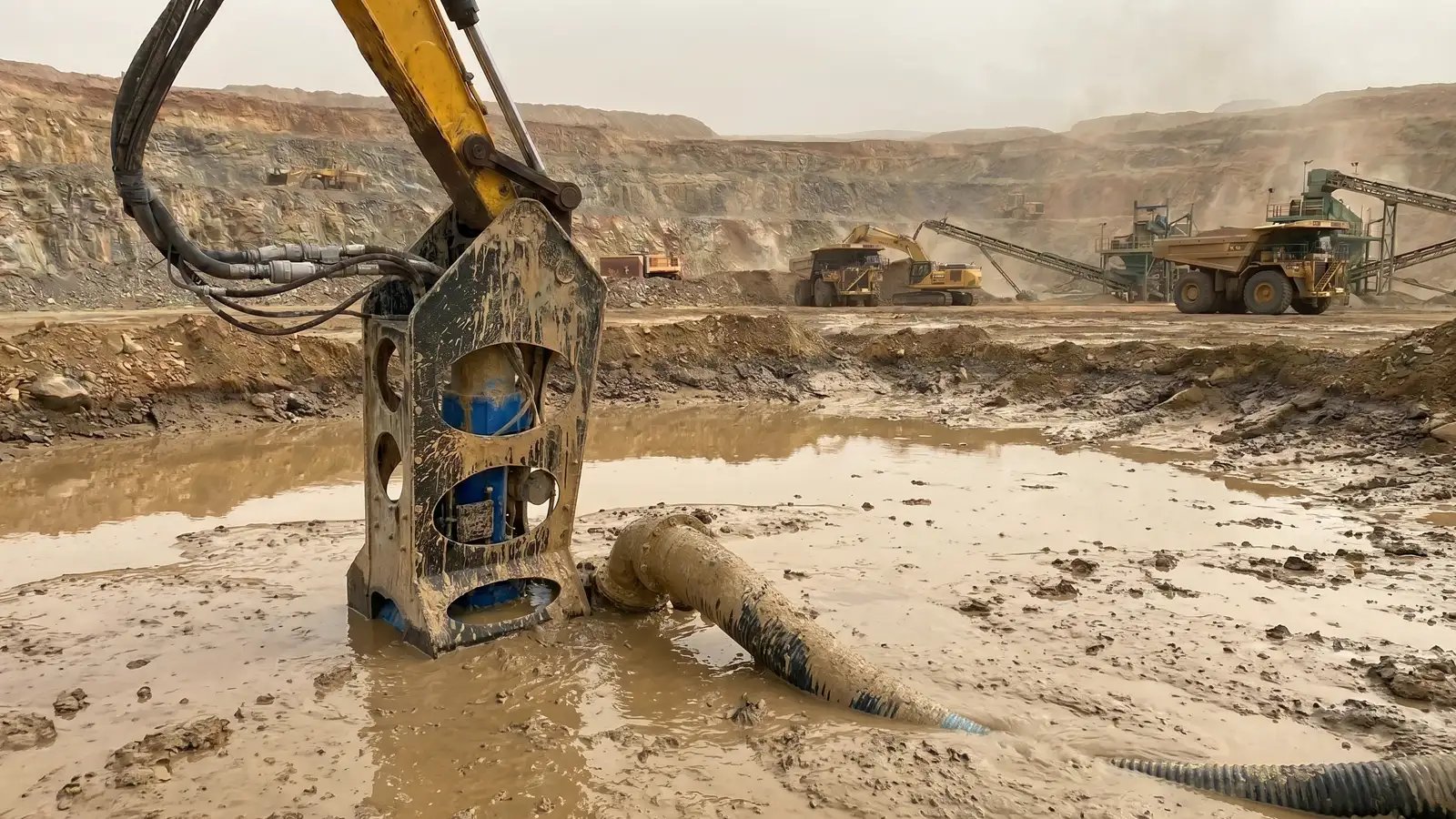
The better starting point is to define the duty before selecting equipment. That means understanding the solids percentage by weight, slurry specific gravity, particle size, maximum debris size, flow target, discharge distance, elevation change, pipe diameter, and available power.
Challenge 4: Access Is Often Worse Than the Material
A mine may know exactly where the sediment is, but still not have an easy way to reach it. Canals may have narrow berms. Ponds may have soft edges. Tailings areas may require long reach. Pits may be too deep for conventional equipment. Active production areas may limit where machines can travel.
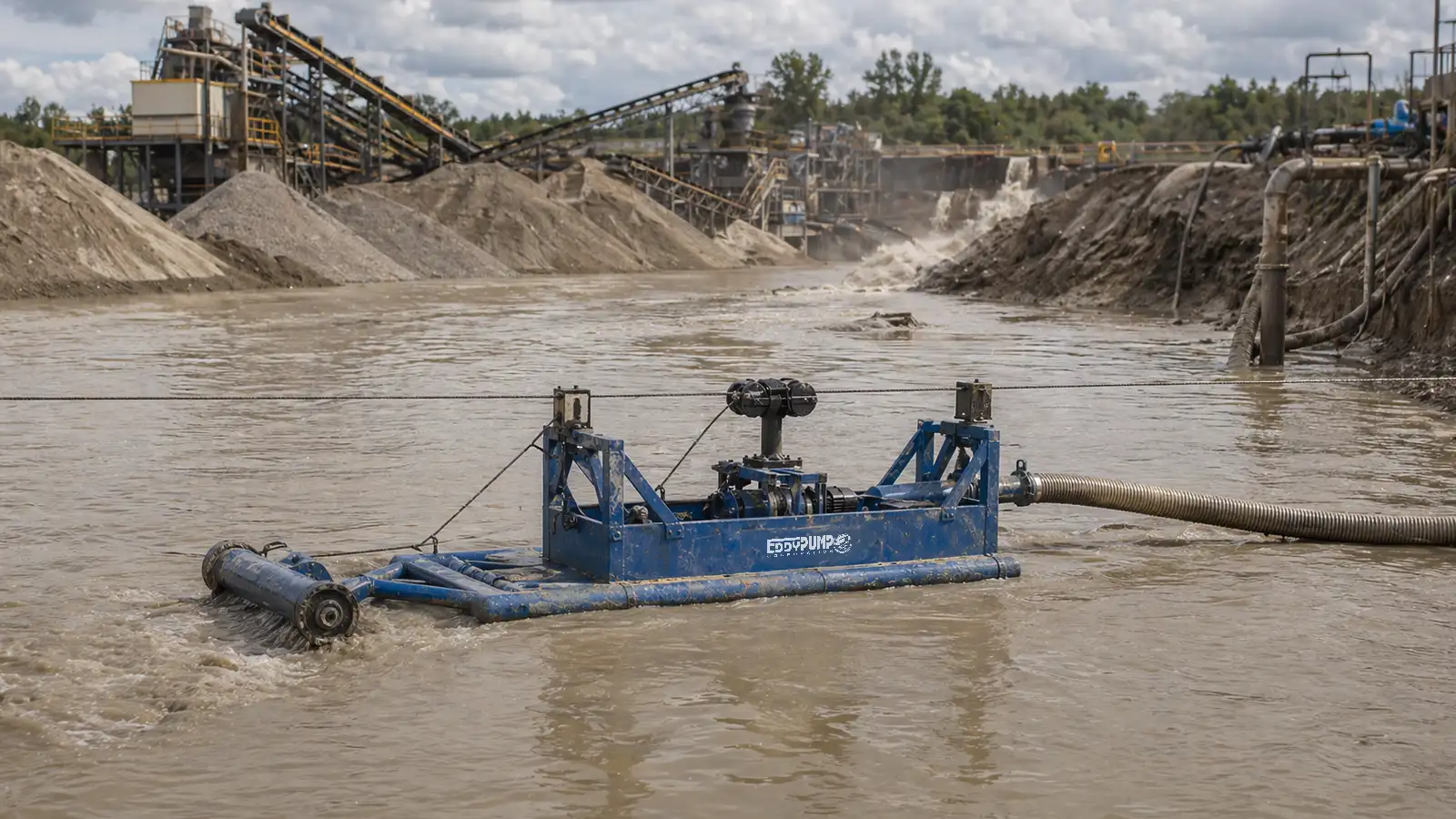
That is why dredging configuration matters as much as pump size. In one location, an excavator attachment may be the fastest solution. In another, the right answer may be a cable-deployed pump, a floating dredge, a Dredge Sled, or a modular remote-operated system.
Challenge 5: Long Discharge Distances Create Pipeline Problems
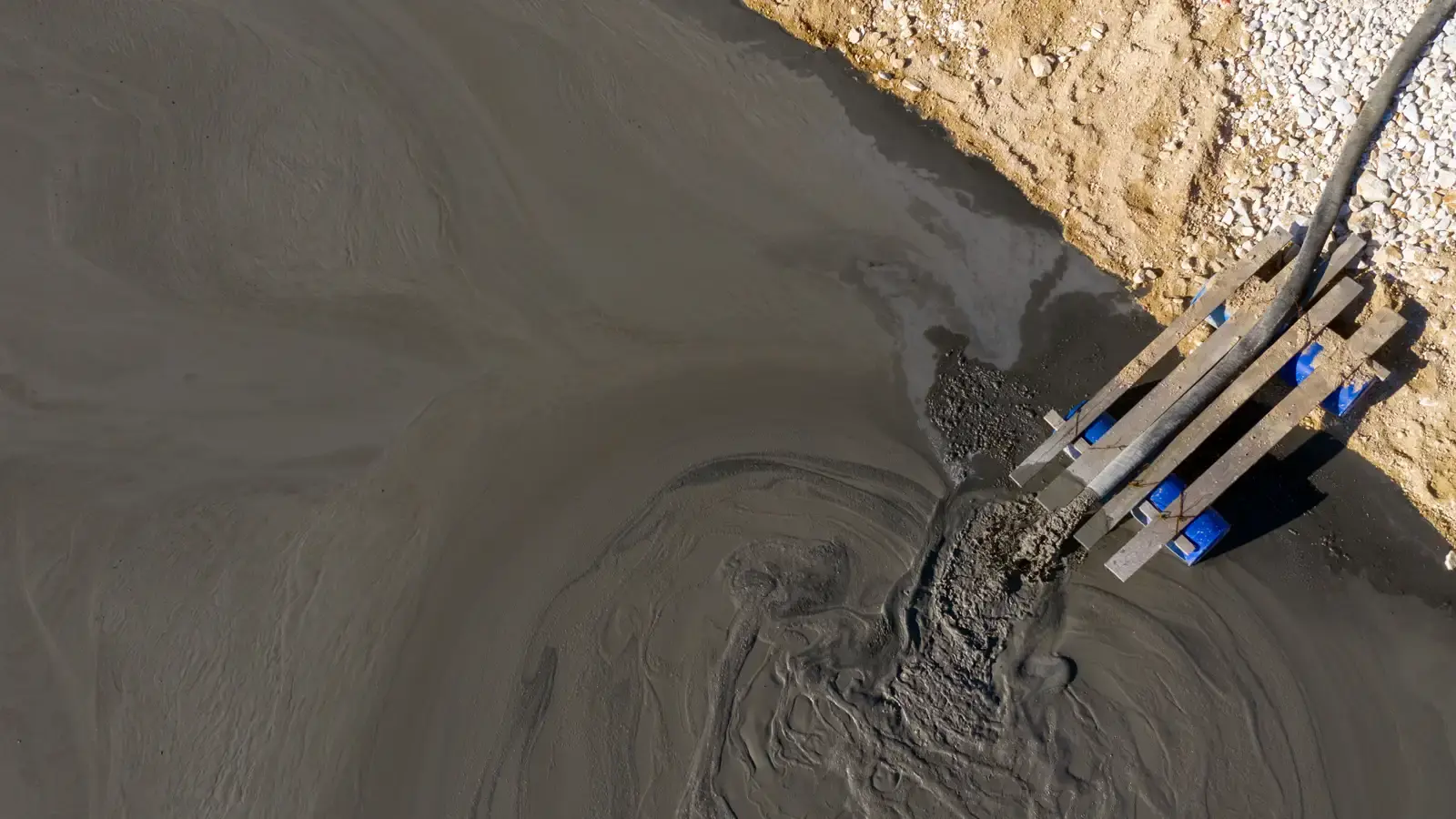
Removing sediment is only half the job. The material still has to travel to a settling pond, tailings area, processing plant, geotube, barge, or disposal location. Long pipelines add friction loss. Elevation changes add head. Bends, valves, hose sections, and fittings add resistance. Dense slurry increases the required power.
For long-distance discharge, mines may need booster pump support to maintain pressure and slurry velocity. The goal is to keep solids moving through the line so material does not settle, plug the pipe, or force repeated shutdowns.
Which EDDY Pump Dredging Configuration Fits the Challenge?
There is not one dredging solution for every mining site. The best fit depends on access, water depth, sediment type, solids size, production target, discharge distance, and whether the customer needs a mobile, shore-based, cable-deployed, or floating system.
|
Mining Challenge |
Best EDDY Pump Starting Point |
Why It Fits |
|---|---|---|
|
Sediment within excavator reach |
Excavator Pump Attachment |
Converts an excavator into a high-solids dredging system for canals, ponds, shorelines, pits, and tailings areas. |
|
Shoreline or land-based dredging with self-priming needs |
Self-Priming Excavator Pump & Bucket |
Combines excavation, cutterhead agitation, self-priming pumping, and discharge transfer in one attachment-based system. |
|
Deep pits, tanks, or areas with limited surface access |
Cable-Deployed Dredge Pump |
Pump can be lowered into the material where excavators or floating dredges are not practical. |
|
Lagoon, pond, or basin cleaning |
Dredge Sled or Mini Auger ModDredge |
Good fit where sediment is spread across a pond, lagoon, or basin and the site needs a compact dredging method. |
|
Large production targets or repeat dredging programs |
ModDredge |
Modular dredge package designed for high-solids pumping, remote operation, and faster mobilization than traditional dredges. |
|
Existing plant, sump, or pit transfer |
Submersible Slurry Pump |
Places the pump directly in the material source and reduces suction-lift limitations. |
|
Long pipeline, high friction, or elevation change |
Booster Pump |
Adds head and helps maintain slurry velocity over longer discharge distances. |
How to Reduce Mining Dredging Disruption
1. Survey the sediment before choosing equipment
Use bathymetry, probing, drone data, operator observations, or historical cleanout records to understand where sediment is accumulating and how much needs to be removed.
2. Sample the material
Identify the solids concentration, slurry density, particle size, abrasiveness, clay content, debris risk, pH, and settling behavior. The pump selection should be based on the worst realistic condition, not only the average.
3. Define the discharge route
Confirm where the material is going, how far it must travel, the pipe size, elevation change, bends, valves, and whether booster support is needed.
4. Match the dredging configuration to access
Choose the deployment method around the site. Excavator, cable-deployed, sled, modular dredge, or floating system selection should be based on reach, ground conditions, water depth, safety, and production goals.
5. Plan for partial operation where possible
Many hydraulic dredging approaches can reduce downtime by working in water or in phases instead of requiring a full canal shutdown or complete dewatering.
6. Monitor production and pipeline velocity
Flow, pressure, solids concentration, and discharge behavior help operators avoid settling, clogging, or overloading the pump and power package.
For projects where the duty point is unclear, EDDY Pump can prepare a custom pump curve using the actual material, slurry density, discharge distance, elevation, pipe size, and production target.
What Data Should a Mine Provide Before Sizing a Dredge Pump?
The more specific the application data, the faster the engineering review becomes. Before requesting a dredging recommendation, gather the following information.
|
Application Data |
Site and System Data |
|---|---|
|
Material being dredged |
Water depth and sediment depth |
|
Percent solids by weight |
Discharge distance and pipe diameter |
|
Slurry specific gravity or density |
Elevation change and pipeline route |
|
Maximum and typical particle size |
Available excavator, electric, diesel, or hydraulic power |
|
Abrasiveness, clay content, stickiness, and debris |
Access limitations, berm strength, and staging area |
|
Target production rate in yd3/hr or tons/hr |
Operating window, duty cycle, and compliance requirements |
How EDDY Pump Technology Helps in Mining Dredging
EDDY Pump is strongest where the material is difficult. The pump is designed with a recessed rotor and open internal geometry that helps move high-solids slurry, abrasive sediment, rocks, sand, gravel, tailings, ash, and other dense materials with fewer clogging points than many conventional pump designs.
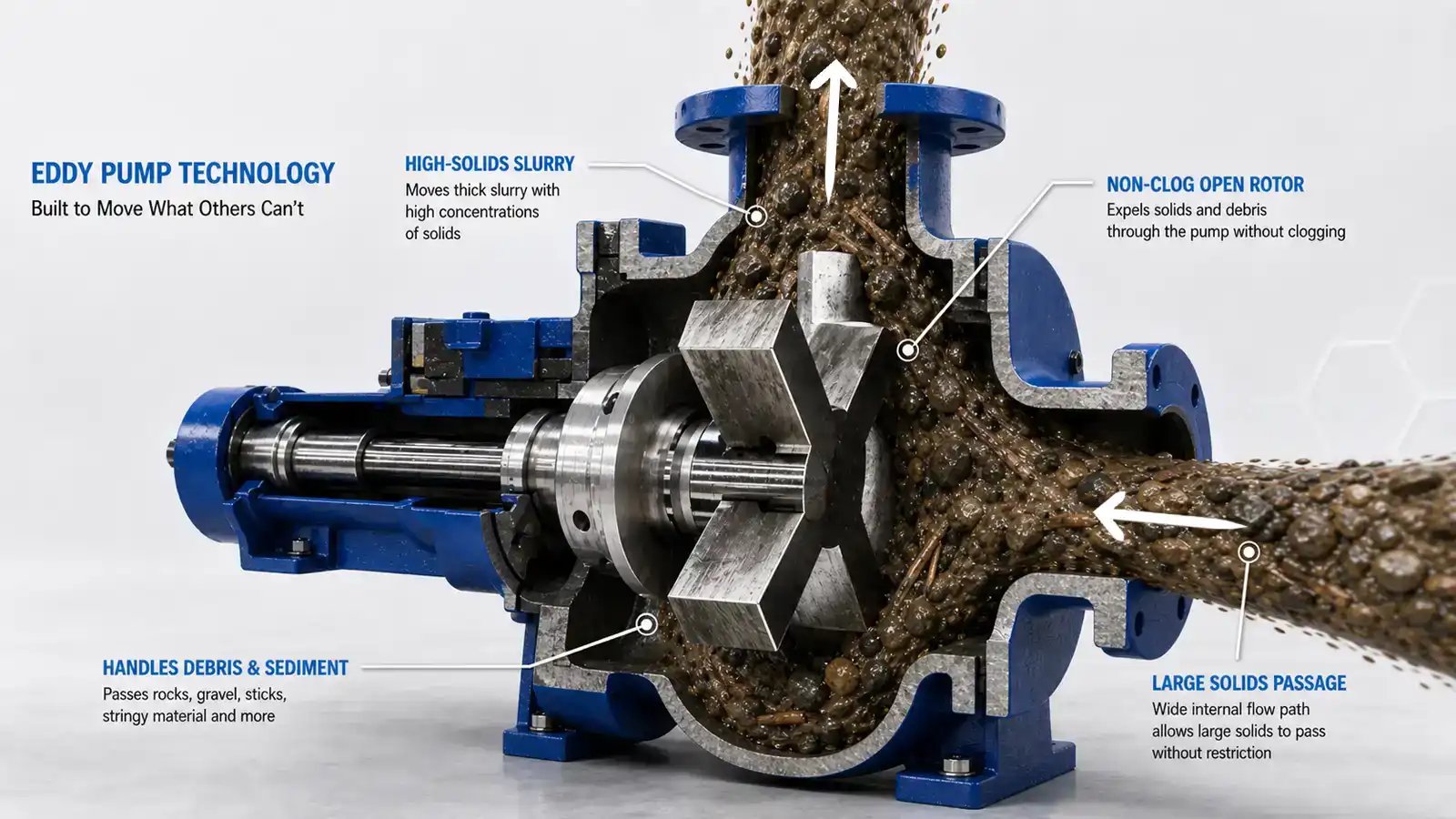
The technology does not remove the need for proper sizing. The pump, power package, intake or cutterhead, pipeline, booster support, and operating speed still need to be matched to the application. But starting with a pump designed for solids gives the project a better foundation than trying to force a clean-water pump into a mining dredging job.
For compact, high-production dredging in lined or sensitive areas, the Mini Auger ModDredge may also be a useful related configuration to include in the buyer journey.
Common Signs the Current Dredging Setup Is Not Working
- The pump clogs repeatedly or requires manual clearing.
- Production rate drops as the job continues.
- The system moves more water than usable solids.
- Material settles in the pipeline or discharge hose.
- Wear parts, seals, elbows, or hoses fail faster than expected.
- The site has to stop production or dewater more area than planned.
- The dredge cannot reach the sediment without building temporary access.
- The discharge distance is too long for one pump to maintain stable slurry velocity.
|
Practical Buyer Guidance If the dredging equipment is creating the downtime it was supposed to solve, the issue is usually a mismatch between the material, access, pump configuration, pipeline, and power package. A better dredging plan should reduce the number of shutdowns, not simply move the same problem to another part of the site. |
Frequently Asked Questions
What are the biggest mining dredging challenges?
The biggest challenges are abrasive slurry, sediment buildup, limited access, high solids concentration, long discharge distance, clogging, pump wear, environmental controls, and production downtime.
Why do standard pumps fail in mining dredging?
Many standard pumps are designed for water or lighter-duty service. Mining dredging involves dense slurry, grit, rocks, tailings, sand, clay, and debris that can clog narrow passages and wear internal components quickly.
Can mining dredging be done without shutting down the whole canal or pond?
In many cases, yes. Hydraulic dredging systems can often work in water or in phases, which may allow the mine to keep partial flow or production capacity available during sediment removal.
What EDDY Pump equipment is best for mine canal dredging?
The best starting point depends on access. Excavator pump attachments are useful where the excavator can reach the canal. Cable-deployed pumps help in deep or difficult locations. Dredge Sled, Mini Auger ModDredge, and ModDredge systems may fit larger pond, lagoon, or repeat-cleanout projects.
When does a mining dredging project need booster pumps?
Booster pumps should be reviewed when discharge distance, elevation change, pipe friction, slurry density, or production targets exceed what one pump can reliably support. Booster support helps maintain slurry velocity and reduce settling risk in long pipelines.
What information is needed to size a mining dredge pump?
Provide the material type, percent solids by weight, slurry density, particle size, abrasiveness, water depth, sediment depth, flow or production target, pipe size, discharge distance, elevation change, and available power.
Does high-solids pumping always increase production?
Not automatically. Higher solids concentration can improve production only when the pump, intake, power package, and pipeline can move the denser slurry reliably. If the slurry settles, overloads the drive, or becomes too viscous, production can decrease.
How can EDDY Pump help reduce dredging downtime?
EDDY Pump helps by matching the pump platform, dredging configuration, power package, pipeline, and booster support to the actual material and site conditions. The goal is to move more usable solids with fewer clogs, fewer interruptions, and a better planned maintenance window.
Next Step: Build the Dredging Plan Around the Material
Mining dredging problems are rarely solved by choosing a pump from a size chart alone. The right plan starts with the material and works outward: solids concentration, particle size, slurry density, access, discharge distance, pipe size, elevation, production target, and available power.
Send EDDY Pump the project details and talk to an application specialist about the best dredging configuration for your mining operation.