Dredge pump maintenance is not just a shop task. It is what keeps the dredge producing when the material is abrasive, the discharge line is long, and a shutdown would stop the entire job.
In dredging, the pump is moving more than water. It may be moving sand, silt, gravel, sludge, mine tailings, ash, shells, rocks, or compacted sediment. Those solids wear against the rotor or impeller, liners, wear plates, seals, bearings, hoses, and discharge pipeline every hour the system runs.

That is why the best maintenance plan is not a generic calendar reminder. It should be built around the material, duty cycle, pump configuration, wear pattern, and production goal.
This guide gives operators, project engineers, and maintenance managers a practical checklist for maintaining slurry pumps and dredge pumps in abrasive service. It also shows when maintenance alone is not enough, and when the better answer may be a different pump configuration, wear package, discharge setup, or application-specific pump curve.
|
Summary A dredge pump maintenance checklist is a structured inspection and service plan for the parts that wear fastest in abrasive slurry service: the rotor or impeller, wear plates, liners, shaft seal, bearings, drive system, hoses, and discharge pipeline. The goal is to catch wear early, replace sacrificial parts before they damage major components, and keep the system operating near the intended duty point. The best checklist should be adjusted to the actual slurry, solids size, abrasiveness, run hours, discharge distance, and pump configuration. |
Key Takeaways
- Abrasive wear is expected in dredging. The goal is to manage it before it becomes unplanned downtime.The highest-value checks are usually seal condition, bearing temperature, flow change, vibration, wear-part thickness, and discharge-line condition.
- Maintenance intervals should be based on run hours, material abrasiveness, solids concentration, particle size, and wear logs - not a guessed calendar date.
- A falling flow rate, rising power draw, new vibration, weeping seal, or hotter bearing is often an early warning that the pump needs attention.
- EDDY Pump can support the maintenance plan with pump selection, wear parts, service support, and application-specific review for high-solids dredging systems.
Why Dredge Pump Maintenance Matters More in Abrasive Service
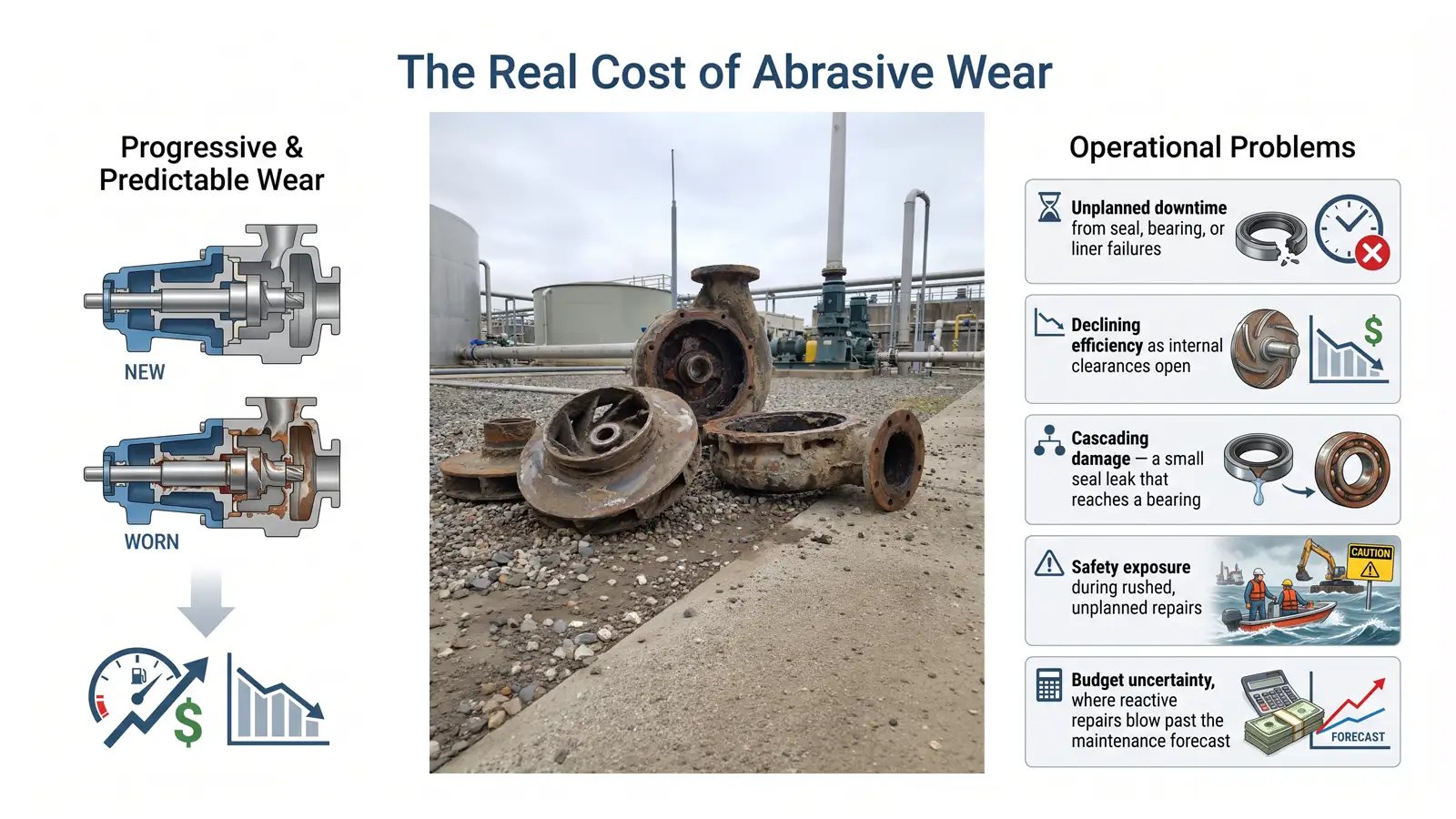
For a dredging contractor or plant operator, the pump is rarely the only cost. The expensive part is what happens when the pump stops. The excavator, barge, crew, booster pump, pipeline, dewatering area, and schedule can all sit idle while the team diagnoses a seal leak, worn liner, plugged discharge hose, or bearing issue.
Wear usually starts quietly. Internal clearances open. The pump moves less material for the same power. Fuel or energy cost per cubic yard starts to rise. The crew may compensate by running longer, adding more water, or pushing the pump harder. Then a manageable wear issue turns into a seal failure, bearing failure, liner breach, or emergency rebuild.
A maintenance checklist turns that cycle around. Instead of waiting for the pump to fail, the team inspects the parts most likely to wear, tracks the trend, and schedules the repair before the job is forced to stop.
How Abrasive Wear Happens Inside a Dredge Pump
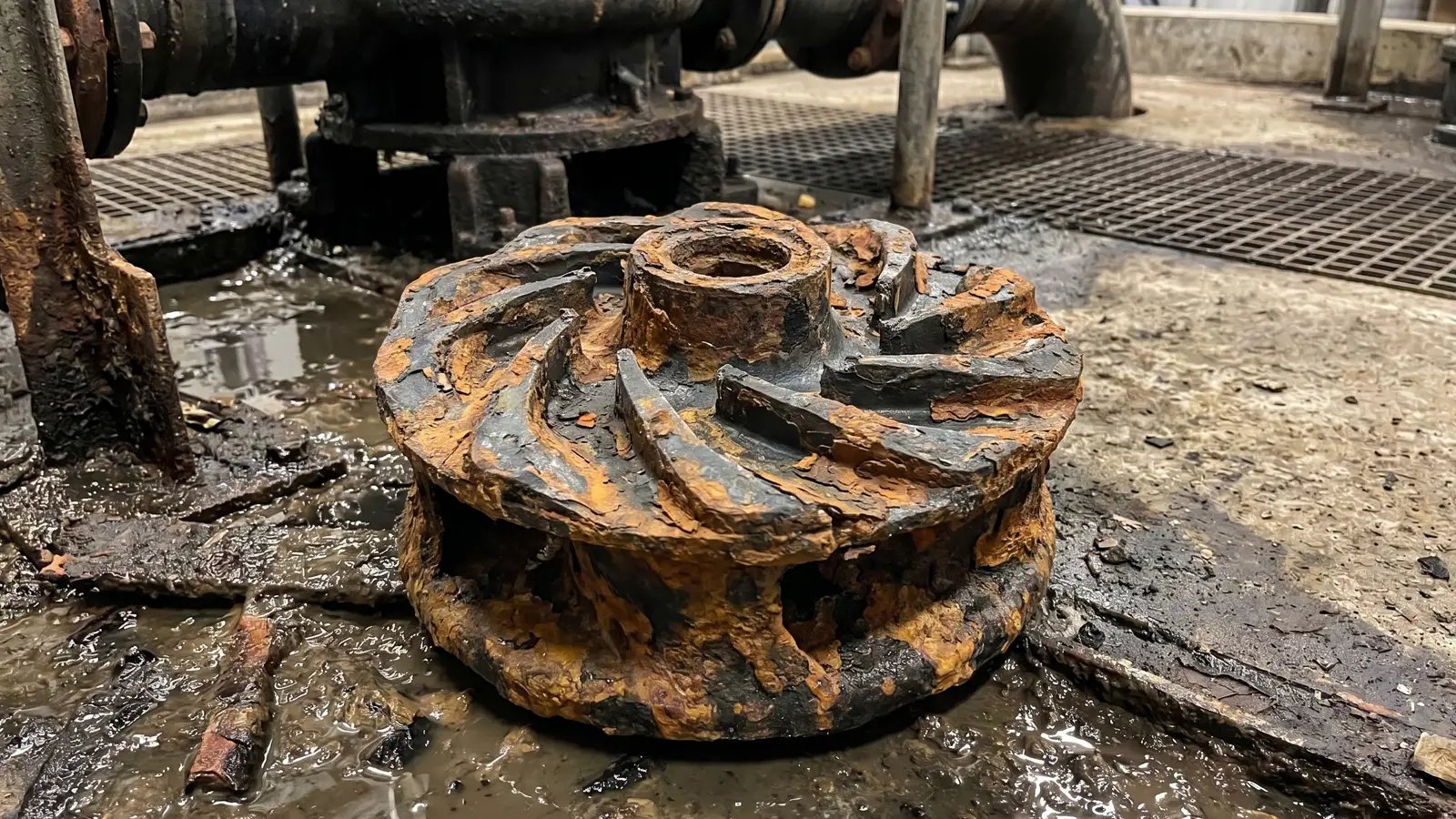
A dredge pump moves a mixture of liquid and solids. Every pass through the pump exposes wetted parts to erosion, impact, turbulence, and sometimes corrosion. Wear is usually worse when the slurry has high solids concentration, sharp or angular particles, larger rocks, high velocity, long run hours, or poor intake conditions.
|
Wear Area |
What Happens |
Why It Matters |
|
Rotor or impeller |
The rotating element takes particle contact and erosion over time. |
Changes in the hydraulic profile can reduce flow and efficiency before the part fails. |
|
Wear plates and liners |
Sacrificial surfaces absorb erosion instead of letting the casing take the damage. |
Tracking liner wear protects the more expensive pump housing. |
|
Shaft seal |
Abrasive material or poor flushing can damage the seal and allow leakage. |
A small seal leak can become a bearing or motor failure if ignored. |
|
Bearings and shaft |
Contamination, misalignment, heat, and lubrication issues shorten bearing life. |
Bearing failure can turn a wear-part job into a major rebuild. |
|
Hoses and pipeline |
Abrasive slurry thins hoses and wears elbows, bends, reducers, and high-velocity sections. |
Pipeline failure can stop production and create cleanup or safety issues. |
Where EDDY Pump Design Fits Into Maintenance
EDDY Pump is built around a recessed rotor and open internal flow path that help keep solids moving through the pump. That does not eliminate maintenance. No dredge pump is wear-proof in sand, gravel, tailings, ash, or sludge. But the design is intended to reduce the tight internal restrictions that often create clogging and concentrated wear in conventional pump designs.
The practical benefit is a better maintenance conversation. Instead of only asking, "How long will this pump last?" the better question is, "How will this system wear, how will we inspect it, and how quickly can we service it when the wear parts reach their limit?"
For applications where the material, discharge distance, flow, head, or solids concentration are uncertain, EDDY Pump recommends an application-specific review and custom pump curve rather than relying only on a clean-water curve.
The Dredge Pump Maintenance Checklist
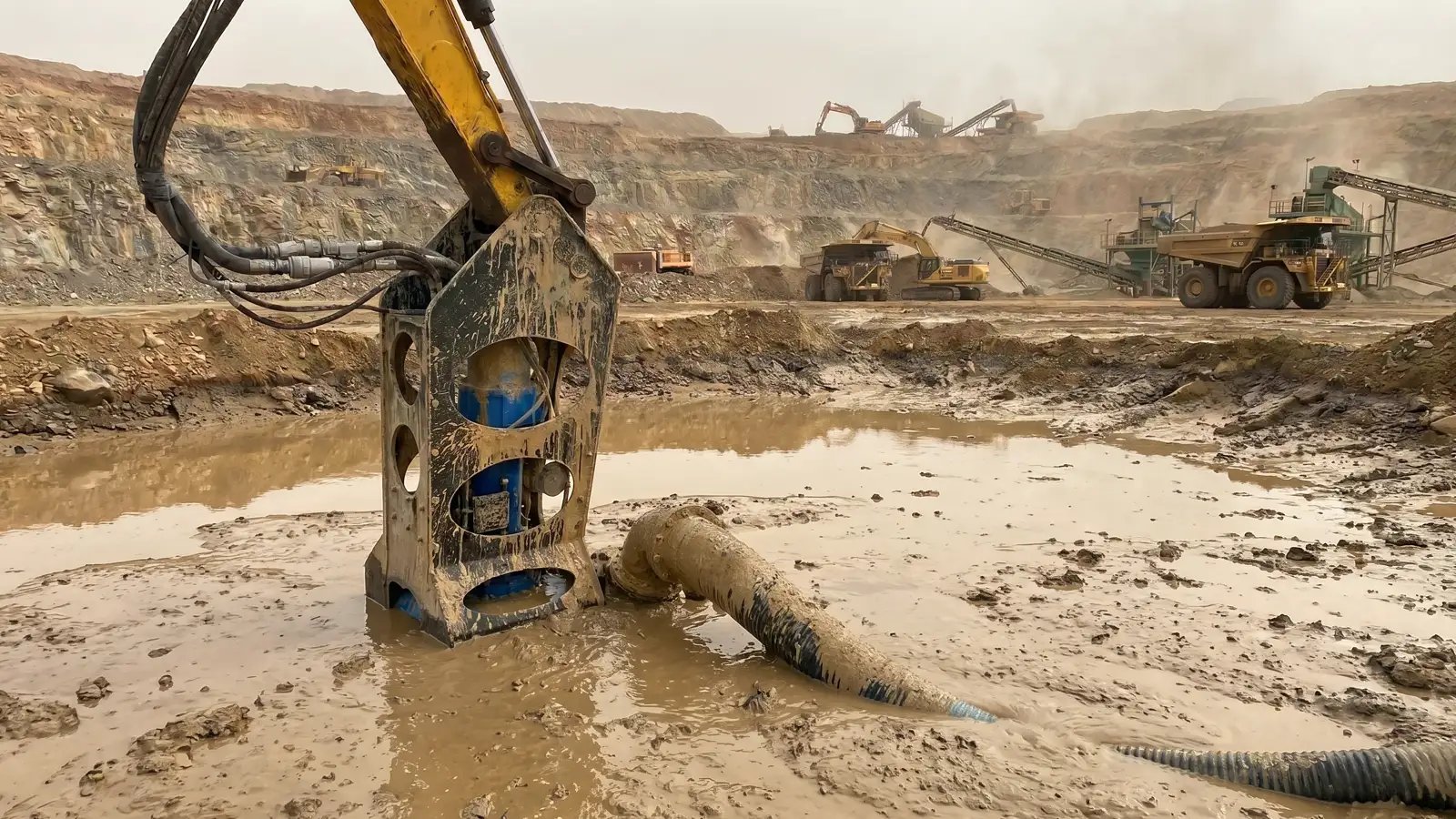
Use the checklist below as a starting point. Then tune the intervals to the job. Coarse sand, gravel, mine tailings, ash, and high-solids dredging usually shorten the inspection window. Cleaner or intermittent duty may extend it. The important thing is to log what you find so the next repair is predicted, not guessed.
Daily or Per-Shift Checks
|
Item |
What to Look For |
Why It Matters |
|
Seal condition |
Weeping, dripping, flush-flow change, slurry at the seal area |
Early seal leaks protect bearings and drive components from grit. |
|
Bearing temperature and sound |
Heat, new vibration, grinding, rattling, or high-pitched noise |
Temperature and sound changes often appear before failure. |
|
Flow and production rate |
Reduced flow, lower solids production, inconsistent discharge |
A drop in flow can signal wear, blockage, air, or intake problems. |
|
Power draw or hydraulic pressure |
Rising motor amps, higher fuel load, pressure spikes, hydraulic leaks |
The system may be working harder because of wear, blockage, or pipeline resistance. |
|
Suction and intake area |
Trash, rocks, matting, air entrainment, poor submergence, compacted material |
Poor feeding increases wear and reduces production. |
|
Discharge line |
Leaks, soft spots, worn bends, pressure changes, hose movement |
Pipeline problems can create downtime even when the pump is healthy. |
|
Lubrication |
Correct level, contamination, water, unusual color or odor |
Bearing life depends on clean, correct lubrication. |
Weekly or Monthly Checks
|
Item |
Action |
What the Trend Tells You |
|
Wear plates and liners |
Measure or inspect wear depth and compare to the last reading. |
Shows how quickly the slurry is consuming sacrificial parts. |
|
Rotor or impeller |
Inspect leading edges, surfaces, and clearance where applicable. |
Identifies erosion that can reduce flow and change performance. |
|
Seal assembly |
Inspect mechanical seal, packing, or flush system for leakage and wear. |
Prevents slurry contamination from reaching bearings or motor components. |
|
Coupling and alignment |
Check alignment and coupling condition on driven packages. |
Misalignment accelerates seal, shaft, and bearing wear. |
|
Hydraulic or power package |
Inspect hoses, fittings, filters, cooling, power supply, and controls. |
A weak or unstable power package can make pump problems worse. |
|
Fasteners and mounts |
Check casing, base, skid, attachment, and mount bolts. |
Vibration can loosen hardware and create secondary damage. |
|
System flush |
Flush pump and line after high-solids runs where appropriate. |
Clears settled abrasive material before restart. |
|
Hoses and pipeline |
Inspect bends, reducers, high-wear sections, and connection points. |
Pipeline wear can become the hidden source of downtime. |
Scheduled Teardown or Overhaul
The best teardown interval is based on the wear log, not a guessed date. During a planned shutdown, disassemble the pump, inspect every wetted component, replace parts that are past their wear limit, reassemble to specification, and test against the expected performance range before returning the system to service.
- Replace liners, wear plates, rotor/impeller, and seals that are beyond their wear limit.
- Inspect bearings, shaft condition, runout, and lubrication history.
- Confirm alignment, clearances, torque requirements, and hydraulic or electrical connections.
- Compare flow, head, power draw, vibration, and production rate against the baseline.
- Update the maintenance log with parts replaced, run hours, material handled, and failure notes.
How to Know Whether Maintenance Is Enough
Sometimes the problem is not the maintenance plan. Sometimes the pump or system was never a good fit for the application. If the same failure keeps returning, the next step is not just another repair. It is a system review.
|
What You See |
Likely Meaning |
Possible Next Step |
|
Constant plugging |
Solids are too large, too fibrous, or not being fed correctly. |
Review solids passage, intake/agitation, pump type, and pipe layout. |
|
Fast liner or wear-plate loss |
Material is more abrasive or moving faster than expected. |
Review materials, velocity, duty point, and wear package. |
|
Seal failures repeat |
Seal is exposed to grit, poor flush, misalignment, or excessive vibration. |
Review seal arrangement, flush, bearings, alignment, and operating conditions. |
|
Flow keeps falling after repair |
Pump is operating away from the intended curve or system resistance changed. |
Review pump curve, pipe length, elevation, bends, slurry density, and speed. |
|
Motor or hydraulic system overloads |
The slurry load or discharge resistance is too high for the driver. |
Review power package, pump speed, pipeline, and booster support. |
|
Solids settle in the line |
Velocity is too low or the discharge run is too long for the current setup. |
Review pipe size, velocity, booster placement, and slurry concentration. |
Choosing the Right Maintenance Strategy
There is no single maintenance strategy for every dredging operation. Most teams use a scheduled checklist as the backbone and add condition-based monitoring when the equipment is critical, remote, or handling extremely abrasive material.
|
Strategy |
How It Works |
Advantage |
Best Fit |
|
Reactive |
Repair after failure. |
Lowest upfront effort. |
Backup units, short jobs, or non-critical equipment. |
|
Preventive |
Inspect and replace parts on planned intervals. |
Predictable and easier to schedule. |
Most dredging operations with known material and run hours. |
|
Predictive |
Use condition data such as wear logs, vibration, flow, pressure, and power trends. |
Maximizes part life and reduces surprise failures. |
High-value, continuous-duty, remote, or highly abrasive projects. |
Where Maintenance Matters Most
A disciplined checklist has the biggest payoff when downtime stops more than a single pump. These are the jobs where planned maintenance, spare wear parts, and engineering support matter most:
- Mining and mineral processing - tailings, sand, aggregate, and high-specific-gravity slurry.
- Dredging and land reclamation - sediment, sand, shells, and abrasive material that can idle an entire spread.
- Wastewater and industrial basins - grit, sludge, settled solids, and debris in continuous-duty service.
- Environmental and remediation dredging - contaminated or regulated sediment where controlled production matters.
- Ash ponds and industrial cleanup - fly ash, bottom ash, scale, grit, or abrasive waste streams.
Match the Pump Configuration to the Maintenance Reality
Maintenance is easier when the system is selected for the way the job will actually run. A pump that works well in a clean test pit may be the wrong choice for a remote mine pond, a lined lagoon, a long discharge line, or an excavator-based dredging job.
|
Configuration |
When It Fits |
Maintenance / Service Consideration |
|
Submersible slurry pump |
The pump can operate directly in the sump, pit, pond, or basin. |
Inspect cable, motor cooling, suction area, solids buildup, and wear components. |
|
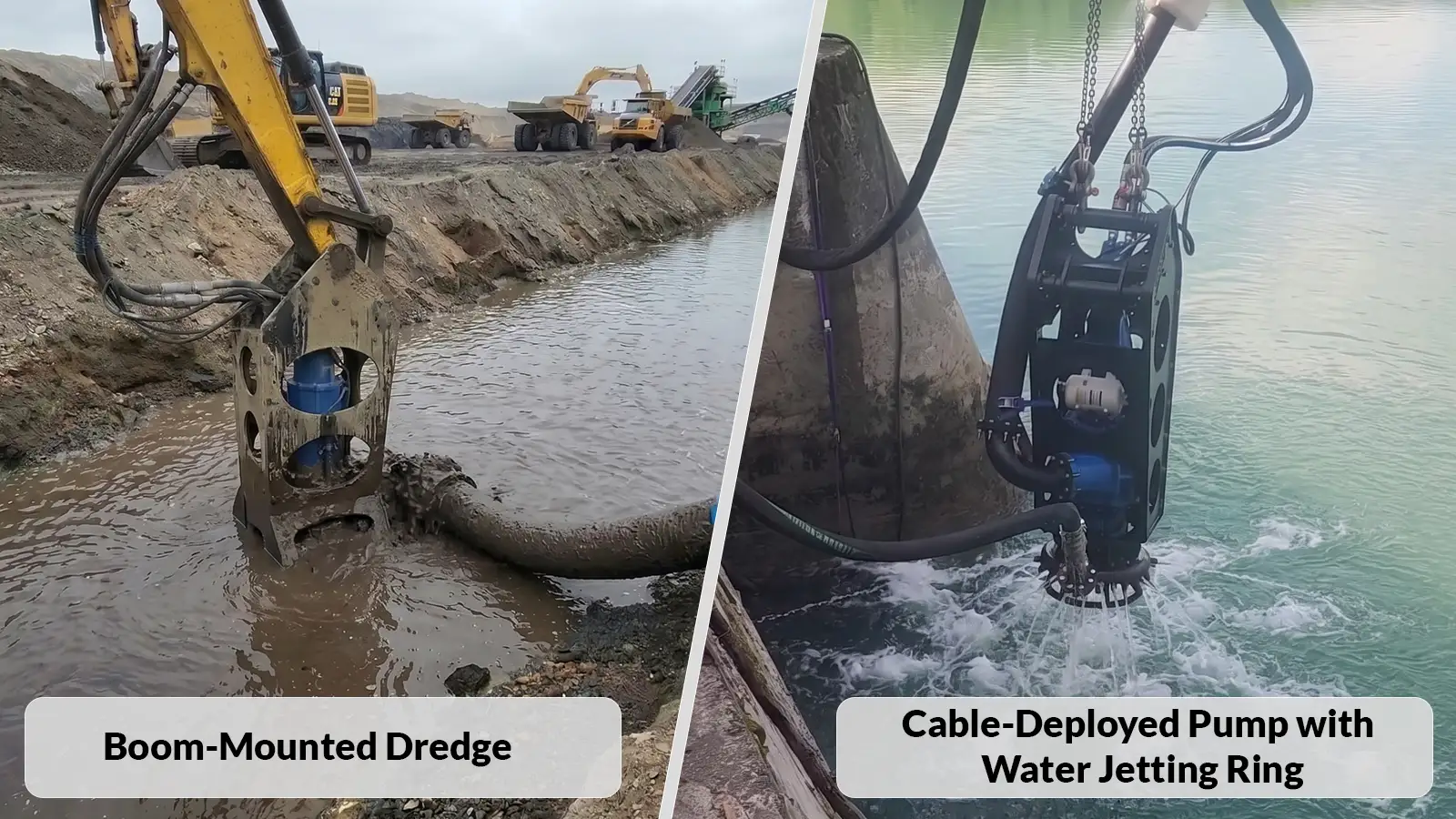
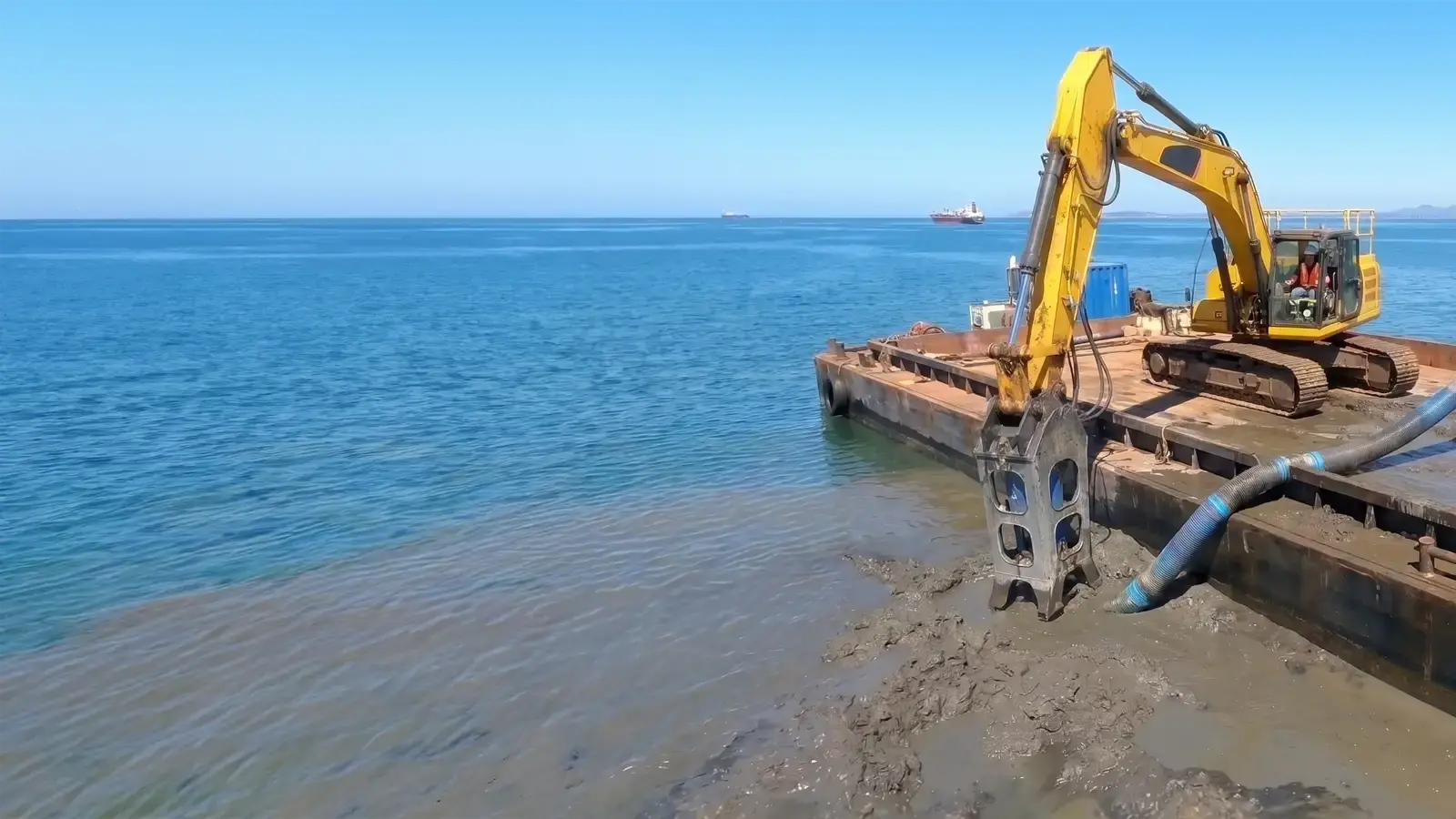
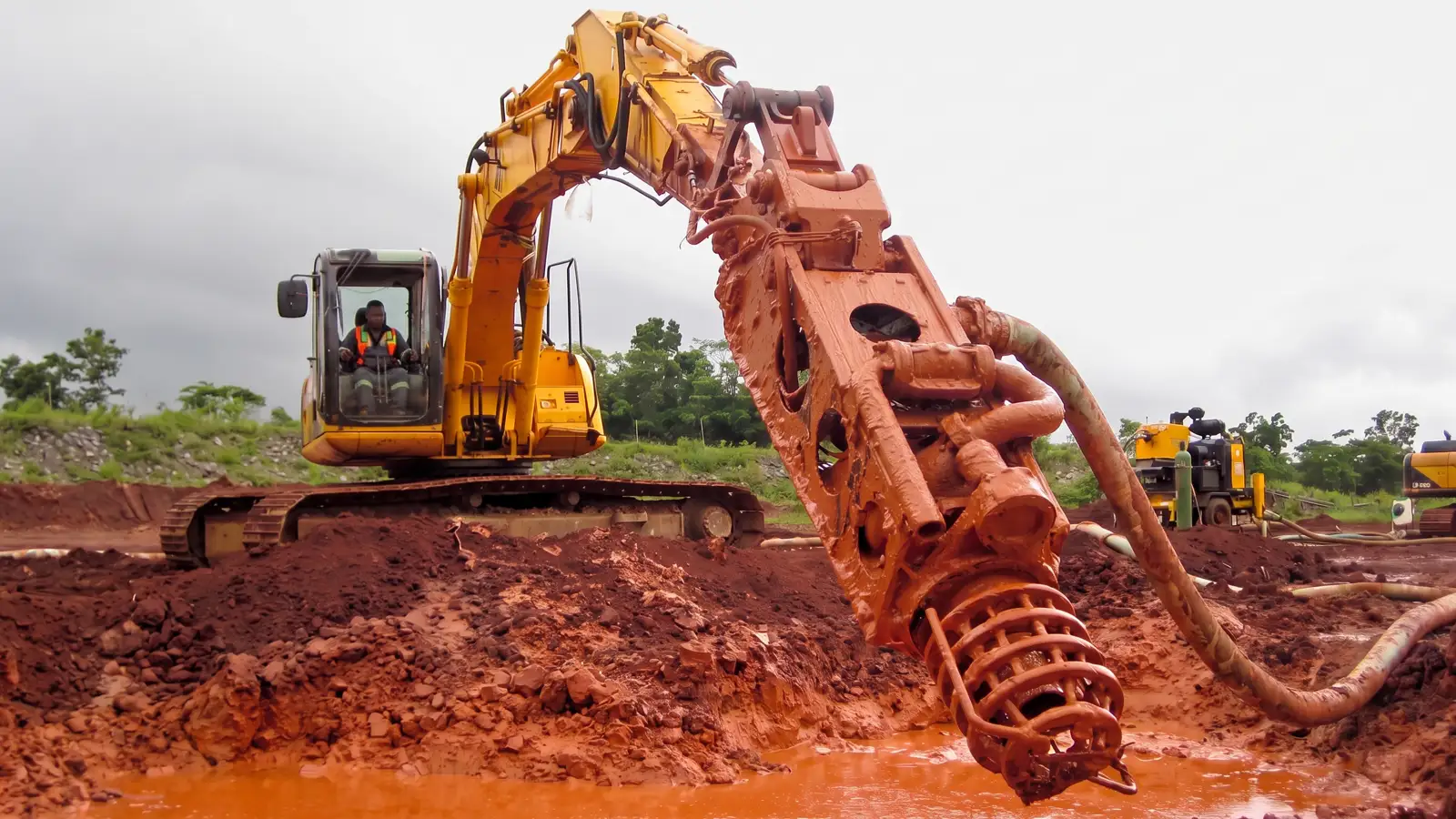
Excavator pump attachment |
The site has excavator access and needs reach, agitation, and direct material removal. |
Inspect hydraulic connections, cutterhead, hoses, linkage, wear parts, and discharge line. |
|
Cable-deployed dredge pump |
The pump must be lowered into a pit, tank, basin, or hard-to-reach area. |
Inspect hoisting points, cables, pump orientation, discharge hose, and power/hydraulic support. |
|
Dredge Sled or low-profile dredge |
Lagoon, pond, or basin dredging where a pullable dredge system fits the job. |
Inspect sled wear surfaces, intake area, hose routing, and production consistency. |
|
Modular dredge or ModDredge |
The project needs a dedicated dredge package with positioning and controls. |
Plan wear parts, hydraulic systems, controls, spuds/winches, and booster support as a system. |
|
Booster pump support |
Distance, elevation, pipe friction, or slurry density exceed the capability of one pump. |
Inspect booster placement, pressure, pipe velocity, wear sections, and synchronization with the primary pump. |
Helpful product paths: Dredging Equipment | Excavator Pump Attachment | Cable-Deployed Dredge Pump | Dredge Sled | Booster Pumps
How Pump Curves Support Maintenance Planning
A pump curve is not only a selection tool. It is also a maintenance baseline. When a dredge pump is new or freshly rebuilt, record the expected flow, head, power draw, and operating speed. As wear increases, the pump may drift away from that baseline.
For slurry, the curve conversation matters even more. Sand, sludge, gravel, tailings, ash, and other high-solids materials do not behave like clean water. Slurry density, viscosity, particle size, pipe length, elevation, bends, and operating speed can all change the real operating point.
That is why EDDY Pump recommends using pump-curve guidance and, when needed, a custom pump curve for high-solids applications. If the pump is wearing faster than expected, the issue may be the material, the duty point, the pipeline, the driver, or the operating speed - not just the wear part itself.
Build a Wear-Parts and Maintenance Plan Before the Job Starts
The best time to plan maintenance is before the dredge mobilizes. The goal is not to stock every possible part. The goal is to stock the parts most likely to stop the job and define who will inspect, who will approve replacement, and how quickly the pump can return to service.
|
Before the Job, Confirm |
Why It Helps |
|
Material being pumped, including particle size and abrasiveness |
Sets expectations for wear rate and inspection frequency. |
|
Target flow, head, discharge distance, and pipe size |
Creates a baseline for performance and future troubleshooting. |
|
Pump model, drive type, and operating speed |
Clarifies which wear parts, seals, bearings, and service procedures apply. |
|
Critical wear parts to keep on hand |
Prevents a small repair from becoming a multi-day shutdown. |
|
Inspection schedule and log owner |
Makes the checklist part of daily operations, not an afterthought. |
|
Service access and lifting plan |
Reduces safety exposure and repair time during planned maintenance. |
How EDDY Pump Supports Longer Service Life
EDDY Pump parts, service, and repair support helps customers structure maintenance around operating conditions, wear patterns, and system demands. That matters because a dredge pump does not operate by itself. The pump, drive, intake, pipeline, booster support, and material all work together.
EDDY Pump can support the maintenance side with application review, wear-part planning, OEM replacement parts, service and repair support, and engineering guidance for difficult slurry applications. For abrasive applications, the right pump configuration and wear package can be just as important as the checklist itself.
Frequently Asked Questions
How often should a dredge pump be inspected in abrasive conditions?
Check high-risk items such as seal leakage, bearing temperature, lubrication, flow, pressure, and unusual noise every shift. Inspect wear plates, liners, rotor or impeller condition, hoses, and pipeline condition on a scheduled interval based on run hours and material abrasiveness. Highly abrasive service shortens every interval.
Which dredge pump parts usually wear first?
The first parts to watch are the sacrificial wetted components: wear plates, liners, rotor or impeller surfaces, and seal components. Bearings often fail after a seal, lubrication, alignment, or contamination problem, so bearing issues should be treated as a symptom to investigate, not just a part to replace.
What are the signs a dredge pump needs maintenance?
Common warning signs include falling flow, reduced production, rising power draw, pressure changes, new vibration, unusual noise, hotter bearings, seal leakage, or more frequent clogging. These symptoms often appear before a hard failure.
Does a maintenance checklist actually reduce total cost?
Yes, in most abrasive-service operations. A checklist converts emergency repairs into planned service, helps prevent small failures from cascading into major rebuilds, and keeps the pump closer to the intended operating point.
What is the difference between preventive and predictive maintenance?
Preventive maintenance uses scheduled inspections and part replacement. Predictive maintenance uses measured condition data, such as wear depth, vibration, flow, pressure, power draw, and temperature trends. Many dredging operations use both.
Should I replace wear parts with genuine manufacturer parts?
Yes. Genuine wear parts are built for the material, fit, geometry, and clearance requirements of the pump. Off-spec parts can wear faster, fit poorly, or shorten the life of the components they are supposed to protect.
How can I extend the lifespan of my dredge pump?
Match the pump to the material, maintain the intake and discharge line, inspect on a schedule, log wear trends, replace sacrificial parts before they damage major components, flush settled solids where appropriate, and keep seals, bearings, lubrication, and alignment in good condition.
When is maintenance not enough?
Maintenance is not enough when the same failure keeps returning. Repeated clogging, rapid liner wear, seal failures, motor overload, or solids settling in the line may point to a pump selection, pipeline, power, or duty-point problem that needs engineering review.
How does a pump curve help with maintenance?
A pump curve gives the expected relationship between flow and head at a defined speed. Once the pump is installed, changes in flow, head, power draw, or production can help identify wear, blockage, settling, or a changed system condition.
Who should I contact for EDDY Pump maintenance support?
Contact EDDY Pump with the pump model, serial information if available, material description, solids size, run hours, symptoms, photos, and operating data. The team can help review parts, service, repair, or application-specific changes.
Talk to EDDY Pump About Your Dredge System
A maintenance checklist works best when it is matched to your material, pump model, run hours, and dredging setup. Send EDDY Pump your application details, pump configuration, wear symptoms, material description, solids size, discharge distance, operating speed, flow target, and photos of worn parts.
Contact EDDY Pump to build a maintenance and wear-parts plan around the conditions your dredge pump actually faces.