
At some point, a marine excavator pump setup stops feeling like a tool and starts acting like the bottleneck. The excavator has reach limits. The pump clogs more often. Wear parts are replaced faster than expected. The discharge line plugs or loses velocity. The crew spends too much time repositioning, troubleshooting, or waiting for maintenance instead of moving material.

That is usually when the real question changes. It is no longer, “Can we get one more project out of this setup?” It becomes, “Is the current setup costing us more than an upgrade would?”
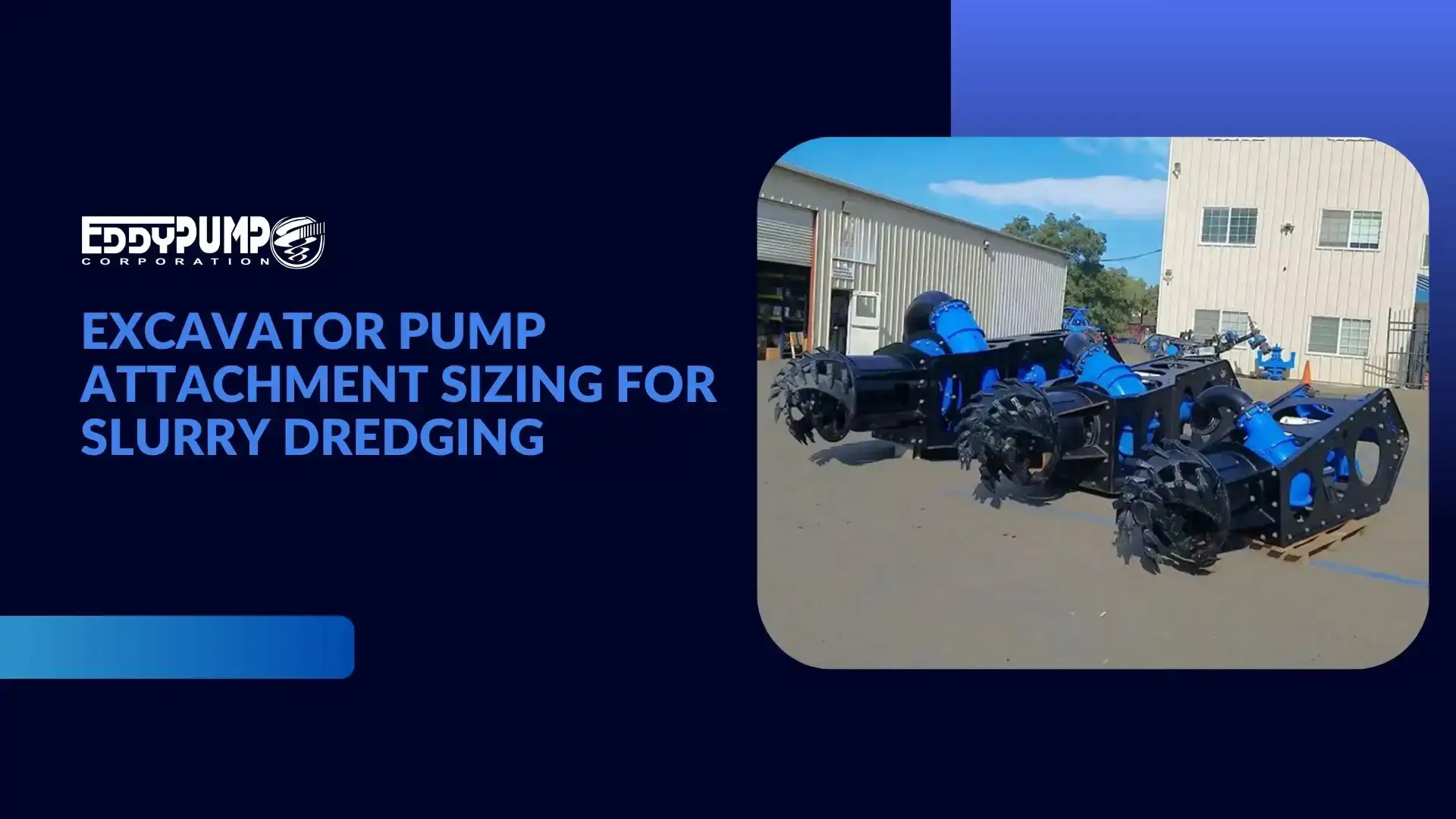
EDDY Pump builds excavator-mounted dredge pump attachments, long-reach excavator packages, hydraulic power units, agitation systems, and related dredging equipment for marine contractors, ports, environmental projects, mining sites, industrial basins, and shoreline dredging work.
This guide walks through when to upgrade, what to upgrade first, and how to build a stronger marine excavator pump setup around the actual material, reach, production target, discharge distance, and jobsite conditions.
|
Summary A marine excavator pump setup should be upgraded when the existing system cannot reliably reach the dredging area, pass the solids, maintain slurry velocity, support the hydraulic demand, or hit the production target without repeated downtime. The strongest upgrades usually involve matching the pump, long-reach arm, cutterhead or water-jetting system, HPU, discharge pipeline, booster support, and controls to the actual duty point instead of treating the pump as a stand-alone attachment. |
Key Takeaways
- Upgrade decisions should be based on lost production, clog frequency, reach limitations, wear-part cost, hydraulic demand, and discharge distance.
- The standard EDDY Pump Excavator Pump Attachment is currently positioned as a 4-inch through 12-inch hydraulic system for high-solids dredging and slurry handling.
- For larger self-priming excavator pump-and-bucket applications, EDDY Pump also offers 4-inch through 16-inch SPE configurations that require application-specific engineering review.
- A long-reach arm can reduce repositioning, but the pump, hose routing, counterweight, carrier stability, and hydraulic power must be reviewed together.
- For long pipelines, booster pumps and pipeline design help maintain slurry velocity so solids do not settle in the line.
- The best upgrade path is not always “buy a bigger pump.” It is building a complete system around the material, reach, flow, head, power, and production target.
When Is a Marine Excavator Pump Upgrade Needed?
The easiest way to know it is time to upgrade is to look at what is stealing the most time from the job. In marine dredging, downtime usually comes from one of five places: reach, clogging, wear, power, or pipeline problems.
|
Upgrade Trigger |
What It Looks Like in the Field |
Likely Upgrade Path |
|
Reach limitation |
The excavator has to reposition constantly, or the operator cannot reach the required depth or work area from a safe position. |
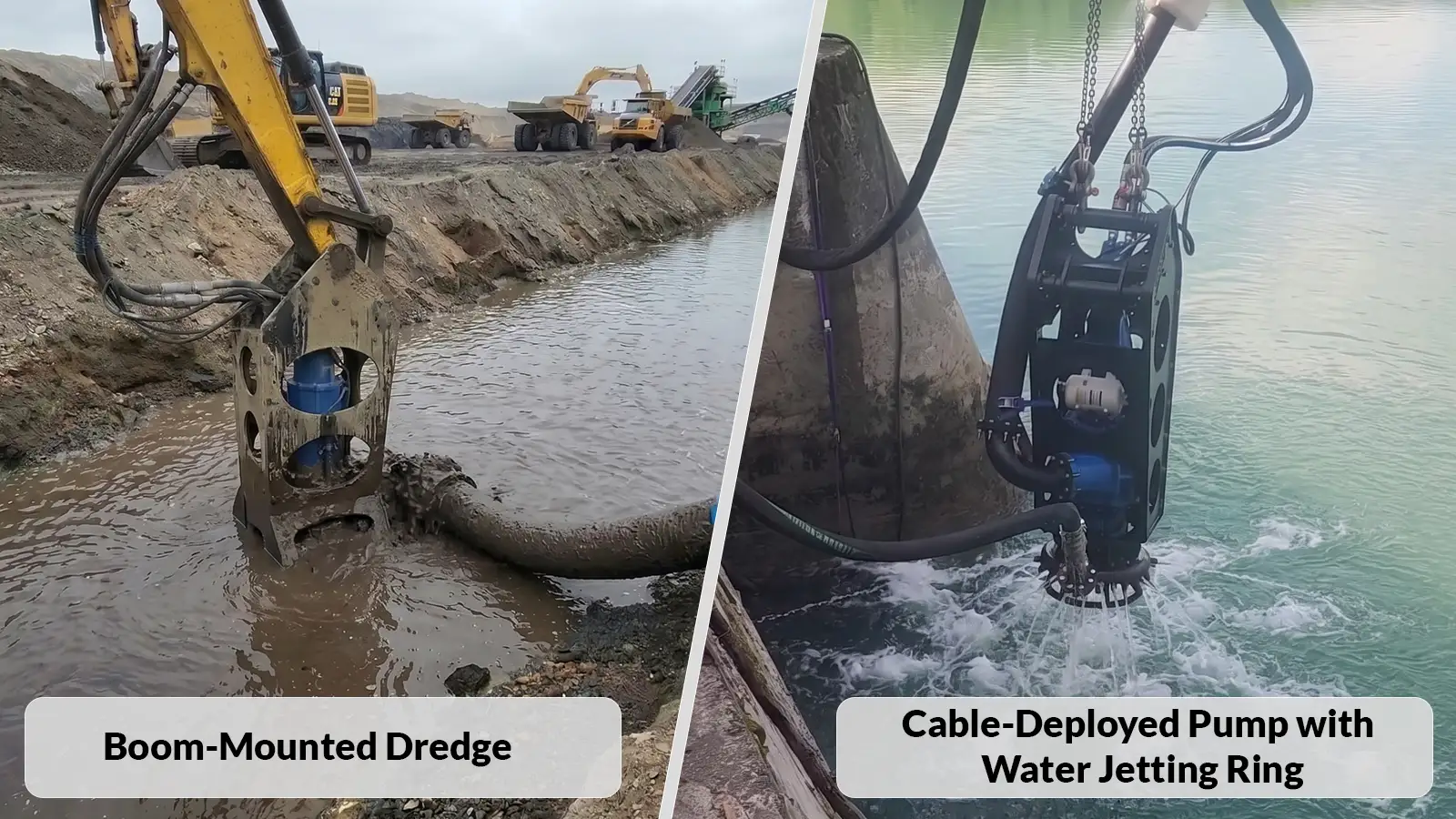
Review a HAWK long-reach arm, barge setup, cable-deployed pump, or alternate deployment method. |
|
Frequent clogging |
The pump repeatedly plugs on rocks, debris, shells, vegetation, compacted sediment, or high-solids slurry. |
Review solids passage, pump size, intake agitation, cutterhead, water jetting, and slurry feed conditions. |
|
Short wear-part life |
Seals, liners, rotor components, hoses, or wear surfaces are being replaced faster than expected. |
Review pump configuration, material abrasiveness, operating speed, wear package, and maintenance plan. |
|
Hydraulic limits |
The excavator auxiliary circuit cannot maintain required flow and pressure, especially at maximum reach or higher production. |
Review a dedicated HPU or a different pump/attachment package. |
|
Pipeline problems |
The line plugs, production drops with distance, or the system cannot maintain slurry velocity. |
Review pipe size, bends, elevation, slurry density, booster support, and pump curve. |
The point is simple: do not upgrade one component in isolation. A larger pump will not solve a reach problem. A longer arm will not solve an underpowered hydraulic circuit. A cutterhead will not fix a pipeline that cannot maintain velocity. The system has to be reviewed as a system.
Start with the Current Setup: What Is Actually Holding Production Back?
Before choosing equipment, document what the existing setup is doing today. This helps separate operator issues, maintenance issues, and true equipment limitations.- Average and peak production rate in cubic yards per hour.
- Number of repositioning cycles per shift.
- Clogging events and how long each stoppage takes to clear.
- Wear-part replacement frequency and the parts being replaced most often.
- Material type, particle size, debris, density, and percent solids by weight.
- Discharge distance, pipe or hose diameter, bends, elevation change, and discharge location.
- Excavator carrier size, auxiliary hydraulic flow and pressure, counterweight, and boom load.
- Depth, tidal movement, current, access limitations, barge requirements, and environmental controls.
When this information is clear, the upgrade conversation becomes much easier. You are no longer asking for “a better pump.” You are asking for the right dredging system for a known duty point.
What Components Matter Most in a Marine Excavator Pump Setup?
1. The Dredge Pump Attachment
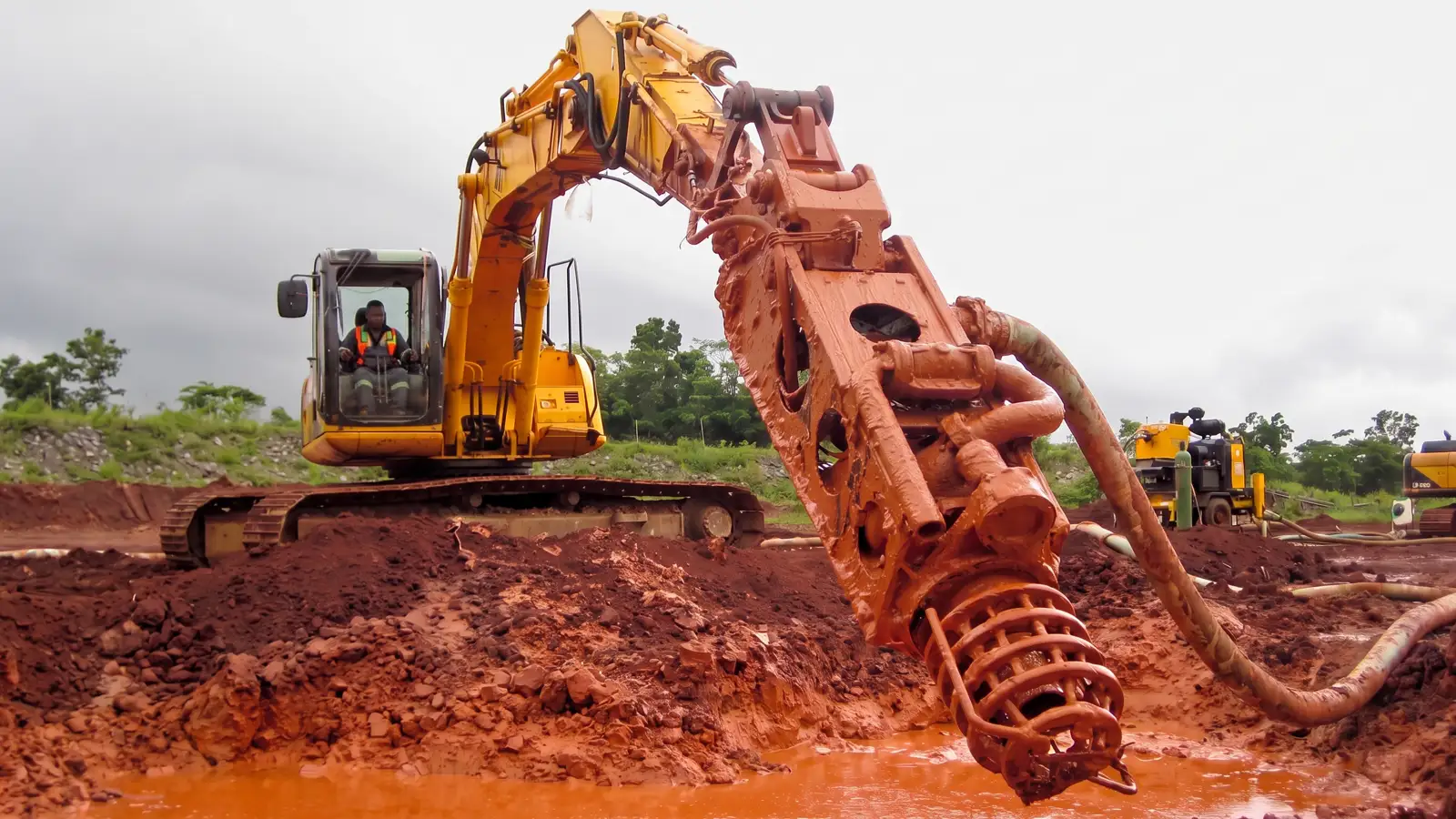
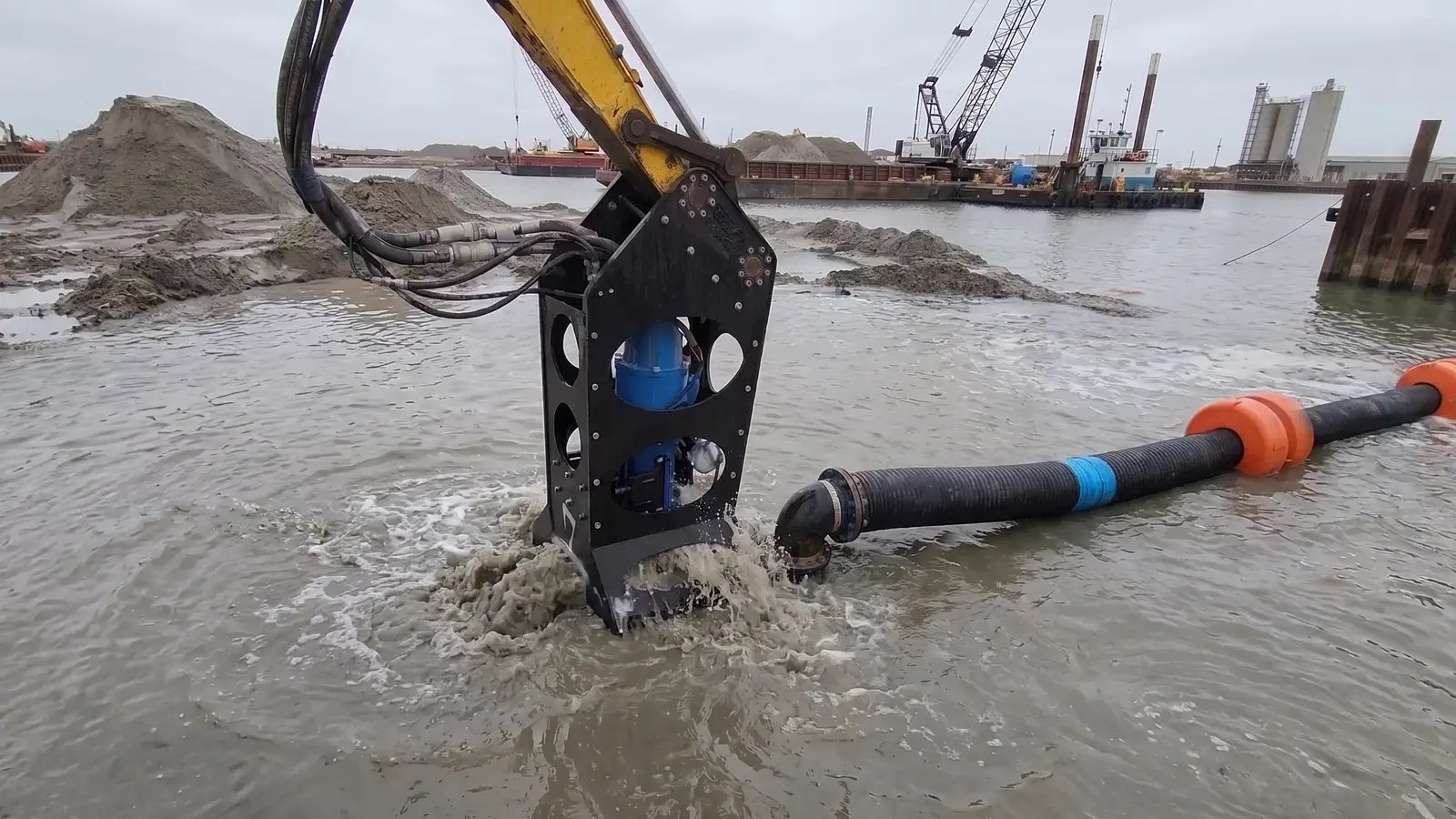
The pump is the center of the system, but it is not the whole system. The current EDDY Pump Excavator Pump Attachment is positioned as a 4-inch through 12-inch hydraulic dredging attachment with excavator or HPU-powered options, cutterhead configurations, and dredging accessories for demanding field applications.
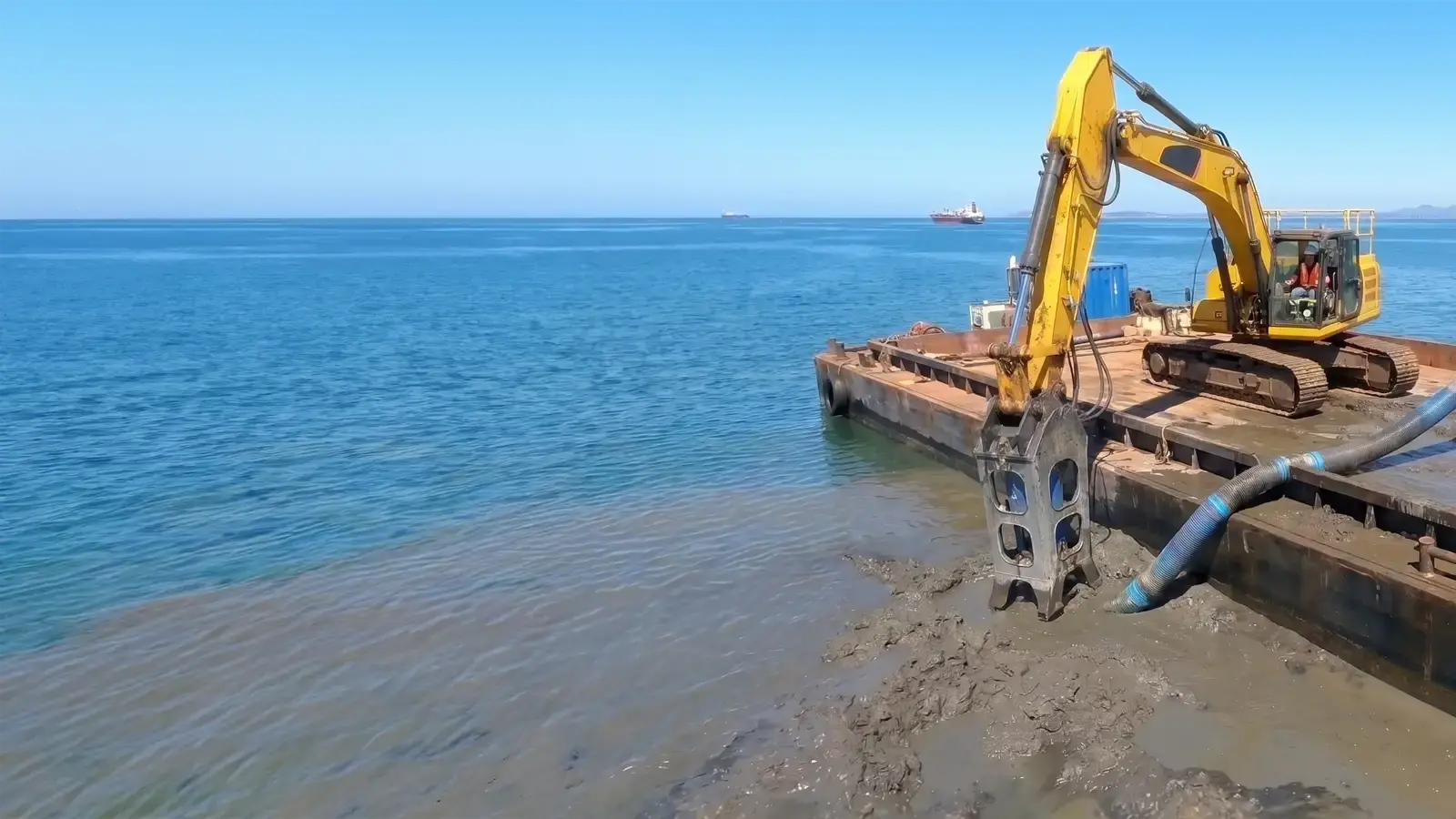
For marine work, this attachment is often used when the excavator can safely reach the material from land, a shoreline, a barge, a work pad, or another stable platform.
2. The Self-Priming Excavator Pump & Bucket
Some projects need a different style of attachment. The Self-Priming Excavator Pump & Bucket combines an excavator-mounted bucket, cutterhead, self-priming slurry pump, hydraulic drive, and discharge system into one tool for cutting, excavating, and pumping high-solids slurry. This configuration is now positioned across 4-inch through 16-inch pump sizes, including the SPE-16000 for high-volume applications.
This matters for the customer journey because “excavator pump upgrade” can mean more than one product path. The standard EXF attachment may be the right upgrade, but a self-priming pump-and-bucket package may be a better fit when excavation, self-priming, cutterhead agitation, and high-production slurry transfer need to work together.
3. Long-Reach Arm and Boom
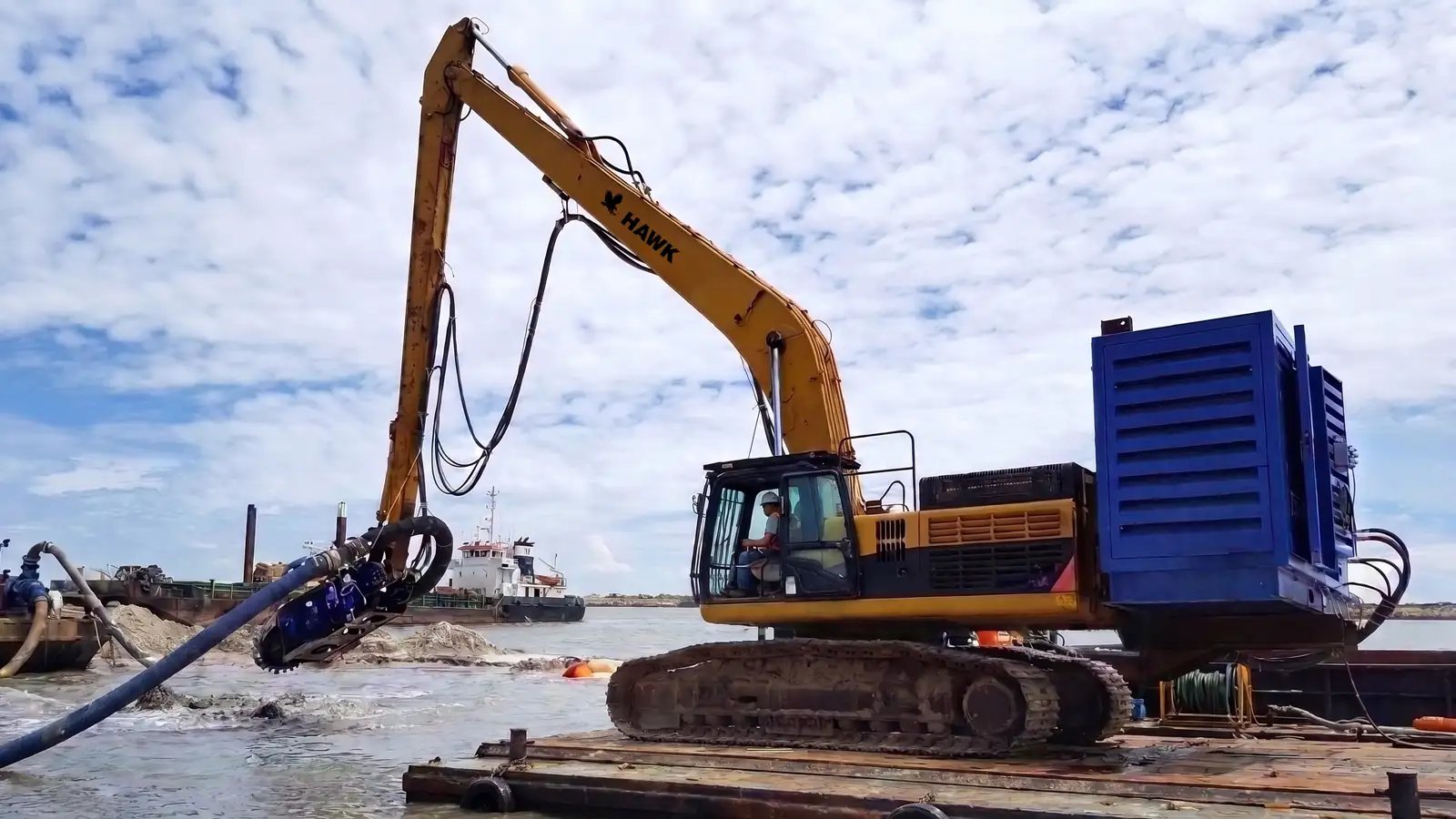
A long-reach arm can be the upgrade that changes production the most. The HAWK Long Reach Arm and Boom distributed by EDDY Pump is positioned for 5- to 130-ton excavators and can provide up to twice the extended reach, with pre-plumbed hydraulic lines, slurry hose brackets, and quick-connect fittings for faster deployment.
A longer arm can reduce repositioning and help reach deeper or farther material, but it also changes the system review. The carrier, counterweight, boom load, hydraulic hoses, discharge hose support, pump weight, and operating envelope all need to be checked before the upgrade is quoted.
4. Agitation: Cutterhead, Water Jetting, or Bucket Feed
A dredge pump cannot move material that never reaches the intake. Compacted sediment, clay, sand, organics, shells, and debris may need help becoming a pumpable slurry.
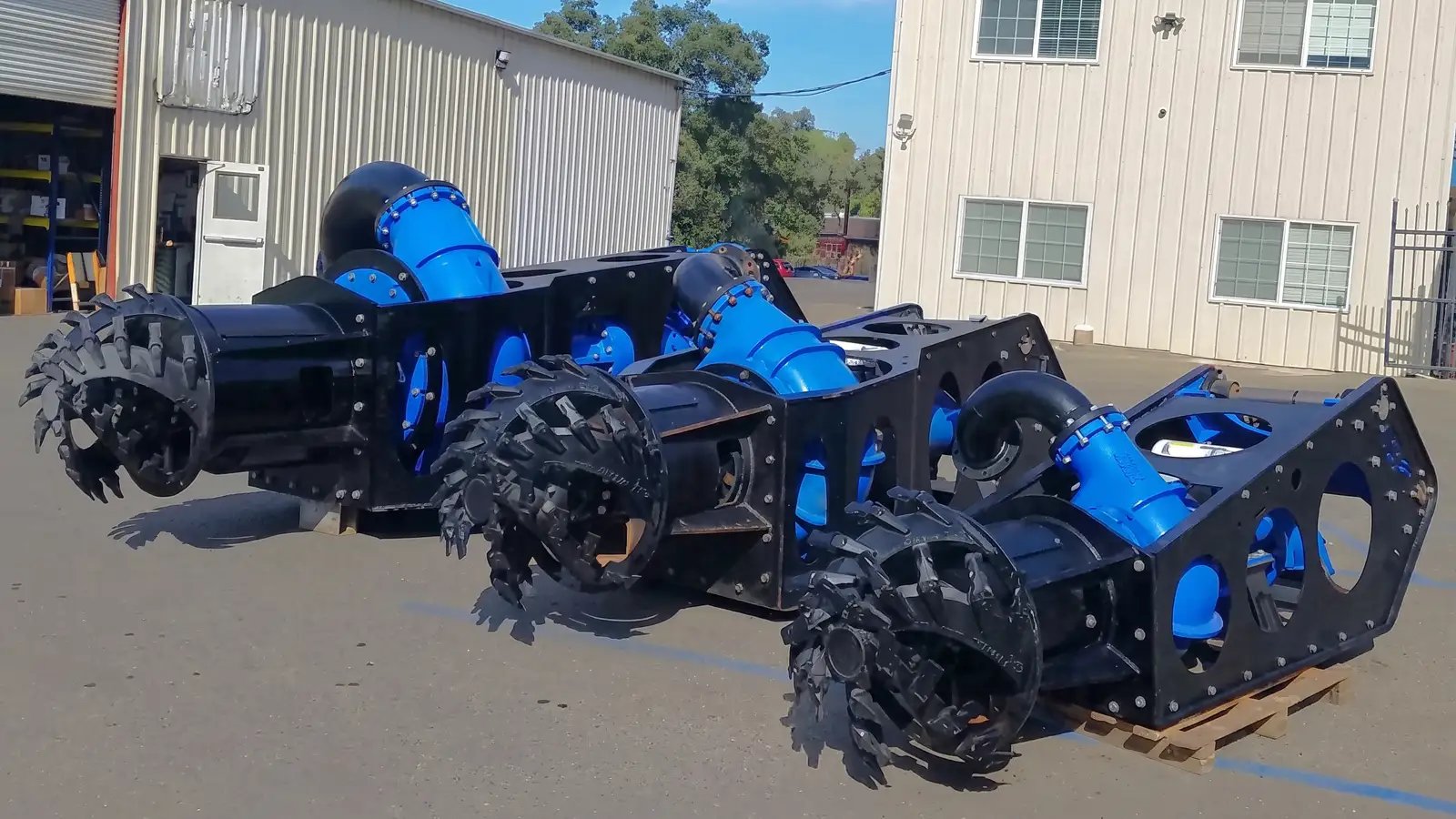
Cutterheads are often used for compacted or consolidated material. Water jetting rings and cutterhead options can help break up or fluidize material so the pump receives a steadier feed. The right choice depends on sediment type, debris, production target, turbidity limits, and how the material behaves when disturbed.
5. Hydraulic Power and HPU Support
Marine excavator pump attachments may run from the excavator auxiliary circuit, but larger pumps, longer duty cycles, higher production targets, or long-reach configurations may need dedicated hydraulic power.
An EDDY Pump Hydraulic Power Unit provides the hydraulic flow and pressure required to operate dredge pumps, cutterheads, excavator-mounted attachments, and other hydraulic-driven equipment. HPU selection should be based on the pump circuit, cutterhead circuit, target production, and duty cycle, not only the pump size.
6. Discharge Pipeline and Booster Support
The pump has to do more than pick up material. It must keep that slurry moving through the discharge line without settling, plugging, or losing production.
For longer discharge lines, elevation changes, high-friction layouts, or dense slurry, skid-mounted booster pumps can be used to extend pipeline reach and help maintain slurry velocity. Booster selection should be based on the pump curve, slurry density, pipeline length, elevation, pipe size, and required production rate.
Which Upgrade Path Fits the Job?
|
Jobsite Need |
Best Starting Point |
Why |
|
Excavator can reach the material, but the current pump clogs or wears quickly. |
Excavator Pump Attachment |
Uses the excavator as the carrier while adding a high-solids dredge pump and agitation options. |
|
Need excavation, cutting, self-priming, and slurry pumping in one attachment. |
Self-Priming Excavator Pump & Bucket |
Combines bucket, cutterhead, self-priming pump, hydraulic drive, and discharge transfer. |
|
Need deeper or farther reach from the same excavator position. |
HAWK Long Reach Arm and Boom |
Expands the working envelope and can reduce repositioning cycles. |
|
No safe excavator access or pump needs to be lowered from a crane or A-frame. |
Cable-Deployed Dredge Pump |
Supports vertical deployment from cranes, barges, excavators, and A-frames. |
|
Pipeline is too long or slurry settles before the discharge point. |
Booster Pump Support |
Adds head and helps maintain slurry velocity over distance. |
|
Precision dredging, liner protection, or controlled cleanup is required. |
Liner-Safe or Environmental Dredging Options |
Helps match the dredging method to sensitive liners, contaminated sediment, or low-disturbance work. |
How to Size the Upgrade Correctly
Sizing should start with the material and the system, not the attachment name. A marine excavator pump upgrade should be based on the complete duty point.
|
Information to Collect |
Why It Matters |
|
Material type and solids size |
Confirms pump solids passage, cutterhead needs, intake design, and wear package. |
|
Slurry density and percent solids by weight |
Determines power demand, pipeline friction, settling risk, and production assumptions. |
|
Target flow or production rate |
Prevents undersizing, oversizing, and unrealistic production expectations. |
|
Total dynamic head |
Accounts for elevation, friction, discharge distance, pipe size, bends, valves, and fittings. |
|
Discharge distance and pipe or hose size |
Controls slurry velocity, pressure drop, settling risk, and booster requirements. |
|
Excavator make, model, carrier weight, and hydraulics |
Confirms whether the carrier can safely support and power the attachment. |
|
Reach, depth, current, tide, and access constraints |
Determines whether a standard arm, long-reach arm, barge, cable-deployed pump, or alternate setup is better. |
|
Environmental requirements |
Affects turbidity controls, containment, dewatering, contaminated sediment handling, and liner-safe options. |
A useful rule: a pump curve or production estimate is only as good as the material data behind it. Dense or abrasive slurry, long discharge distances, elevation changes, and coarse solids can change the actual duty point quickly.
For application-specific sizing, use EDDY Pump’s custom pump curve and project review process with the real slurry and site data.
What Changes When You Add a Long-Reach Arm?
Long reach can solve a real production problem, but it also changes the loads on the excavator. The upgrade should review more than total reach.
- Carrier size and stability at the required reach.
- Boom and stick loads with the pump, cutterhead, hoses, and slurry in the line.
- Counterweight and lift chart limits.
- Hydraulic hose routing and protection along the boom.
- Discharge hose support, floats, abrasion protection, and pinch-point control.
- Operator visibility, GPS/RTK positioning, sonar, or production monitoring requirements.
A long-reach arm should make the system easier to operate, not harder. That is why the pump, arm, hydraulic power, hose routing, and controls should be engineered together.
How to Reduce Downtime During the Upgrade
The upgrade itself should not become the next disruption. The most successful projects are staged before the equipment arrives.
- Schedule installation during a planned maintenance window, tide window, or between phases of work.
- Confirm pin dimensions, coupler details, hydraulic flow and pressure, hose routing, and carrier compatibility before mobilization.
- Pre-stage the pump, long-reach arm, fittings, cutterhead or jetting package, HPU, hoses, floats, and discharge pipeline.
- Test hydraulic pressure, flow, pump rotation, cutterhead operation, and discharge line routing before full production.
- Train operators on feed rate, slurry density, avoiding cavitation, clearing blockages, monitoring gauges, and safe shutdown.
- Log baseline production, pressure, flow, vibration, and wear so maintenance can be planned from day one.
Maintenance After the Upgrade: Protect the Investment
An upgraded system still needs a maintenance plan. The difference is that the plan should now be tied to actual slurry conditions and production goals rather than a generic calendar.
- Inspect wear surfaces, liners, rotor, cutterhead, hoses, and discharge bends on a schedule matched to material abrasiveness.
- Monitor hydraulic fluid condition and keep filters, coolers, and protection systems in good condition.
- Track pump pressure, flow, production rate, and power demand for changes that may indicate wear or partial blockage.
- Flush the pump and pipeline where needed to prevent settled solids from hardening in the system.
- Keep critical wear parts and hose components available when project downtime is expensive.
For ongoing support, link readers to EDDY Pump parts, service, and repair so the article does not end at equipment selection. It continues into lifecycle support.
Environmental and Marine Project Considerations
Marine dredging upgrades should also improve control. On environmental, port, marina, lagoon, and shoreline projects, the system must move material efficiently while helping manage turbidity, containment, access, and safety.
Hydraulic dredging can move material through a contained discharge line rather than repeated mechanical handling. For lined basins, ponds, or lagoons, review liner-safe dredging equipment options. For contaminated sediment or sensitive removal areas, review agitation method, dredging speed, turbidity controls, dewatering method, and disposal path before choosing the equipment package.
How EDDY Pump Supports the Upgrade Path
A marine excavator pump upgrade is not just a pump sale. It is an application review.
EDDY Pump can help connect the pump platform, excavator attachment, long-reach arm, agitation tool, HPU, booster support, pipeline, and service plan into one workable system. That matters because marine dredging problems usually show up at the weakest point in the setup.
Explore the full EDDY Pump dredging equipment lineup or review the marine dredging and construction applications page for related deployment options.
Frequently Asked Questions
When should I upgrade a marine excavator pump setup?
Upgrade when the current setup repeatedly loses production because of reach limits, clogging, wear, hydraulic power limits, pipeline plugging, or maintenance downtime. The best time to upgrade is before the system forces an emergency repair or missed production target.
What is the first thing to check before upgrading?
Start with the real duty point: material type, maximum solids size, percent solids by weight, slurry density, target production, discharge distance, elevation change, pipe size, and available hydraulic power. Those details determine whether the problem is the pump, the power source, the reach, the pipeline, or the complete system.
What is the difference between an excavator pump attachment and a self-priming excavator pump bucket?
The standard excavator pump attachment turns an excavator into a high-solids dredging and slurry pumping system. The self-priming excavator pump bucket combines bucket excavation, cutterhead agitation, self-priming slurry pumping, hydraulic drive, and discharge transfer in one attachment. The right choice depends on material, access, priming needs, production target, and hydraulic review.
How much reach can a long-reach arm add?
Reach depends on the excavator size and custom arm design. EDDY Pump positions HAWK long-reach arm and boom packages for 5- to 130-ton excavators and up to twice the extended reach. Final selection should be confirmed against carrier stability, counterweight, boom load, pump weight, hose routing, and jobsite conditions.
Can the attachment run from excavator hydraulics?
Many excavator pump attachments can run from the excavator auxiliary hydraulics, but the hydraulic flow and pressure must match the pump and cutterhead requirements. Larger pumps, long-duty cycles, or long-reach/high-production work may require a dedicated HPU.
When is an HPU needed for a marine excavator pump setup?
An HPU is commonly reviewed when the excavator cannot provide enough hydraulic flow and pressure, when the project needs more stable continuous power, or when the pump and cutterhead demands exceed the carrier’s auxiliary system.
When should a booster pump be added?
A booster pump should be reviewed when discharge distance, elevation change, pipe friction, slurry density, or solids loading prevents the main pump from maintaining the velocity required to keep solids moving. Booster placement should be based on the full pipeline and slurry duty point.
Can one pump be used in multiple marine dredging configurations?
In many cases, EDDY Pump systems can be adapted across configurations such as excavator-mounted, cable-deployed, diver-operated, or barge-mounted setups. The feasibility depends on the pump model, power source, frame, hose package, controls, and project requirements.
What information should I send EDDY Pump for an upgrade review?
Send the excavator make and model, carrier weight, hydraulic flow and pressure, coupler details, material type, maximum solids size, slurry density, percent solids, target flow or production, discharge distance, pipe or hose size, elevation change, depth, access conditions, and whether the system will run from excavator hydraulics or an external HPU.
Build the Right Marine Excavator Pump Upgrade
The best upgrade is not always the largest pump or the longest arm. The best upgrade is the system that moves your material, at your target production rate, through your pipeline, from your available access point, with less downtime.
Send EDDY Pump the project details and talk to an EDDY Pump engineer about the right pump, attachment, long-reach arm, HPU, booster, pipeline, and maintenance plan for your marine dredging application.