If you've spent any time managing dredging operations for waterway maintenance or marine construction, you already know how quickly equipment decisions can derail a project. The wrong dredge clogs on dense sediment. Undersized pumps stall against high-solids slurry. Maintenance costs spiral when wear parts fail ahead of schedule. Selecting dredging equipment that matches your material, site conditions, and operational demands is the difference between hitting production targets and watching your timeline slip.

This guide breaks down the critical factors for choosing dredging equipment across waterway maintenance and marine construction applications. You'll find practical criteria for evaluating dredge types, pump configurations, and deployment methods based on real-world conditions rather than theoretical specifications.
Key Takeaways: How to Choose Dredging Equipment in 2026
- Material type determines whether you need mechanical excavation for compacted clay or hydraulic suction for loose sand and silt.
- Water depth and site access dictate deployment configuration, from submersible pumps to excavator-mounted attachments and barge systems.
- Solids handling capacity directly impacts production rates, with high-performance systems like EDDY Pump handling 40–70% solids by volume.
- Pump technology affects maintenance intervals and downtime, where non-clog designs dramatically reduce service costs in abrasive conditions.
- Total cost of ownership includes fuel consumption, wear parts, and mobilization expenses alongside the initial equipment investment.
What Is Dredging Equipment and Why Does Selection Matter?
Dredging equipment removes sediment, silt, sand, gravel, and debris from underwater environments. The machinery excavates material from waterway beds and transports it to designated disposal or processing sites. This equipment serves critical functions across multiple industries including port maintenance, environmental restoration, mining operations, and marine construction.
The selection decision ripples through every phase of your project. Choose equipment mismatched to your sediment type, and production rates drop while maintenance costs climb. Pick a deployment configuration that can't access your work zone, and you're stuck with expensive workarounds or complete re-mobilization.
Global demand for dredging continues to grow, with market valuations reaching approximately USD 8.9 billion in 2025 and projections extending toward USD 14.2 billion by 2035. This expansion reflects increasing infrastructure requirements, coastal protection needs, and environmental remediation projects requiring specialized equipment.
How Does Material Type Affect Dredging Equipment Selection?
The physical composition of what you're dredging determines which equipment category will perform effectively. Soft silts behave completely differently than compacted clay, and dense gravel creates challenges that loose sand never presents. Getting this assessment wrong means fighting your equipment instead of moving material.
Soft Sediments and Loose Sand
Hydraulic dredging systems excel with loose, unconsolidated materials. These systems use suction and pump technology to create a slurry of water and sediment that flows through discharge pipelines to the placement site. Cutter suction dredgers and trailing suction hopper dredgers handle high volumes of sand, silt, and fine particles efficiently.
For operations involving soft sediments, flow rates and pump capacity become the primary performance metrics. Systems capable of 2,500 to 7,300 GPM can move substantial volumes when the material cooperates with hydraulic transport.
Compacted Clay and Dense Sediment
Hard-packed materials require mechanical force to break them free before transport. Standard suction systems cannot generate enough force to dislodge consolidated clay or dense gravel. Mechanical dredgers using backhoes, clamshells, or cutter heads provide the breakout force needed to excavate these materials.
Cutter suction dredgers bridge mechanical and hydraulic approaches by using rotating cutter heads to break apart tough sediments before suctioning the loosened material into the pump system. This combination handles a broader range of material densities than pure suction methods.
High-Solids Slurry and Abrasive Materials
Mining tailings, industrial sludge, and abrasive slurries present unique challenges. Conventional centrifugal pumps clog when solids concentration exceeds their design limits. Impellers wear rapidly against abrasive particles, shortening service intervals and increasing replacement costs.
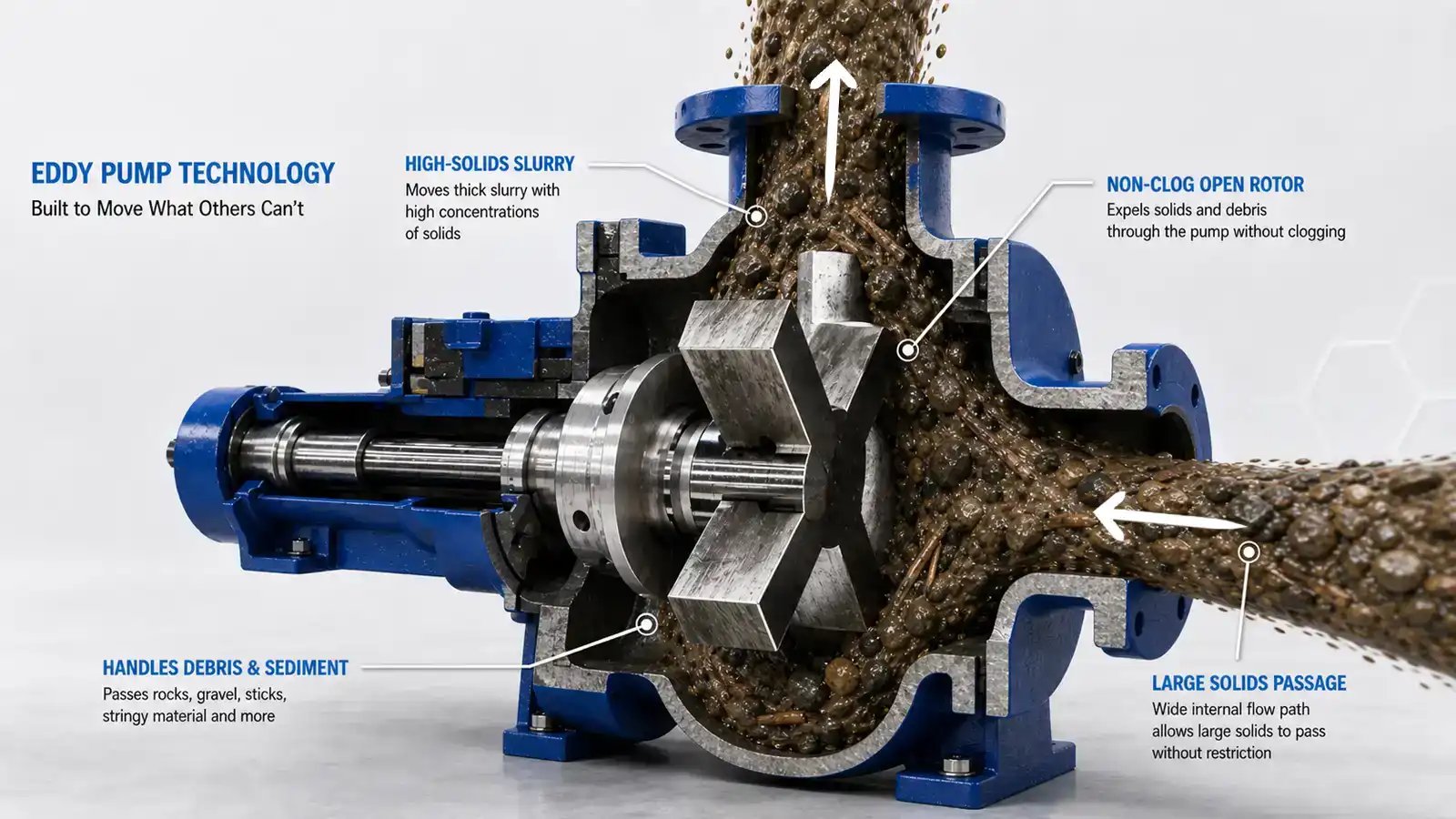
EDDY Pump dredging equipment handles 40–70% solids by volume using a patented non-clog rotor design that passes solids up to 11 inches in diameter. The open rotor geometry eliminates the tight clearances where conventional pumps fail, allowing continuous operation in high-solids environments where other equipment requires frequent maintenance stops.
What Water Depth and Site Access Factors Should You Evaluate?
Your work site's physical characteristics constrain which equipment configurations will actually function. A dredge rated for deep-water operation becomes useless in a shallow marsh. Equipment requiring barge mobilization can't reach land-locked lagoons without expensive access preparation.
Deep-Water Operations
Large-scale channel maintenance and harbor deepening projects in deep water favor trailing suction hopper dredgers or large cutter suction dredgers. These vessels operate effectively in open water conditions where wave action and current would destabilize smaller equipment. Hopper dredgers collect material while moving, store it onboard, then sail to disposal sites for discharge.
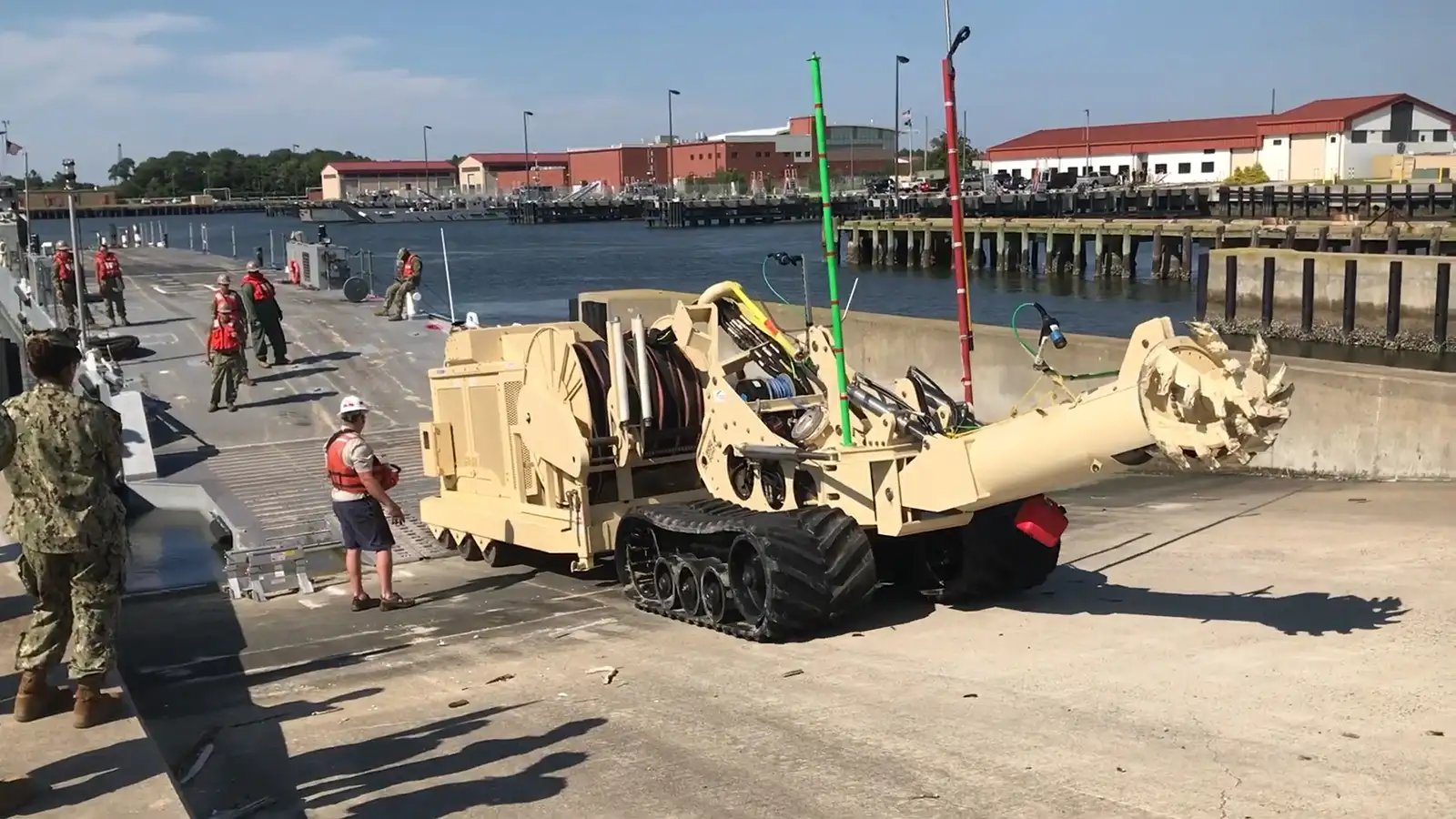
Deep-water projects also benefit from submersible dredge pumps that operate at depth without capacity loss. Remote-operated submersible systems like the Subdredge ROV can reach challenging underwater locations while operators control positioning from the surface.
Shallow Water and Restricted Access
Shallow waterways, retention ponds, and confined basins demand equipment designed for limited draft and maneuverability. Traditional barge-mounted dredges may not float in the available water depth, and large vessels cannot navigate narrow channels or pass under low bridges.
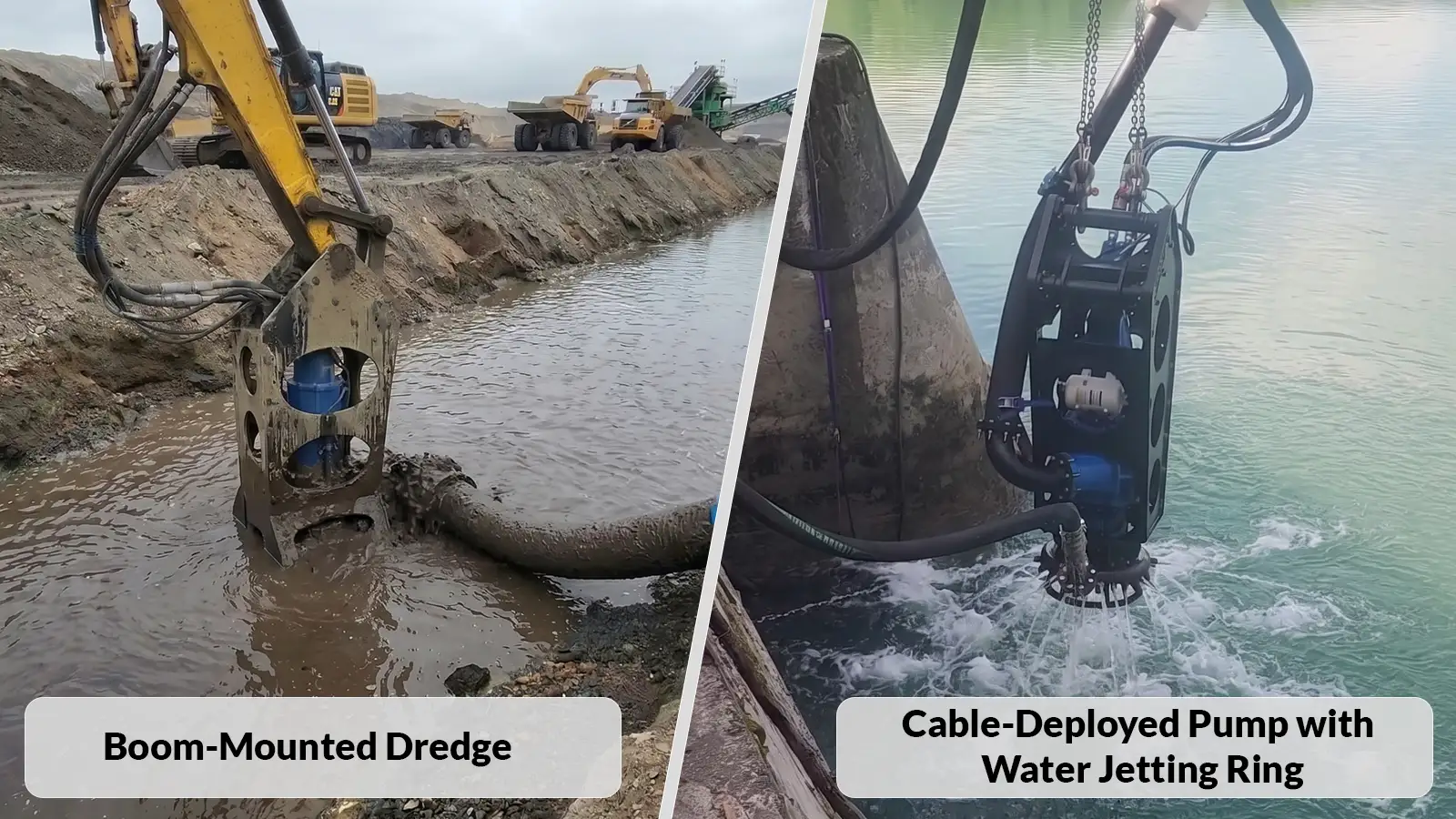
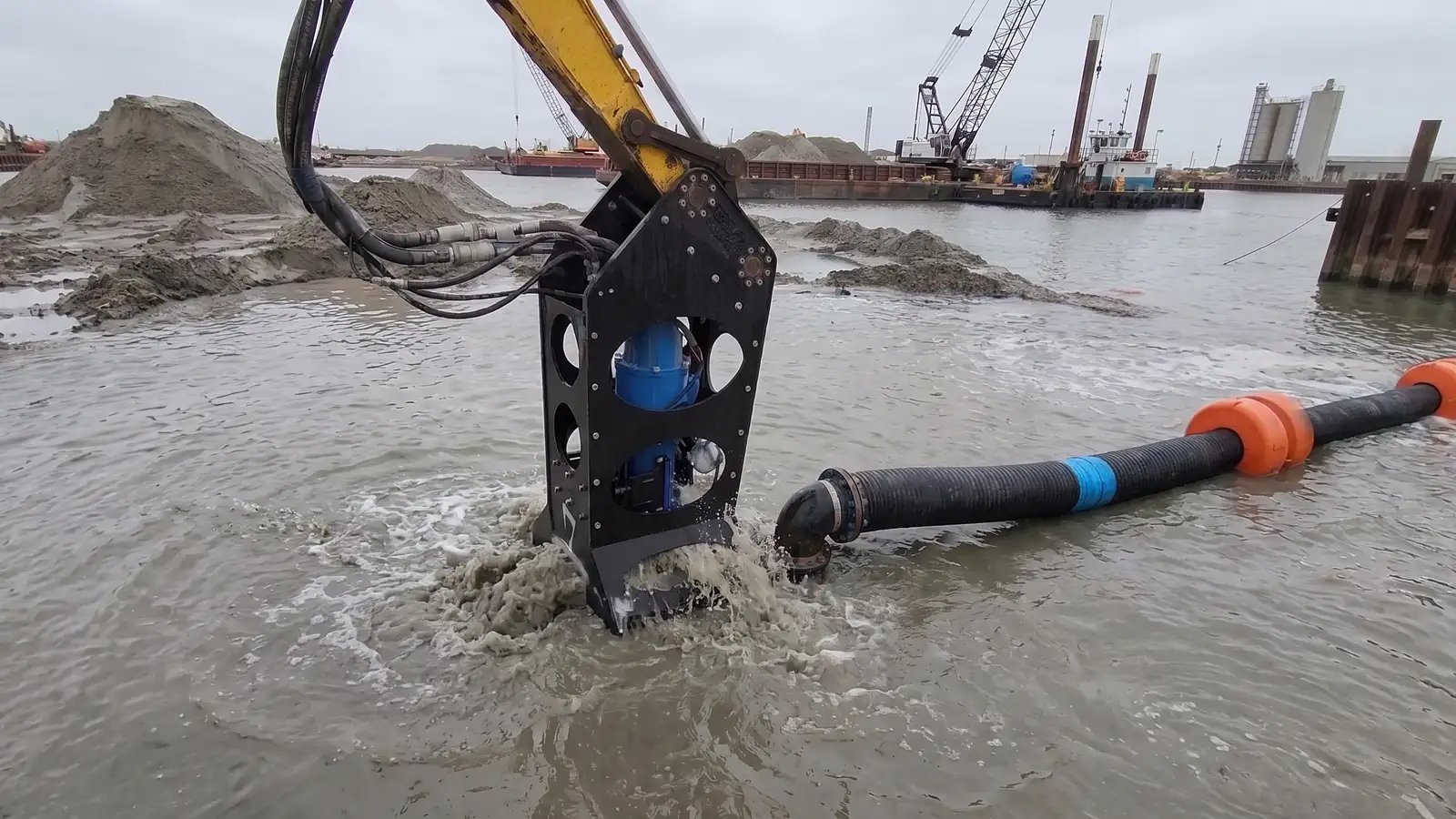
Excavator-mounted pump attachments solve access problems by bringing dredging capability to equipment that can traverse varied terrain. An excavator fitted with a dredge pump attachment can work from shorelines, wade into shallow water, or operate from temporary work platforms without the mobilization complexity of dedicated dredging vessels.
Wetlands and Environmentally Sensitive Areas
Environmental dredging projects in marshes, wetlands, and protected waterways require equipment that minimizes habitat disturbance. Low ground pressure becomes essential to avoid damaging soft substrates. Turbidity control matters for protecting water quality and aquatic ecosystems.
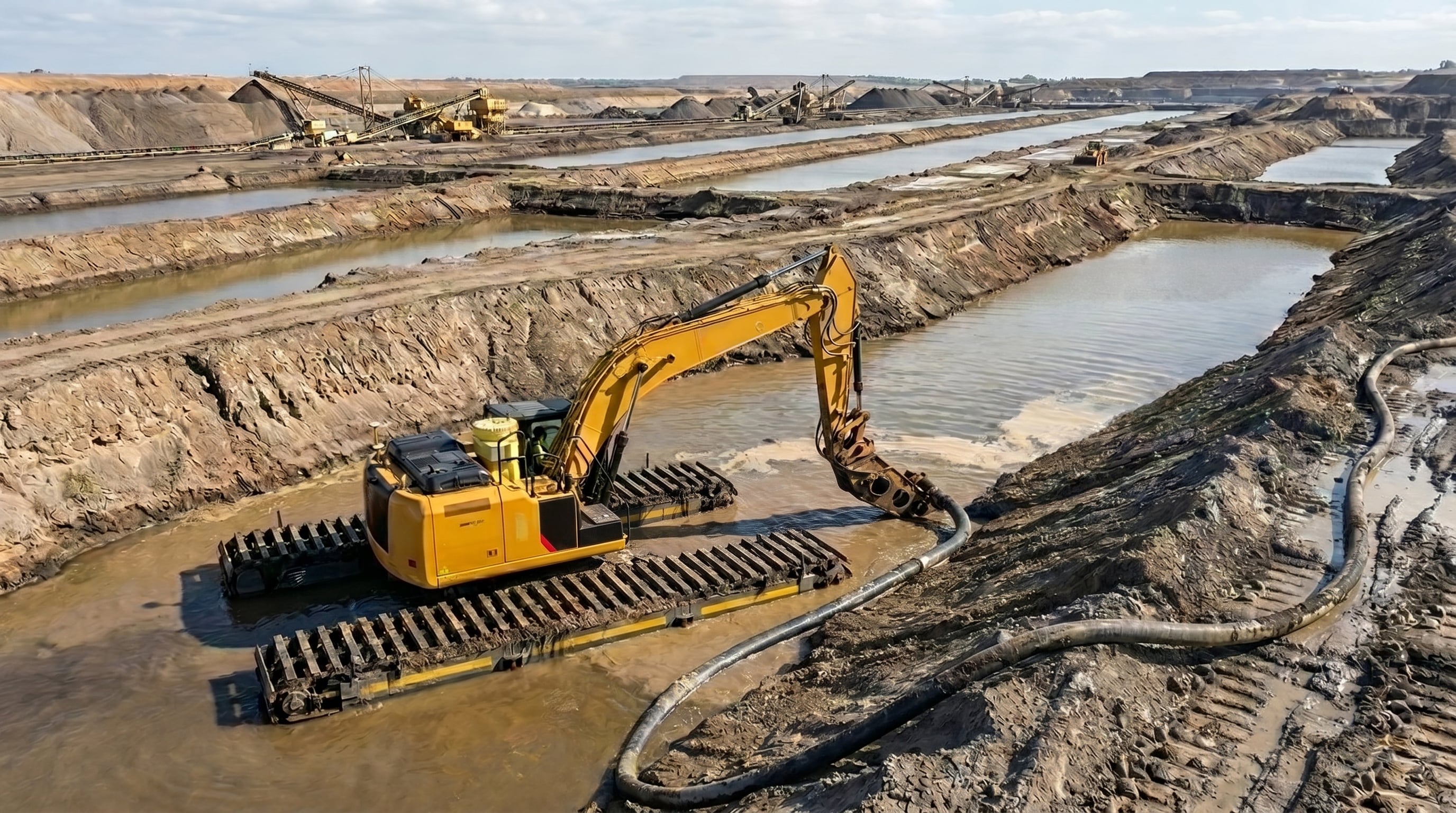
Amphibious excavators with pontoon undercarriages provide access to areas where conventional equipment would sink or cause excessive damage. These machines distribute weight across larger surface areas, allowing navigation through swamps and marshy terrain while maintaining the digging power needed for effective sediment removal.
How Do Different Dredge Types Compare for Waterway Maintenance?
Waterway maintenance projects typically involve removing accumulated sediment to restore navigable depth or hydraulic capacity. The work is often repetitive, occurring on scheduled intervals as sediment re-accumulates. Equipment selection should prioritize efficiency for the expected material types and volumes.
Cutter Suction Dredgers
Cutter suction dredgers anchor in position using spuds driven into the bottom and swing laterally to cut and suction material across a defined arc. The rotating cutter head breaks apart compacted sediments while suction draws the loosened material into the pump system for pipeline transport.
These dredgers work well for creating and deepening channels, mining sand and aggregates, and land reclamation projects. They deliver continuous production when pumping material over long distances, though they require adequate swing room and stable working conditions without significant wave action.
Trailing Suction Hopper Dredgers
Trailing suction hopper dredgers are self-propelled vessels that drag suction pipes along the bottom while moving. Dredged material collects in onboard hoppers for transport to disposal sites, where it can be discharged through bottom doors or pumped ashore.
This equipment type dominates large-scale maintenance dredging in shipping channels and coastal areas. The mobility and self-contained operation make hopper dredgers efficient for covering extensive areas, though they are less precise for confined spaces or shallow water work.
Mechanical Excavator-Based Systems
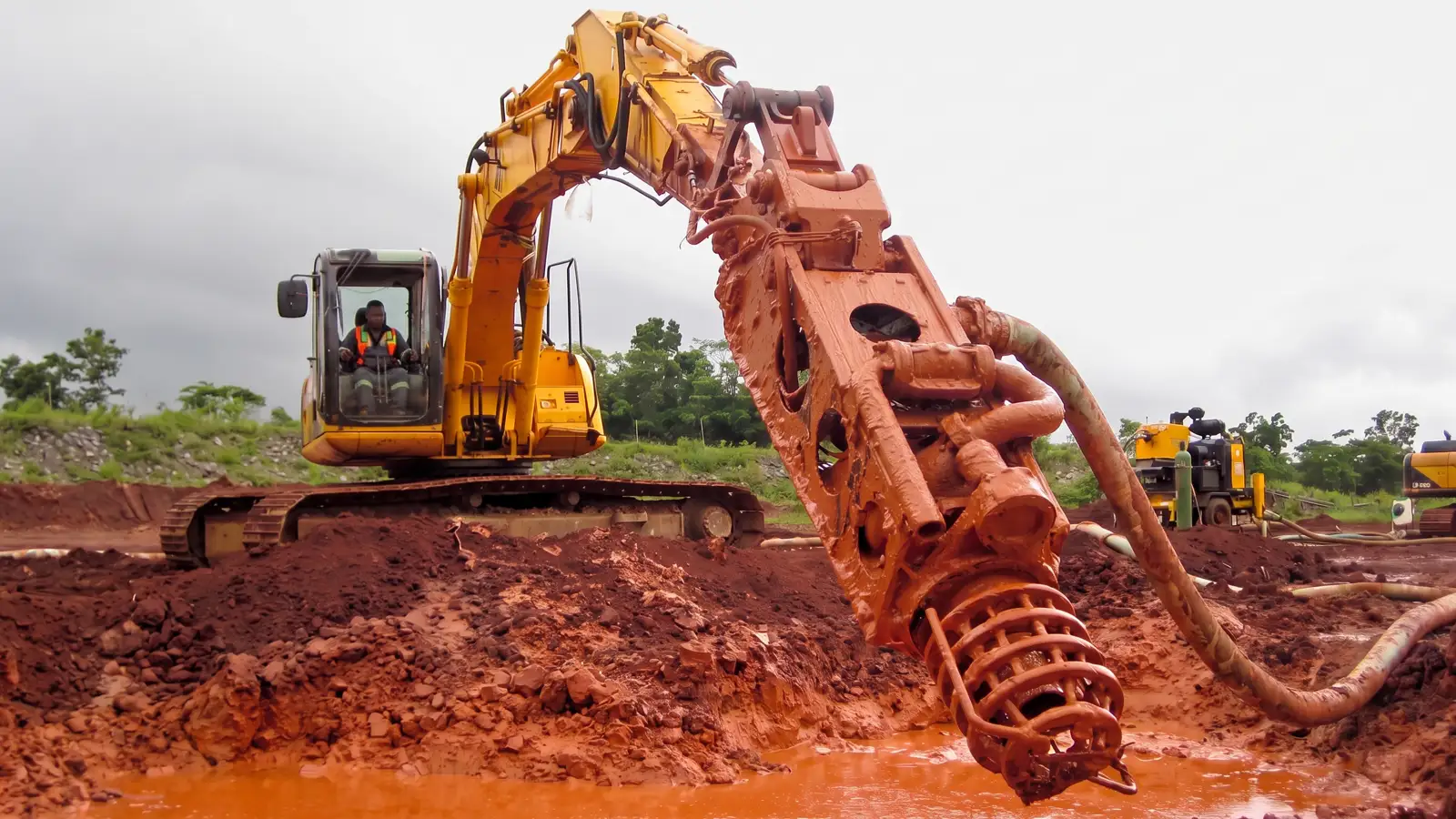
Excavator-mounted dredge pumps combine the positioning control of mechanical excavation with hydraulic material transport. The excavator provides precise placement of the pump intake while the dredge pump handles slurry transport through discharge pipelines.
EDDY Pump's excavator pump attachments transform standard excavators into high-solids dredging systems. Available in 4-inch through 12-inch configurations, these attachments support flow rates from 250 to 7,300 GPM with solids handling up to 11 inches depending on material and conditions.
What Equipment Options Work for Marine Construction Projects?
Marine construction dredging differs from maintenance work in its relationship to other project activities. Dredging often represents one phase within larger construction programs involving pile driving, concrete placement, or structure installation. Equipment selection must consider coordination with other operations and the specific material removal requirements of construction applications.
Foundation and Trench Excavation
Creating foundations for marine structures or trenches for pipeline installation requires controlled excavation to specific depths and profiles. Precision matters more than raw volume capacity. Backhoe dredgers and clamshell dredgers excel in these applications because mechanical excavation provides direct control over material removal.
The breakout force of mechanical systems handles dense clay, gravel, and even soft rock that suction systems cannot dislodge. Backhoe dredgers concentrate immense pressure at the cutting edge, making them indispensable for foundation preparation in hard materials.
Land Reclamation and Fill Placement
Large-scale land reclamation projects require moving massive volumes of material from borrow areas to placement sites. Cutter suction dredgers with pipeline discharge or hopper dredgers with rainbowing capability can place fill material across extensive areas efficiently.
The economics of reclamation favor equipment with high continuous production rates. Pipeline transport distances, pump head capacity, and material flow consistency all influence equipment selection for these volume-driven projects.
Environmental Remediation in Construction Zones
Marine construction sometimes encounters contaminated sediments requiring careful removal and containment. Environmental dredging demands precision to remove target material without spreading contamination or disturbing clean sediments below the remediation zone.
EDDY Pump's environmental dredge configurations target specific material without over-dredging, reducing the volume requiring treatment and lowering overall remediation costs. Liner-safe options protect geomembrane liners in containment areas during cleanup operations.
How Should You Evaluate Pump Technology and Solids Handling?
The pump represents the heart of any hydraulic dredging system. Pump technology determines what materials you can move, how much you can move, and how often you'll stop for maintenance. This is where equipment selection directly hits your production rates and operating costs.
Centrifugal Pump Limitations
Most conventional dredge pumps use centrifugal technology designed around water. The impeller spins at high speed, creating pressure differential that draws material through the pump. This design works efficiently when pumping clean water or light slurry with minimal solids content.
Introduce solids, and centrifugal pumps face challenges. Tight clearances between the impeller and casing clog with debris. Abrasive particles wear impeller surfaces rapidly. Solids pack into passages and cause blockages requiring operator intervention. Each clog stops production while crews clear the pump, then restarts the cycle of wear and eventual failure.
Non-Clog Technology for High-Solids Applications
EDDY Pump technology takes a fundamentally different approach. The patented recessed rotor design creates a powerful eddy current that moves material hydrodynamically rather than through direct impeller contact. The open rotor sits recessed within the volute, eliminating the critical clearances where conventional pumps clog.
This geometry allows passage of solids up to 11 inches in diameter through the 12-inch pump. Rocks, rags, fibrous material, and large debris pass through without blocking the flow path. The result is more uptime, fewer maintenance stops, and longer intervals between wear part replacement.
Matching Pump Size to Production Requirements
Pump sizing involves balancing flow capacity against discharge head requirements, solids concentration, and pipeline friction losses. Undersized pumps cannot maintain adequate line velocity, causing solids to settle and plug the pipeline. Oversized pumps waste energy and increase wear rates without proportional production gains.
EDDY Pump offers dredge pump configurations from 4-inch through 12-inch discharge sizes. The 4-inch units produce 250–1,200 GPM for smaller applications, while 12-inch systems deliver 2,600–7,300 GPM for high-volume projects. Each size maintains consistent solids handling capability of 40–70% by volume.
What Deployment Configurations Should You Consider?
How you get the pump to the material matters as much as the pump itself. Deployment configuration affects mobilization costs, site access, operational flexibility, and the range of projects you can tackle with your equipment investment.
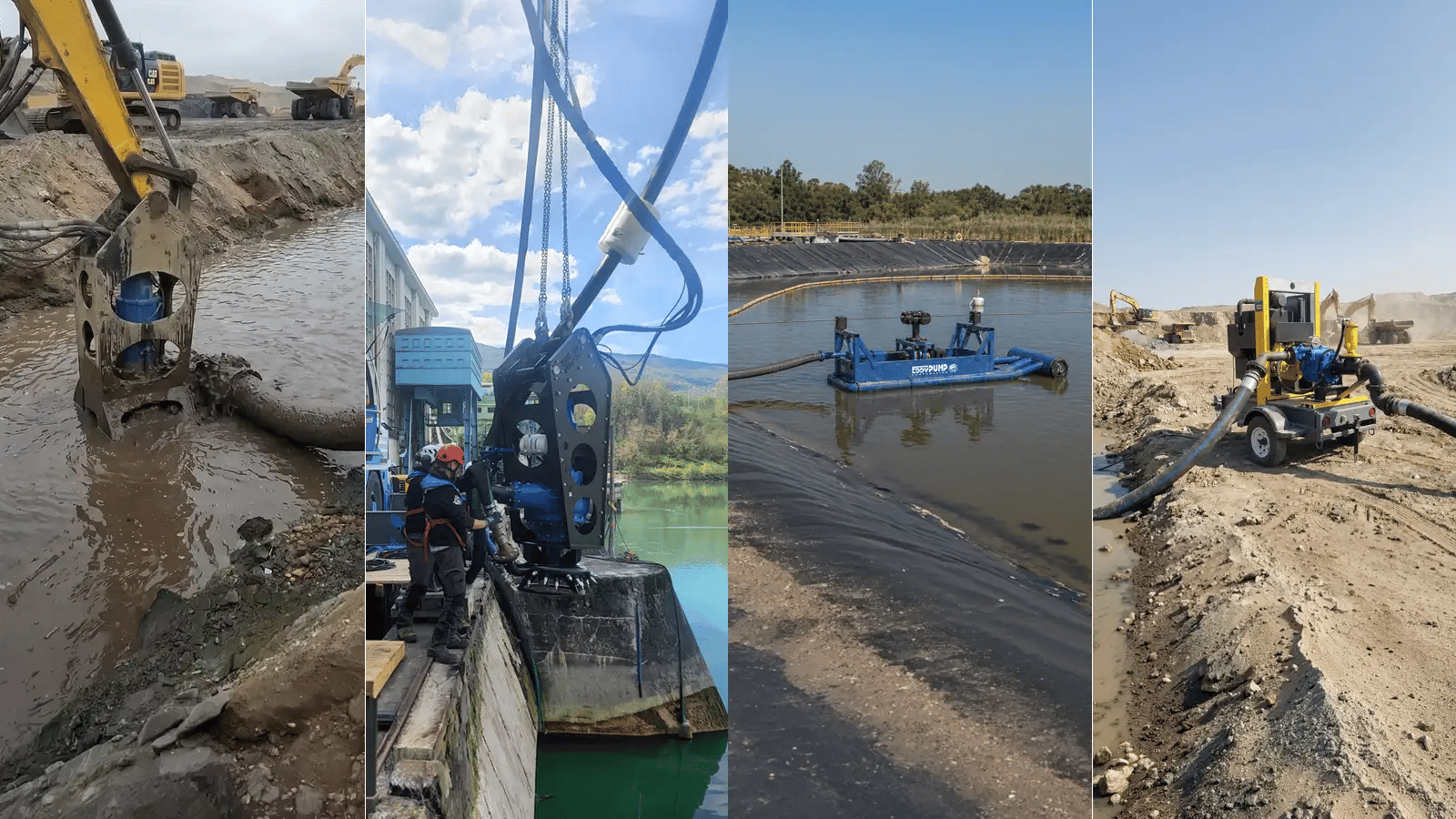
Excavator-Mounted Attachments
Excavator pump attachments convert existing excavators into dredging systems without dedicated dredging vessel investment. The attachment pins into the excavator's existing bucket linkage and runs from the excavator's hydraulic system or a standalone hydraulic power unit.
This configuration provides exceptional flexibility. The same excavator can perform conventional digging work, then switch to dredging mode by installing the pump attachment. Access to the work zone depends on where the excavator can position itself, whether that's shoreline, barge deck, or shallow water wading.
EDDY Pump excavator attachments include options for standard cutterheads, auger heads for dense sludge, water jetting rings for compacted material, and liner-safe wheels for operations in lined ponds.
Submersible and Cable-Deployed Systems
Submersible dredge pumps operate directly in the material being moved, eliminating suction lift limitations and allowing operation at significant depth. Cable-deployed systems lower the pump to the work zone from surface support equipment.
Remote-operated submersible dredges like the Subdredge provide operator positioning control without placing personnel in the water. These systems handle production rates up to 4,500 GPM while maintaining the ability to navigate challenging underwater environments.
Modular Dredge Systems
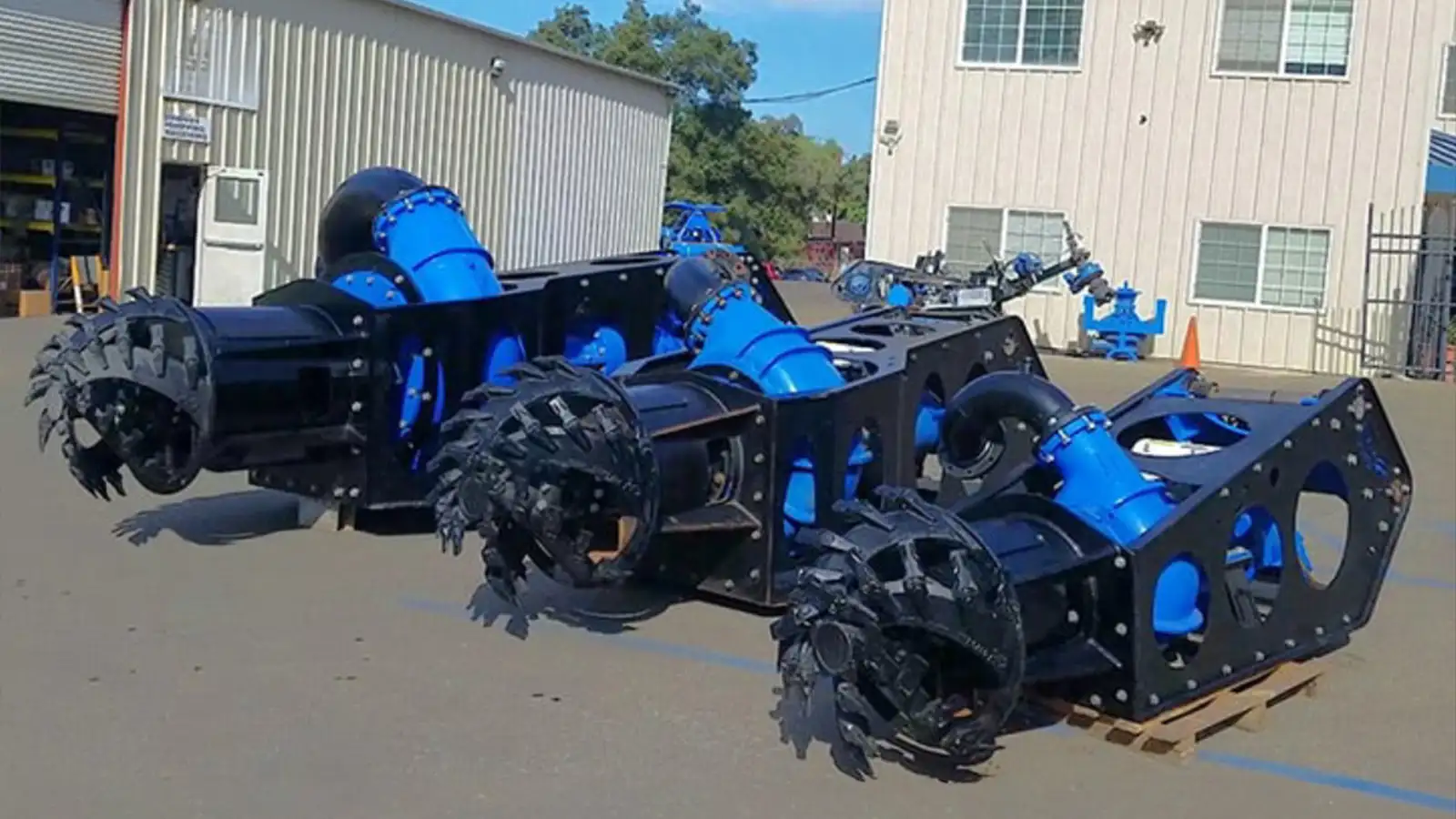
Modular dredge platforms assemble from transportable components for deployment in locations where moving a complete dredging vessel would be impractical or impossible. The ModDredge portable cutterhead dredge systems ship in standard containers and assemble on-site for projects ranging from 4-inch to 16-inch pump sizes.
This approach solves logistics challenges for remote sites, landlocked ponds, and projects where water access for conventional dredge mobilization doesn't exist. The equipment reaches the site by truck, assembles rapidly, and begins dredging without waiting for marine transport.
Self-Priming Surface Units
Self-priming pump systems keep the pump and power unit above the water surface, extending a suction hose into the material. This configuration works well for applications where submersible operation isn't practical and provides easier access for maintenance and monitoring.
Trailer-mounted or skid-mounted self-priming units offer high mobility between work sites. The equipment loads onto standard transport and moves to the next location without specialized marine logistics.
How Do You Calculate Total Cost of Ownership for Dredging Equipment?
Purchase price represents only the starting point for equipment cost analysis. Operating expenses, maintenance requirements, and production efficiency determine the true cost per cubic yard of material moved. Equipment that costs less initially but underperforms in the field will ultimately cost more per unit of production.
Fuel and Power Consumption
Energy costs accumulate continuously during dredging operations. Larger diesel-powered systems consume substantial fuel volumes, while electric-powered equipment trades fuel costs for infrastructure requirements at the work site. Hydraulic efficiency affects how much power translates into actual material movement versus losses.
High-efficiency pump designs that maintain production rates while consuming less power reduce operating costs across project duration. The energy cost difference between efficient and inefficient equipment compounds over thousands of operating hours.
Wear Parts and Maintenance Intervals
Dredging environments destroy equipment. Abrasive particles grind against wear surfaces, corrosive water attacks metal components, and debris impacts stress mechanical systems. The rate of wear part consumption directly impacts maintenance costs and production downtime.
EDDY Pump's open rotor design dramatically reduces wear compared to conventional impeller pumps. The recessed rotor geometry prevents direct particle impact that destroys centrifugal impellers. Longer service intervals between part replacement mean lower parts costs and more hours of productive operation.
Downtime and Production Loss
Every hour your equipment sits idle for maintenance or clog clearing is an hour of lost production. In contract dredging, that lost production translates directly to schedule slippage and cost overruns. For internal operations, downtime delays dependent activities and disrupts project sequencing.
Non-clog pump technology reduces unplanned downtime by eliminating the most common cause of production interruption. Equipment that runs continuously at designed capacity produces more material per operating period than equipment that requires frequent operator intervention.
Mobilization and Support Costs
Getting equipment to the work site and supporting operations once there adds significant project costs. Large dredging vessels require marine transport, tugboat support, and specialized mooring systems. Smaller, more mobile equipment reduces these logistics expenses.
Excavator-mounted dredge systems and modular dredge platforms minimize mobilization complexity. Equipment that arrives by truck and deploys without marine infrastructure dramatically cuts the overhead of project startup.
What Maintenance Practices Extend Dredging Equipment Life?
Proper maintenance protects your equipment investment and maintains production capability. Dredging environments are harsh, but systematic maintenance practices can extend equipment life well beyond what neglected systems achieve.
Pump System Maintenance
The dredge pump takes constant punishment from abrasive slurry. Regular inspection of the rotor, wear plates, and volute identifies wear before it causes failure. Seal systems require monitoring to prevent bearing contamination and subsequent damage.
For conventional pumps, impeller balance and clearance adjustment demand frequent attention. EDDY Pump's recessed rotor design simplifies maintenance by eliminating critical clearance adjustments and reducing wear rate on primary components.
Hydraulic System Care
Hydraulic-powered dredge equipment depends on clean fluid and properly functioning components. Contaminated hydraulic fluid damages pumps, motors, and valves throughout the system. Filter maintenance and fluid condition monitoring prevent cascading failures from contamination.
Regular inspection of hoses, fittings, and cylinders catches leaks and wear before they cause operational problems. Hydraulic system cleanliness directly affects component life and system reliability.
Pipeline and Discharge System Inspection
Discharge pipelines carry abrasive slurry at high velocity. Wear concentrates at bends, joints, and areas of turbulence. Rotating pipe sections to distribute wear evenly extends replacement intervals. Monitoring pipeline thickness identifies sections approaching failure before they burst.
Magnetic flow meters help maintain proper line velocity, preventing solids settlement that leads to plugging and the subsequent pressure spikes when blockages release.
How Do Environmental Regulations Affect Equipment Selection?
Environmental compliance increasingly shapes dredging equipment decisions. Turbidity limits, sediment containment requirements, and habitat protection measures restrict which equipment types and methods are permissible for specific projects.
Turbidity Control Requirements
Many waterway projects face strict limits on sediment suspension in the water column. Equipment that generates excessive turbidity during operation may not be permitted, regardless of its production efficiency. Mechanical dredges with controlled material handling often generate less turbidity than aggressive hydraulic methods.
Environmental dredge configurations designed for precision removal minimize disturbance to surrounding sediments. Targeting only the intended material reduces the volume displaced and limits turbidity generation during operations.
Contaminated Sediment Handling
Dredging contaminated sediments requires equipment that prevents spreading pollutants to clean areas. Containment measures, controlled discharge, and precise removal capabilities become essential rather than optional features.
EDDY Pump environmental dredge systems provide targeted sediment removal without over-dredging into clean material below. This precision reduces the volume of contaminated material requiring treatment or disposal, directly lowering remediation costs.
Protected Habitat Considerations
Work in or near protected habitats may require equipment with low ground pressure, minimal noise generation, or limited operational footprint. Seasonal restrictions on dredging during fish spawning or bird nesting periods affect equipment scheduling and utilization.
Equipment selection for environmentally sensitive projects must balance production requirements against regulatory constraints. Sometimes the most efficient equipment isn't permissible, and project planning must accommodate compliant alternatives.
In Conclusion: Matching Equipment to Project Requirements
Selecting dredging equipment comes down to matching machinery capabilities to your specific material, site conditions, production requirements, and operational constraints. The right equipment moves material efficiently without excessive downtime, maintenance costs, or regulatory complications.
Material type drives the fundamental choice between mechanical and hydraulic excavation methods. Site access determines deployment configuration options. Production targets establish pump sizing and system capacity requirements. Total cost analysis reveals which equipment delivers the lowest cost per unit of material moved over project duration.
EDDY Pump manufactures both pumps and dredging equipment at the El Cajon, California facility, ensuring integrated systems designed for demanding applications. The patented non-clog pump technology handles 40–70% solids by volume with passage capability for objects up to 11 inches. More than 5,000 projects completed across mining, dredging, wastewater, and marine construction demonstrate proven performance in real-world conditions.
If you're evaluating dredging equipment for waterway maintenance or marine construction, speak with an engineer about your specific application. Call 619-404-1916 or visit eddypump.com to discuss material characteristics, site conditions, and production requirements with specialists who understand dredging challenges from decades of field experience.
FAQs About Choosing Dredging Equipment
What factors matter most when selecting dredging equipment?
Material type, water depth, site access, production requirements, and total cost of ownership are the primary factors. Material characteristics determine whether you need mechanical or hydraulic excavation. EDDY Pump systems handle 40–70% solids by volume, making them effective for high-solids applications where conventional pumps clog and fail.
How does an excavator pump attachment compare to a dedicated dredge?
Excavator pump attachments offer flexibility and lower mobilization costs for projects where site access limits conventional dredge deployment. EDDY Pump excavator attachments produce up to 7,300 GPM and handle solids up to 11 inches, providing production capability comparable to dedicated dredges with greater operational flexibility.
What pump technology works for abrasive materials and high-solids slurry?
Non-clog pump designs outperform conventional centrifugal pumps in abrasive, high-solids applications. EDDY Pump's patented recessed rotor creates an eddy current that moves material without direct impeller contact, eliminating clogging and dramatically reducing wear on pump components.
Can dredging equipment operate in lined ponds without damaging the liner?
Liner-safe configurations allow dredging in poly, clay, and concrete-lined containment areas. EDDY Pump offers liner-safe wheel options and controlled agitation systems designed to remove sediment while protecting geomembrane and other liner surfaces from damage.
What maintenance extends dredging equipment service life?
Regular inspection of wear surfaces, seal systems, hydraulic components, and discharge piping identifies problems before they cause failure. EDDY Pump's open rotor design reduces maintenance frequency by eliminating critical clearances and minimizing wear rates compared to conventional impeller pumps.
How do you calculate the true cost of dredging equipment?
Total cost includes purchase price, fuel consumption, wear parts, maintenance labor, and production downtime. Equipment that costs more initially but delivers higher production rates and lower operating costs often produces the lowest cost per cubic yard over project duration.