Ask someone new to dredging what equipment a project needs, and the first answer is usually “a dredge pump.” The pump matters, but it is only one part of the system. A hydraulic dredge project also needs the right platform, discharge hose, HDPE pipe, flotation, booster support, instrumentation, positioning, and discharge-side containment. If any one part is undersized or mismatched, the pump may never deliver its rated production in the field.

This guide walks through the major pieces of hydraulic dredge equipment in the order a contractor, mine, municipality, or industrial plant should think about them. The goal is simple: understand what each component does, how it affects production, and what information EDDY Pump engineering needs to size the full system correctly.
Quick Answer
A hydraulic dredge project usually needs a dredge platform, slurry pump, cutterhead or agitation method, discharge hose, HDPE pipe, pipeline floats, booster pumps if the discharge run is long, flow measurement, positioning, anchoring, and a plan for where the dredged material will go. Start with the site and material first: water depth, access, sediment type, solids concentration, required production rate, discharge distance, and disposal area. Then select the platform and size the pump, pipeline, floats, and instrumentation as one connected system rather than separate parts.
Key Takeaways
- The dredge pump is only one part of the system; the platform, pipeline, floats, boosters, and controls determine whether production is realistic.
- Platform selection comes first: floating dredges, excavator pump attachments, cable-deployed pumps, and dredge sled systems fit different site conditions.
- Discharge hose and HDPE pipe should be sized around flow rate, slurry velocity, friction loss, pressure rating, and solids settling risk.
- Pipeline floats are core equipment for open-water discharge lines, not optional accessories.
- Long discharge distances may require booster pumps to maintain head, velocity, and solids transport through the line.
- Flow meters, density measurement, RTK/GPS, and survey data make dredging measurable, defensible, and easier to manage.
- The fastest path to a quote is to provide material data, production target, dredging depth, discharge distance, elevation change, pipe route, power source, and site access.
Start with the Job, Not the Pump
A beginner mistake is to pick a pump size first and then build the rest of the project around it. Hydraulic dredging does not work that way. The right pump package depends on the material, the water depth, the discharge distance, the available power, and how the dredge will physically reach the sediment.
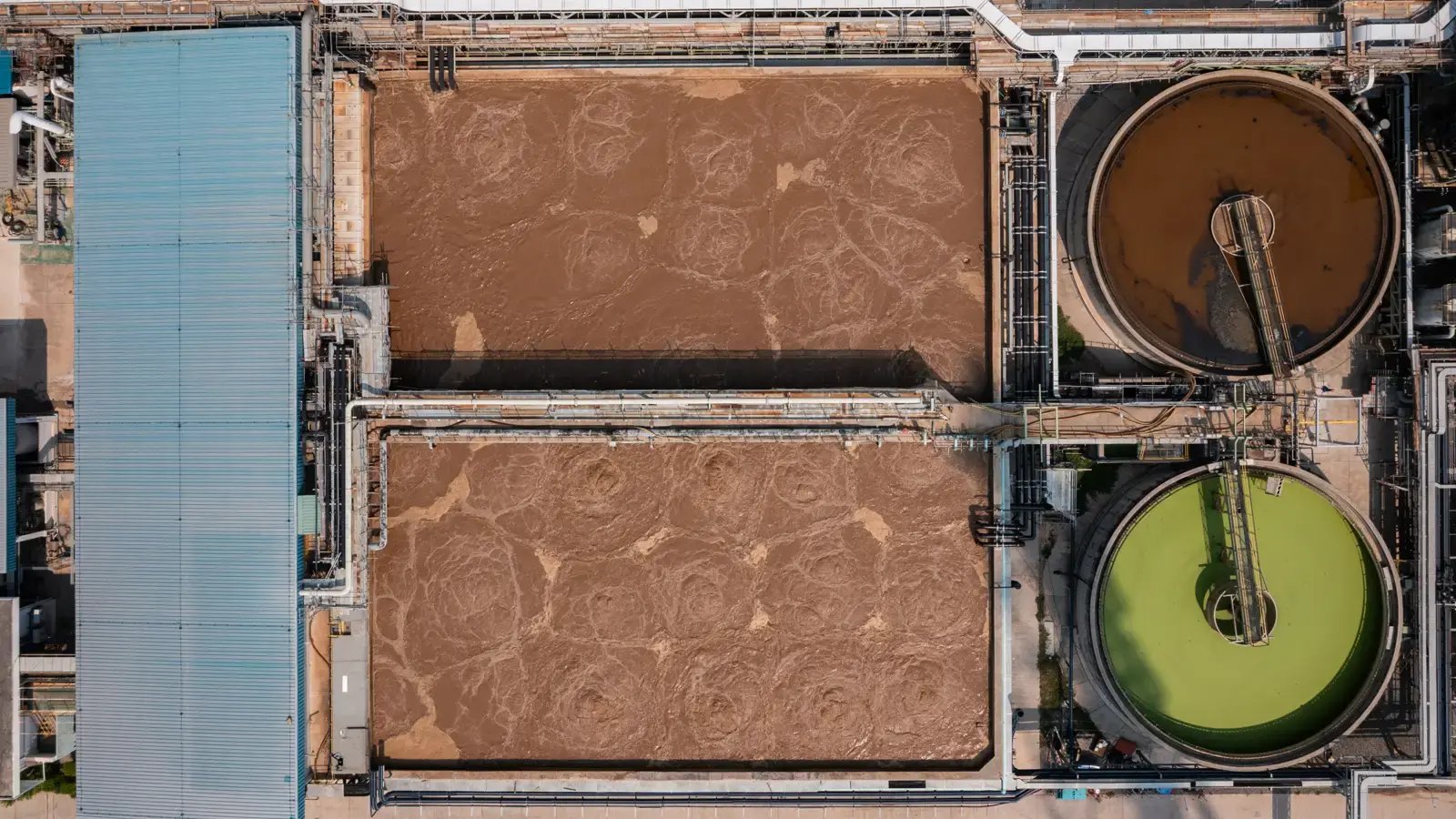
Think of the system like a chain. The pump can only perform if the intake can feed it, the discharge line can carry the slurry, the floats can support the line, and the booster system can maintain enough velocity over the full route. A weak link in any part of that chain slows production or creates downtime.
1. Choose the Dredge Platform
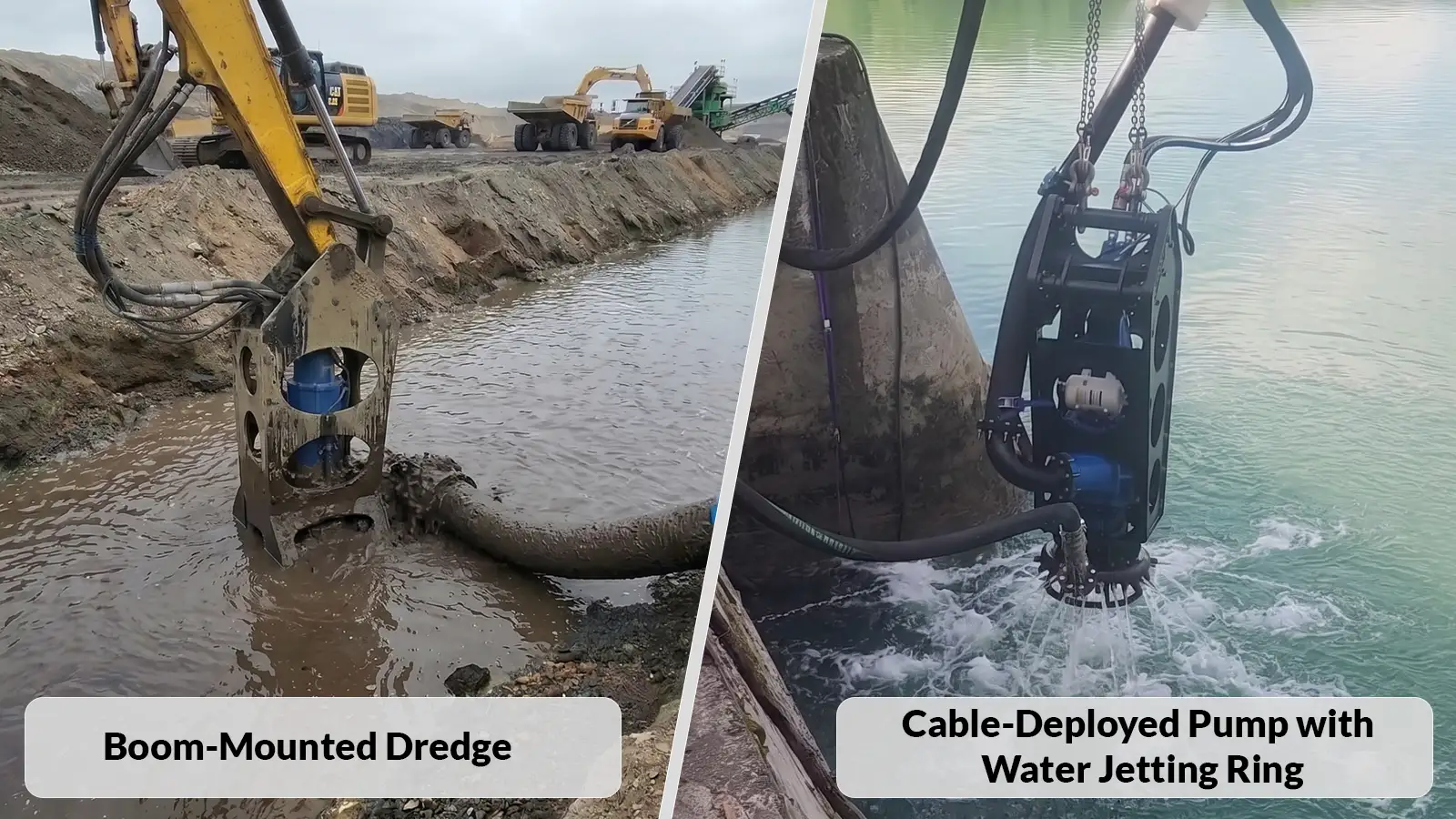
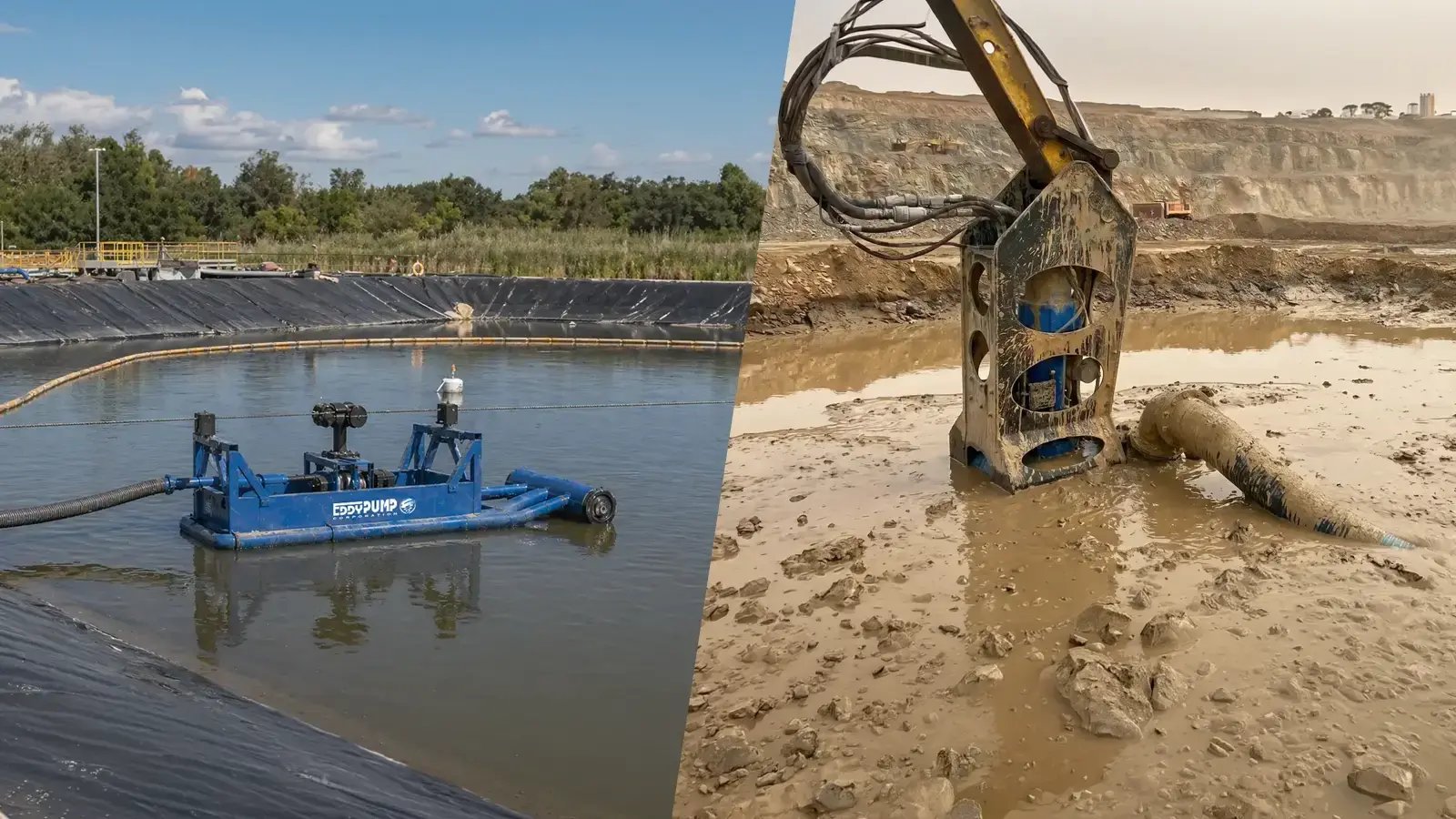
The first real equipment decision is the platform. Are you dredging from a floating vessel, from shore with an excavator, from a crane/barge, or from a low-profile sled that travels along the bottom? This is driven by site access, water depth, sediment type, liner risk, and production target.
|
Platform |
Best Fit |
Simple Example |
Primary EDDY Link |
|
Floating dredge / ModDredge |
Open water, sustained production, enough depth to launch and operate. |
A mine process pond or tailings pond needs ongoing high-volume sediment removal. |
ModDredge |
|
Excavator Pump Attachment |
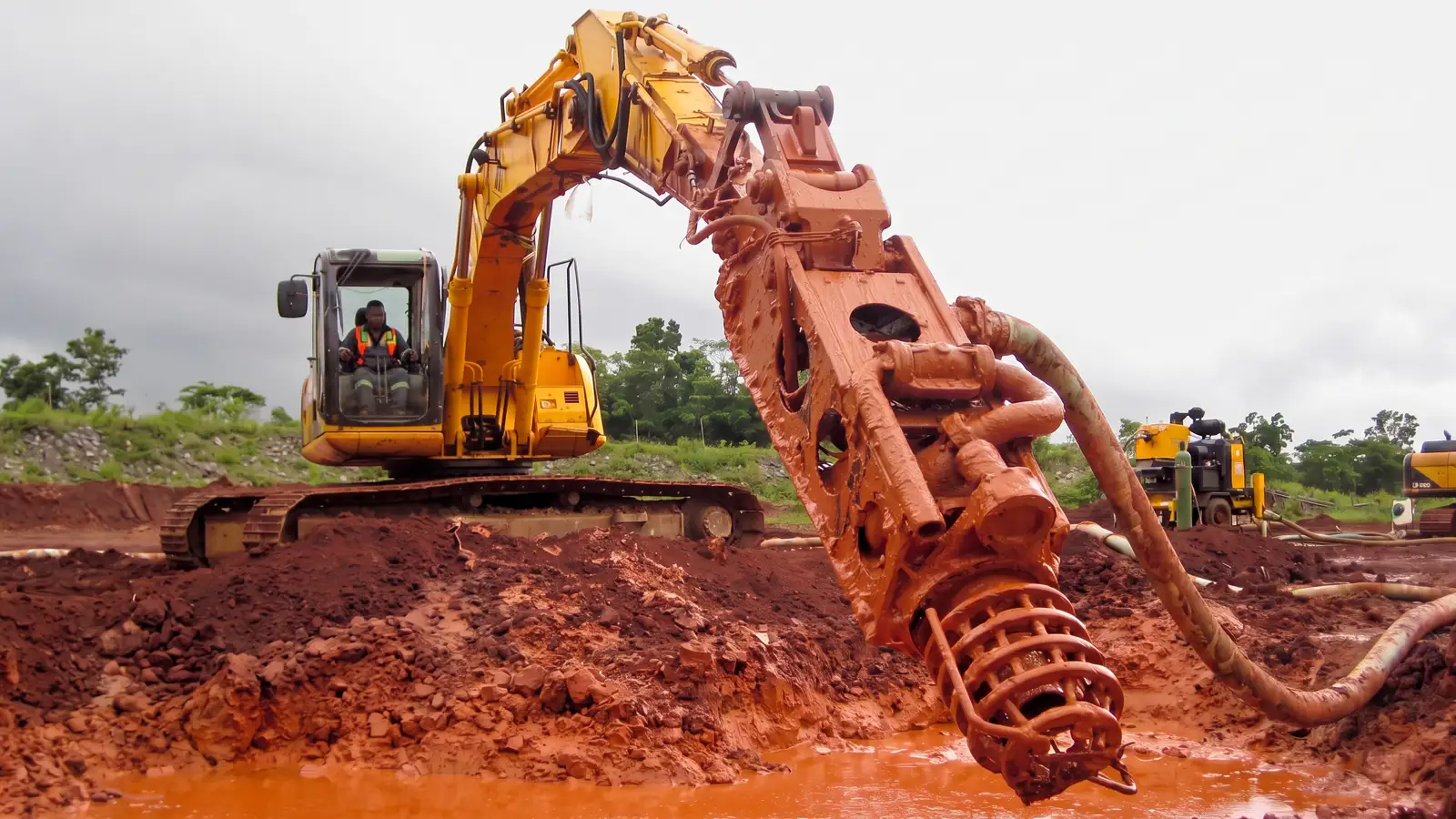
Shallow, confined, shoreline, canal, bank, or hard-to-launch locations. |
An excavator can work from the bank of a canal where a floating dredge cannot launch. |
Excavator Pump Attachment |
|
Cable-Deployed Dredge Pump |
Deep water, crane/barge access, pits, berths, and locations beyond boom reach. |
A port berth needs sediment removed below the reach of an excavator arm. |
Cable-Deployed Dredge Pump |
|
Dredge Sled |
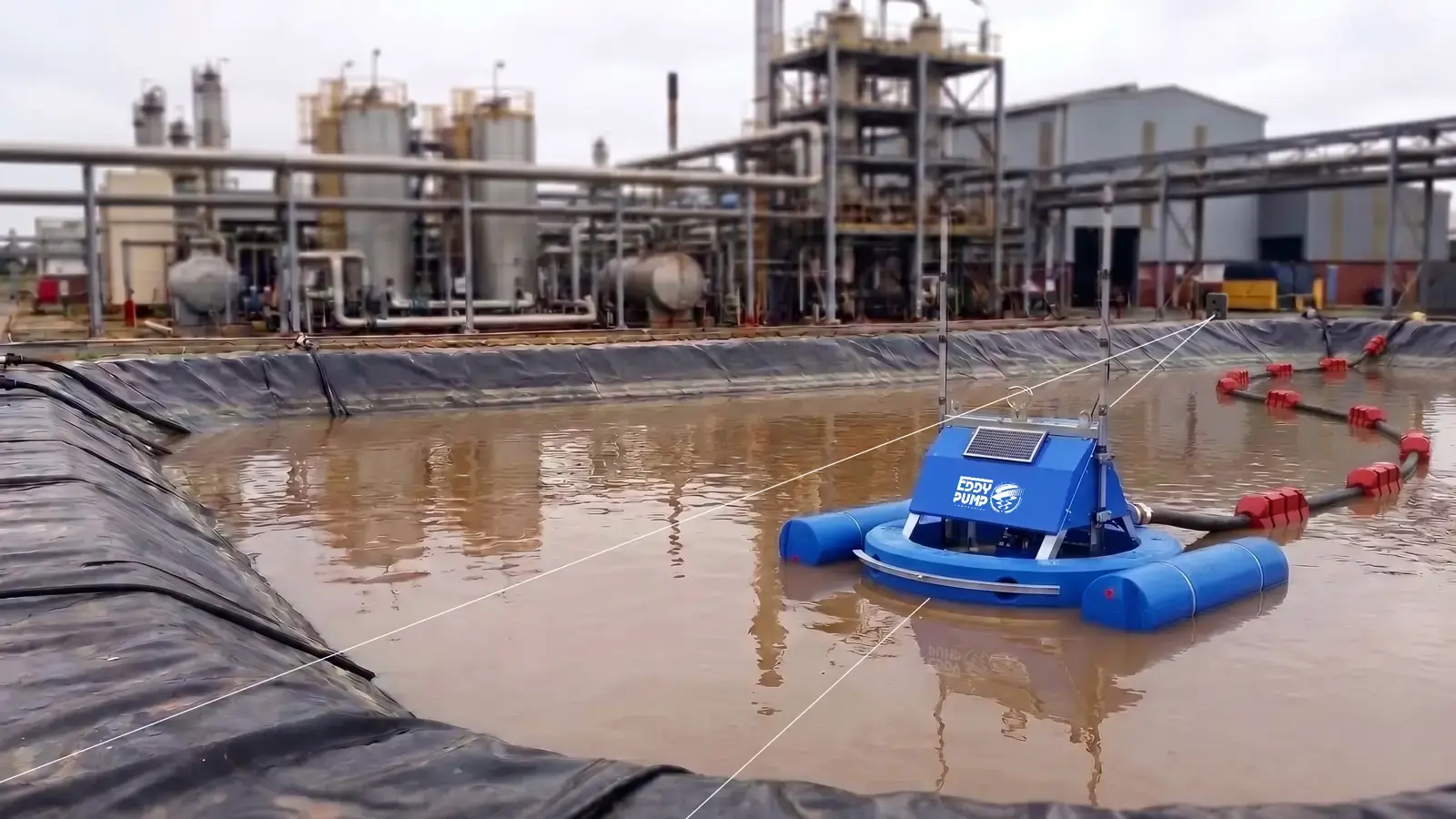
Ponds, lagoons, settling basins, tailings ponds, liner-sensitive or low-profile dredging. |
A lined industrial pond needs sediment removal with less aggressive bottom contact. |
Dredge Sled |
For larger modular dredging projects, review ModDredge. For bank, shoreline, shallow-water, and excavator-based dredging, review the Excavator Pump Attachment. For deeper deployment from a crane, barge, or A-frame, review the Cable-Deployed Dredge Pump. For lagoons, ponds, and liner-sensitive sediment removal, review the Dredge Sled.
2. Select the Pump Configuration and Power Source
Once the platform is clear, the pump configuration becomes easier to narrow down. A submersible or cable-deployed pump sits in the material. An excavator pump attachment mounts to the end of a boom. A self-priming or flooded suction pump may be used where the pump is installed outside the pit or pond. The power package may be hydraulic, electric, or diesel, depending on the site.
|
Question |
Why It Matters |
|
Is the pump submerged, on shore, on a barge, or on an excavator? |
This drives suction configuration, deployment type, and maintenance access. |
|
Is electric power available? |
Electric systems can be efficient and precise, but remote sites may need diesel or hydraulic power. |
|
Is an excavator already on site? |
An excavator pump attachment may reduce mobilization if hydraulic capacity is available. |
|
How abrasive or dense is the slurry? |
Material type affects pump size, wear package, cutterhead/agitation, and pipeline design. |
|
How far and how high must the slurry travel? |
Discharge distance and elevation affect head, pipe size, pressure rating, and booster needs. |
3. Size the Discharge Slurry Hose
The discharge slurry hose is the flexible section that connects the pump to the pipeline. It absorbs movement, vibration, and alignment changes that rigid pipe cannot handle. It is commonly used near the pump, around floating dredge articulation points, at bends, and at transitions where the line needs flexibility.
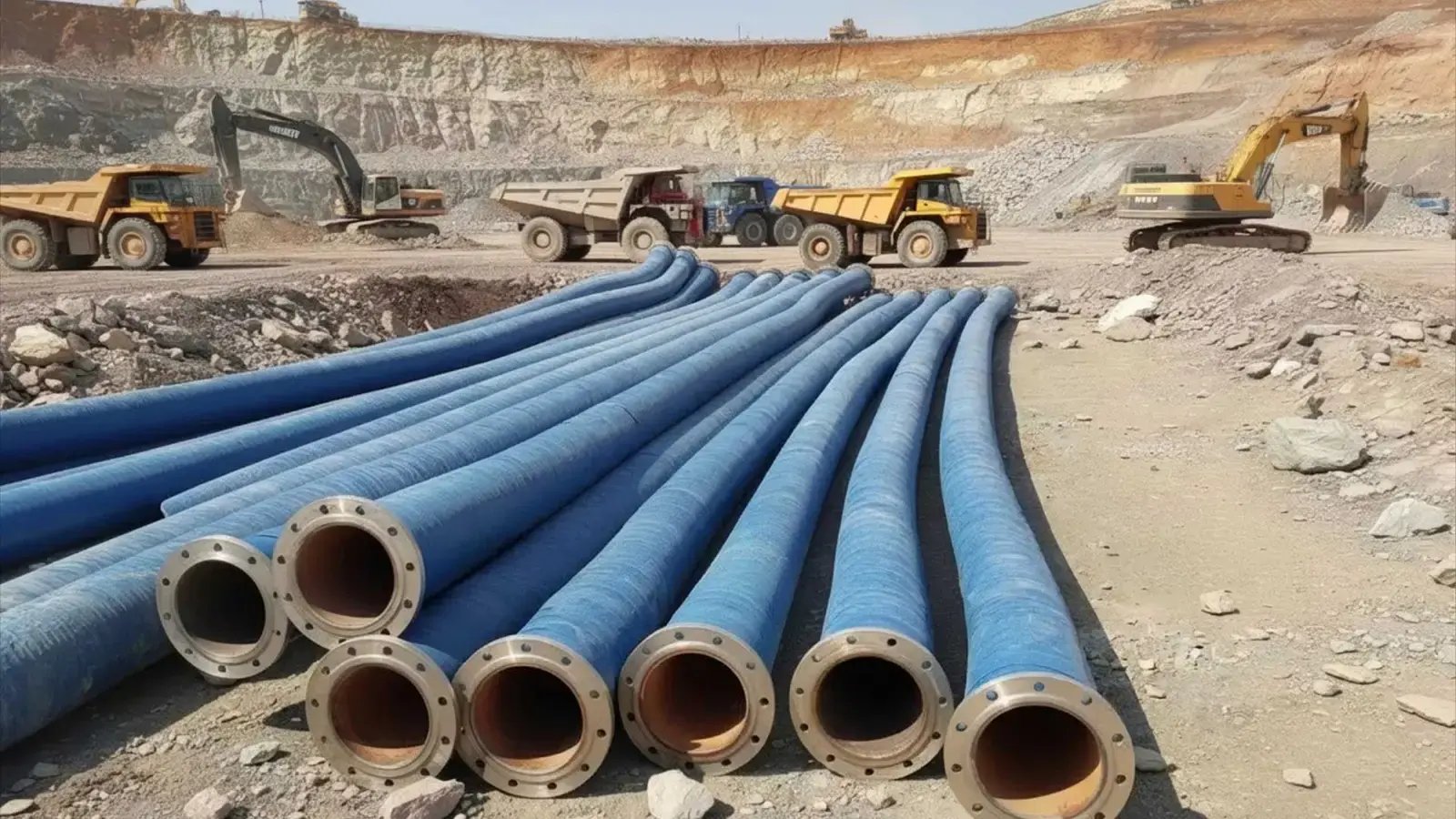
If the hose is too small, velocity and friction loss increase, which can accelerate wear. If it is too large, velocity may drop below the level needed to keep solids suspended, which can cause settling and blockages.
A simple planning formula for velocity is:
Velocity (ft/s) = (GPM x 0.4085) / Inside Diameter^2
Rearranged to estimate inside diameter:
Inside Diameter = square root of [(GPM x 0.4085) / Target Velocity]
For many dredging applications, engineers often evaluate slurry velocity in the general range of about 12-18 ft/s. This is not a universal rule. Coarse, dense, or high-specific-gravity material may need a higher velocity to avoid settling, while fine, uniform material may run lower. The final number should come from the slurry properties, pipe route, and pump curve.
For hose, pipe, fittings, and flexible discharge support, reference Anaconda Pipe & Hose dredging solutions.
4. Size the HDPE Discharge Pipe
HDPE pipe is usually used for longer, more fixed discharge runs. It has a smooth internal bore, strong abrasion and corrosion resistance, and works well for transporting sand, silt, slurry, and dredged material over distance.
The same velocity check used for hose applies to HDPE pipe, but pipe runs introduce a bigger issue: friction loss over distance. A pipe diameter that looks fine for a short run may create too much total dynamic head over a long route. That is why the pipeline should be sized with the pump curve, slurry density, elevation change, and discharge distance together.
HDPE pipe is also selected by pressure class, often expressed as DR or SDR. A lower DR number means a thicker wall and higher pressure rating. A higher DR number means a thinner wall and lower pressure rating. The right class depends on the maximum system pressure, total dynamic head, safety factor, and operating conditions.
|
Use Hose When... |
Use HDPE Pipe When... |
|
You need flexibility near the pump or dredge. |
You have a longer, straighter discharge route. |
|
The line must move with the dredge or excavator. |
Lower friction over distance matters. |
|
You need to absorb vibration or alignment changes. |
You need a more fixed pipeline with consistent routing. |
|
You are working through bends, transitions, or floating equipment interfaces. |
Pressure class, durability, and long-run efficiency are the priority. |
5. Add Pipeline Floats for Open-Water Discharge Lines
When a discharge line crosses open water, it needs flotation. Without the right floats, the pipeline can sink, drag on the bottom, kink, pull against fittings, or become difficult to manage as the dredge moves.
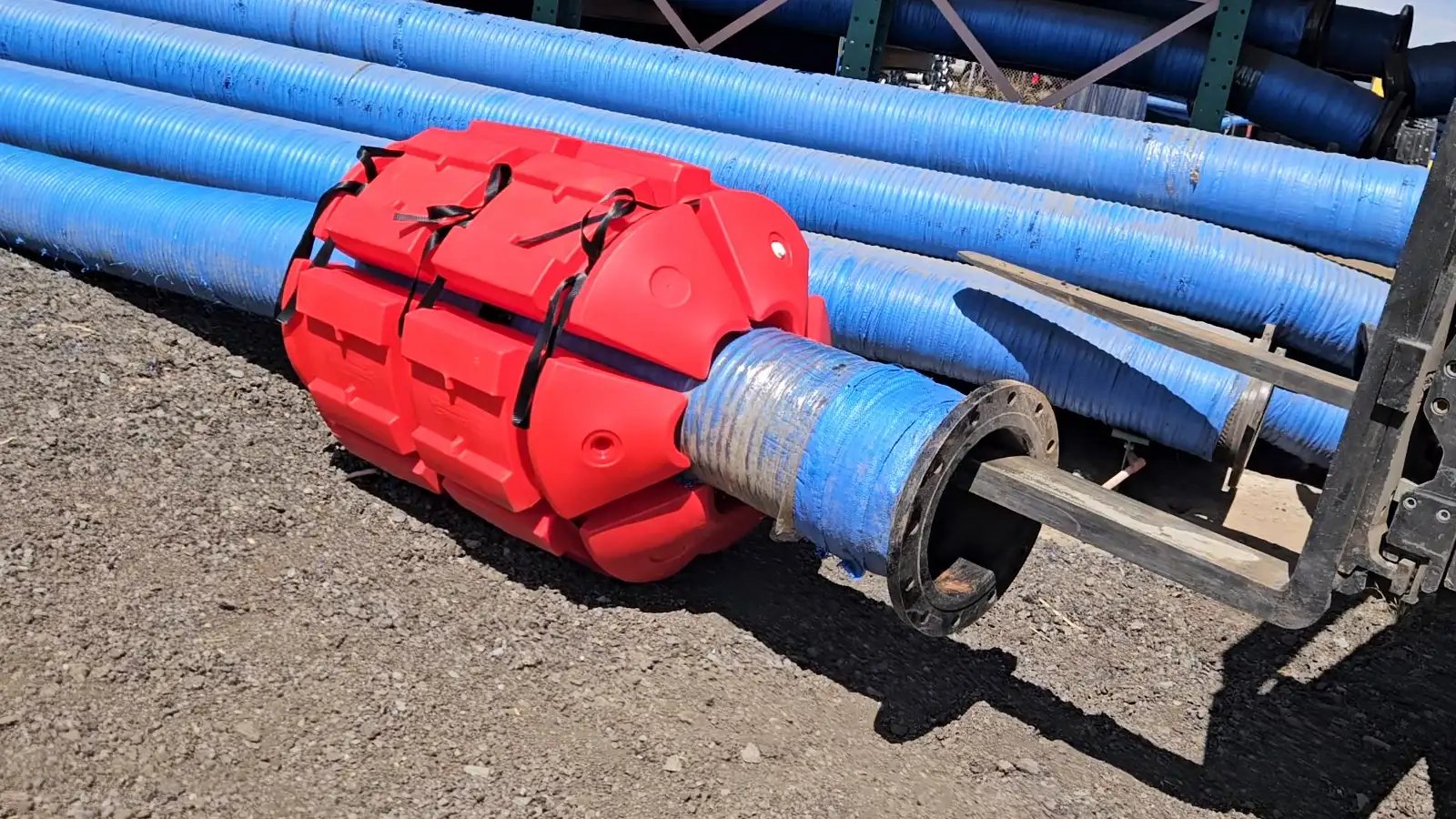
EZ Connect Floats are used to support pipe, hose, cable, and umbilicals in dredging, mining, marine construction, wastewater, industrial pumping, and temporary discharge projects. Float sizing should account for pipe or hose outside diameter, filled-line weight, slurry load, desired submergence, spacing, current, wave action, and installation layout.
For the content team: this is where we should naturally cross-link to EZ Connect dredging floats and, where appropriate, the specific float size pages.
6. Plan Booster Pumps for Long Discharge Distances
Every slurry pipeline loses head as material moves through it. The longer the pipeline, the more friction loss the pump must overcome. At some point, the main dredge pump may not have enough head left to maintain the target slurry velocity through the full line.
A Skid-Mounted Booster Pump is added along the discharge route to restore pressure and keep the slurry moving. Booster spacing should not be guessed. It depends on pipe diameter, material density, solids concentration, total dynamic head, elevation change, and the pump curve. As a planning concept, longer pipelines should be reviewed early for booster requirements so the line does not settle out mid-run.
7. Add Flow Measurement and Production Monitoring
A flow meter tells the operator how much slurry is moving through the discharge line. When paired with density measurement, the team can estimate actual solids production instead of only gallons of slurry. This matters because many projects are judged by the amount of sediment removed, not simply by how long the pump ran.
Wireless telemetry can be valuable because dredges, excavators, and floating pipelines move. A wired monitoring setup may not be practical on a mobile dredging spread. Real-time production data helps operators adjust speed, cutterhead position, discharge routing, and booster performance.
8. Use RTK/GPS and Survey Data for Cut Control
RTK/GPS positioning helps operators understand where the dredge is cutting compared with the permitted or contracted dredge plan. Without positioning and survey feedback, it is easy to over-dredge areas that are already clean or under-dredge areas that still need work.
For regulated projects, RTK/GPS, bathymetric survey data, and as-built documentation may be part of closeout and compliance. For production projects, they also reduce rework by helping the operator remove the right material the first time.
9. Budget for the Ancillary Equipment
- Cutterhead, auger, mixer head, or water jetting ring: used when material must be loosened, cut, or re-suspended before pumping.
- Hydraulic Power Unit (HPU): required when the pump or dredging equipment is hydraulically powered and the excavator or site equipment cannot supply the needed hydraulic flow and pressure.
- Anchoring, spuds, winches, or positioning system: holds a floating dredge in place against current, wind, and cutting forces.
- Discharge boom or hose management hardware: helps control discharge routing and reduce strain on hose and fittings.
- Turbidity curtains or silt barriers: often needed where the project has turbidity limits, nearby habitat, or regulatory requirements.
- Dewatering or containment: geotextile tubes, settling ponds, lined containment areas, or confined disposal facilities for the dredged material.
- Spare parts and wear kit: critical wear parts, gaskets, fittings, clamps, hoses, and tooling to avoid shutdowns while waiting for parts.
Example Dredge System Packages
|
Scenario |
Likely Equipment Path |
Why |
|
Mine process pond with high solids |
ModDredge or Dredge Sled + EDDY slurry pump + Anaconda HDPE/slurry hose + EZ Connect floats + booster review |
The system needs production, high-solids handling, pipeline support, and discharge planning. |
|
Shallow canal with limited launch access |
Excavator Pump Attachment + cutterhead or jetting option + slurry hose + floats if crossing water |
The excavator can work from the bank without launching a floating dredge. |
|
Deep berth or port maintenance |
Cable-Deployed Dredge Pump + crane/barge + jetting ring + discharge pipeline + monitoring |
The pump can be lowered where excavator reach is not enough. |
|
Long-distance reclamation discharge |
Primary dredge pump + HDPE pipeline + EZ floats + booster pumps + flow/density monitoring |
Long runs need head management, pipeline flotation, and production verification. |
|
Lined lagoon or containment pond |
Dredge Sled or liner-safe excavator attachment + controlled intake + discharge hose/pipe + containment |
The equipment path should reduce the risk of liner damage while removing settled solids. |
Quote-Prep Checklist: What to Send Engineering
The fastest way to size a hydraulic dredge system is to give the applications team the right information up front. Send as many of these details as possible:
- Material type: sand, silt, clay, tailings, sludge, ash, organics, rocks, debris, or mixed material.
- Solids concentration and slurry density, if known.
- Largest expected particle size and whether the material is abrasive, cohesive, or fibrous.
- Estimated sediment volume and desired production rate.
- Water depth, dredging depth, and whether the pond or canal is lined.
- Site access: shore access, launch access, excavator access, crane/barge access, or remote access constraints.
- Discharge distance, elevation change, and route across land or water.
- Available power: electric, generator, diesel, excavator hydraulics, or HPU.
- Pipe/hose diameter already on site, if any.
- Permit, turbidity, dewatering, or containment requirements.
- Whether the equipment is needed for purchase, rental, or short-term emergency work.
For a final selection, request a Custom Pump Curve so the pump, pipeline, booster, and discharge equipment are reviewed as a complete system.
Conclusion: Size the Whole System, Not Just the Pump
A successful hydraulic dredge project is not built around one component. The pump, platform, hose, pipe, floats, booster pumps, flow measurement, positioning, and dewatering plan all have to work together.
EDDY Pump should be the primary quote path for the full dredge system. EZ Connect Floats should support the floating discharge line. Anaconda Pipe & Hose should support the hose, HDPE pipe, lay-flat hose, fittings, and pipeline configuration. Together, those three brands can help a customer move from “what equipment do I need?” to a complete material-moving solution.
Talk to EDDY Pump engineering about your material, dredging depth, discharge distance, production target, and site access. The team can help identify the right pump, platform, pipeline, floats, booster support, and quote path for your project. Call 619-404-1916 or request a custom pump curve.
Frequently Asked Questions
What equipment do you need for a hydraulic dredge project?
Most hydraulic dredge projects need a dredge platform, slurry pump, cutterhead or agitation method, discharge hose, HDPE pipe, pipeline floats, booster pumps for long runs, flow measurement, positioning equipment, anchoring, and discharge-side containment or dewatering.
What is the first decision when planning dredge equipment?
Start with the platform. Decide whether the site fits a floating dredge, excavator pump attachment, cable-deployed pump, dredge sled, or another deployment method. Water depth, site access, sediment type, liner risk, and production target usually drive that decision.
How do you size dredge discharge hose?
Start with flow rate and target slurry velocity, then confirm friction loss, pressure rating, flexibility, and wear requirements. The hose should keep solids suspended without creating unnecessary velocity, abrasion, or head loss.
When do you use HDPE pipe instead of slurry hose?
Use slurry hose where flexibility is needed near the pump, dredge, bends, or transitions. Use HDPE pipe for longer, straighter discharge runs where lower friction, durability, and pressure rating matter more than flexibility.
Why does a dredge discharge line need floats?
A discharge line needs floats when it crosses open water so the pipe or hose stays supported and aligned. Floats help prevent sinking, kinking, bottom drag, and damage to the line.
When does a dredging project need a booster pump?
A booster pump is needed when the discharge run is long enough that friction loss consumes too much of the available pump head. Booster spacing should be engineered from pipe size, slurry density, solids concentration, elevation change, and the pump curve.
Is RTK/GPS necessary for dredging?
RTK/GPS is most important when the job has a defined cut plan, depth requirement, contract volume, or regulatory closeout. It helps avoid over-dredging, under-dredging, and rework.