Why Pump Downtime Costs More Than the Repair
Pump downtime in dredging and mining operations is rarely just a maintenance problem. When a slurry pump stops, material movement often stops with it. Crews remain on the clock, excavators or dredges sit idle, support equipment continues accumulating cost, and production schedules begin to slip.
That is why pump downtime cost is usually much larger than the repair invoice. A worn impeller, clogged intake, seal issue, cavitation problem, or failed component may be the immediate cause of the shutdown, but the true cost includes everything the operation loses while the pump is not moving slurry.
In high-solids dredging and mining applications, even short interruptions can create larger downstream problems. Once slurry flow stops, solids can settle inside the pipeline, restart can become more difficult, and maintenance crews may need additional time for flushing, line clearing, or cleanup before production returns to normal.

For many operations, the better question is not simply, "What does the pump cost?" The better question is, "What will this pump cost us if it keeps stopping production?"
What Is Pump Downtime Cost?
Pump downtime cost is the total financial impact of a pump shutdown. It includes direct repair expenses, but it also includes lost production, idle labor, inactive equipment, emergency maintenance, replacement parts, pipeline cleanup, restart costs, missed schedules, and any compliance or contractor delays caused by the interruption.
A simple way to estimate pump downtime cost is:
Total Pump Downtime Cost = Lost Production + Idle Labor + Idle Equipment + Repair Cost + Pipeline Cleanup + Restart Cost + Schedule or Compliance Impact
That full calculation matters because slurry pumps in dredging and mining operations often support the entire production chain. If the pump stops, the rest of the project may not be able to keep moving.
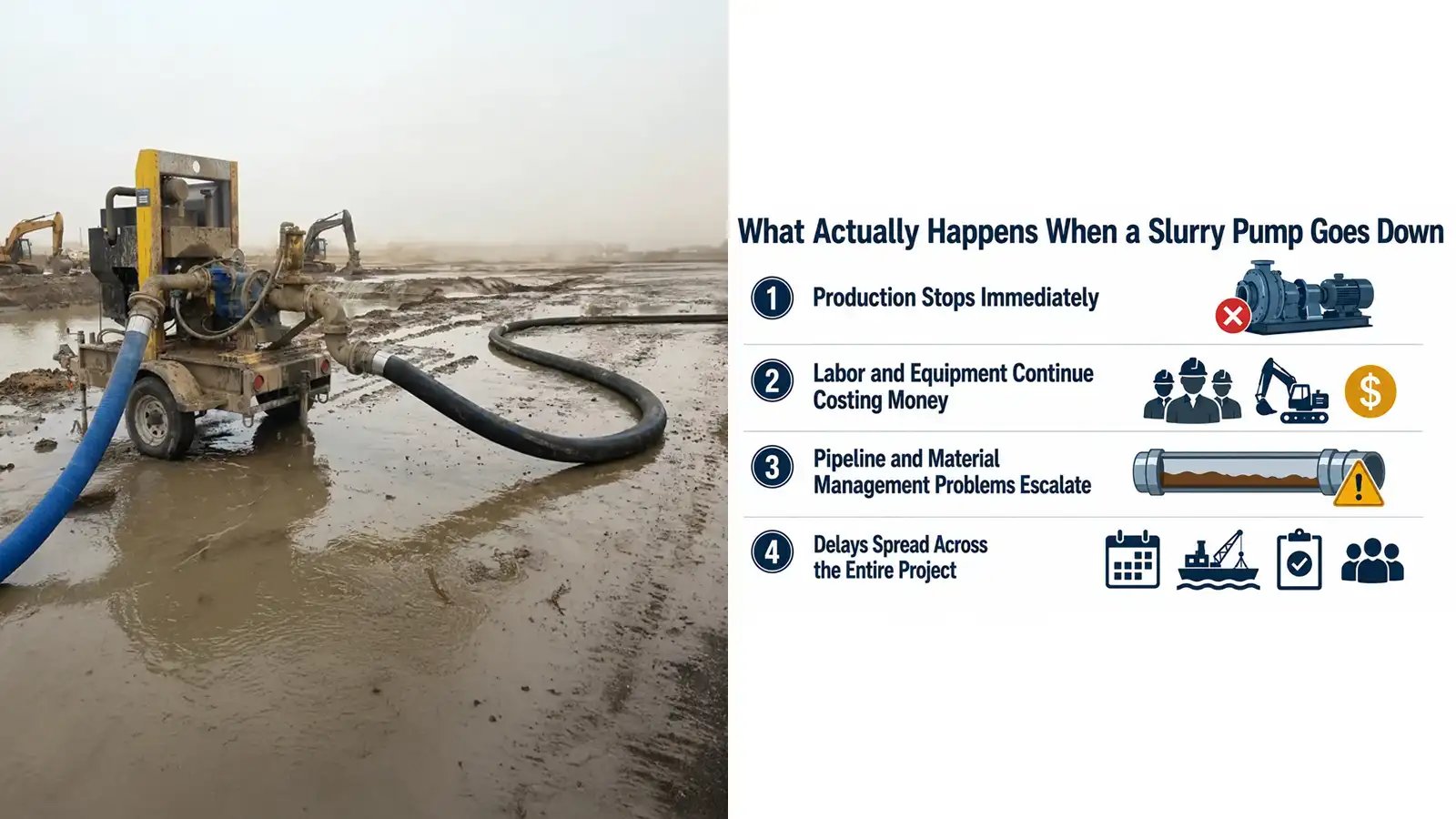
What Actually Happens When a Slurry Pump Goes Down?
Production Stops Immediately
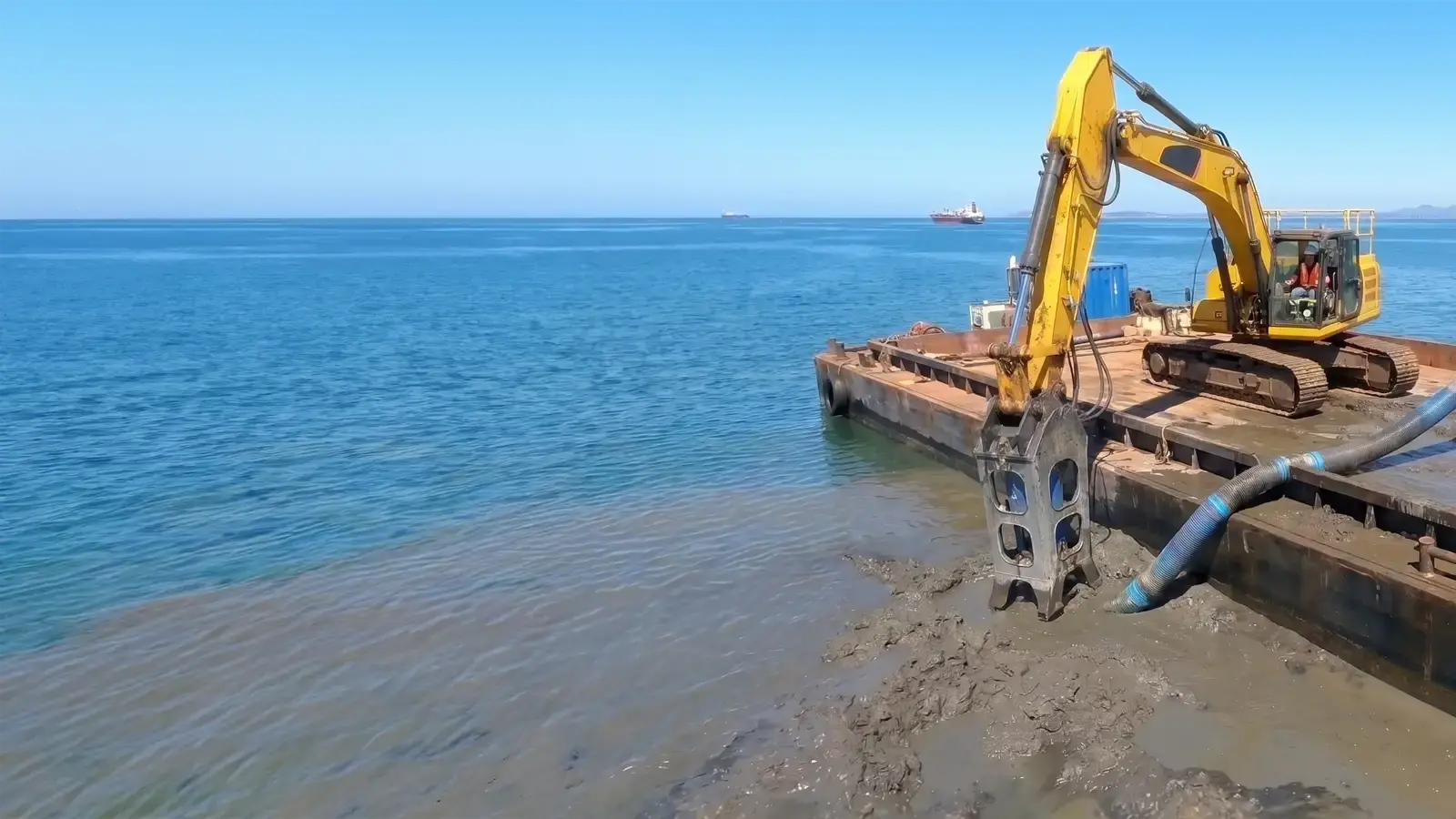
In dredging operations, the slurry pump is often responsible for moving sediment from the excavation point to a discharge pipeline, containment area, barge, dewatering system, or disposal location. If the pump stops, dredging progress may stop immediately.
In mining operations, slurry pump downtime can interrupt tailings transfer, mill discharge movement, process-water recirculation, sump pumping, dewatering, or material movement between process stages. The larger the role of the pump in the system, the greater the production impact when it fails.
Labor and Equipment Keep Accumulating Cost
A shutdown does not pause the entire cost structure of the project. Operators, mechanics, supervisors, contractors, and support crews may still be on site while troubleshooting occurs. Excavators, dredges, barges, trucks, generators, support vessels, and rental equipment may remain inactive while the meter keeps running.
In some operations, a few hours of slurry pump downtime can create costs across multiple departments at once: operations, maintenance, rental equipment, fuel, production scheduling, and project management. That is where the repair invoice becomes only one piece of the real financial picture.
Solids Can Settle in the Pipeline
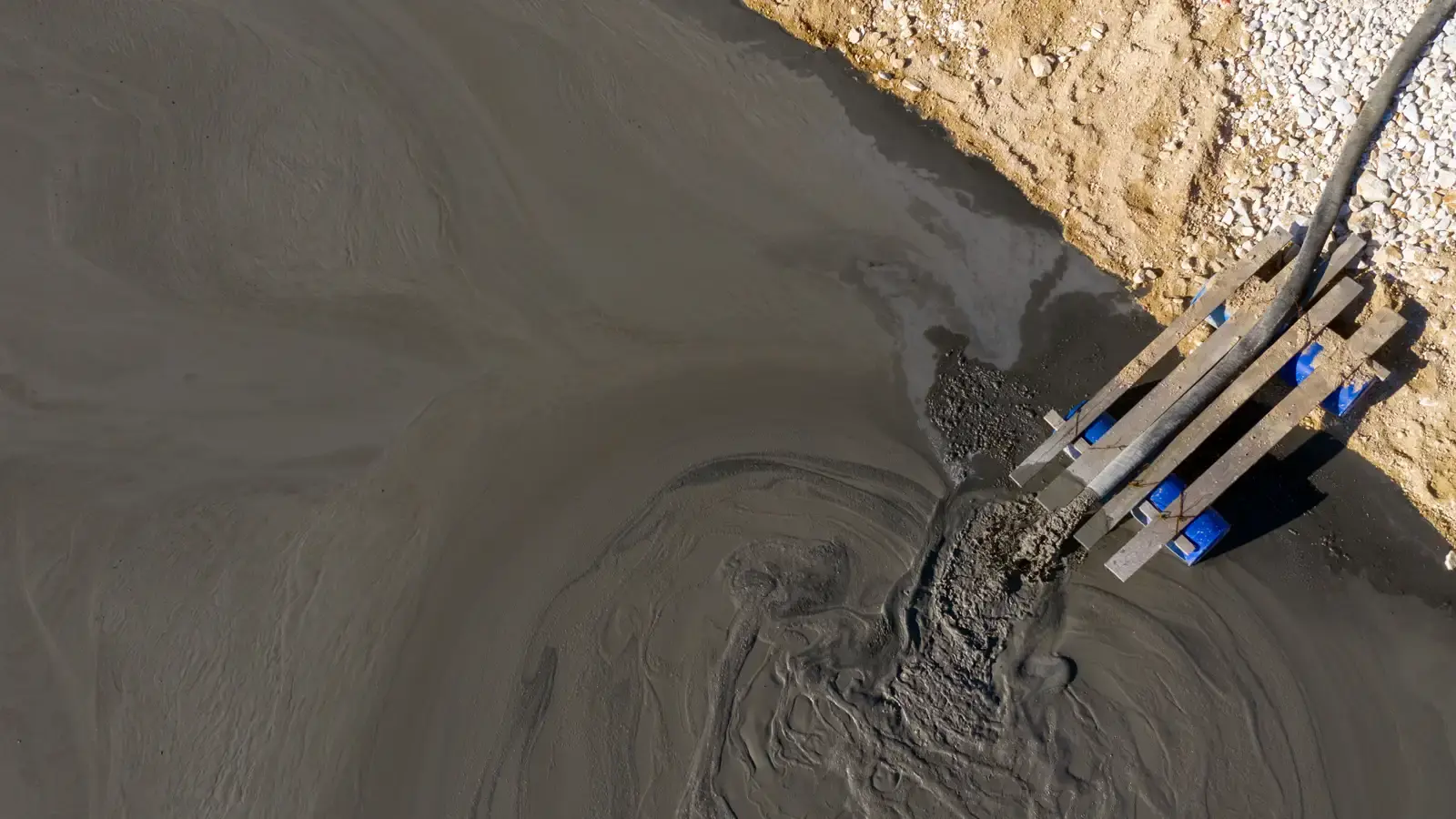
High-density slurry needs enough velocity to keep solids suspended during transport. When flow stops, solids may begin settling inside pipelines, hoses, bends, and low points. This can create partial blockages, increase restart pressure, and require flushing or manual cleanup before the system can return to full production.
Restarting after material has settled can also place extra stress on the pump and pipeline. If the system restarts under unstable conditions, the operation may experience additional clogging, pressure spikes, cavitation, or accelerated wear.
Project Delays Spread Beyond the Pump
Pump downtime can affect production targets, dredging windows, vessel loading schedules, tailings management plans, contractor coordination, and environmental work windows. A single pump issue may begin as a maintenance event, but it can quickly become a project execution problem.
Why Dredging and Mining Slurry Applications Increase Downtime Risk
Slurry pumps in dredging and mining operate under conditions that are far more demanding than clean-water transfer. These systems handle abrasive solids, high material density, changing particle size, oversized debris, variable flow conditions, and difficult suction environments. Every one of those factors can increase wear and shutdown risk.
Common causes of slurry pump downtime include:
- Abrasive wear from sand, tailings, gravel, sediment, ash, mill scale, or industrial sludge.
- Clogging caused by oversized solids, debris, rags, rocks, organic material, or inconsistent particle size.
- Cavitation caused by poor suction conditions, excessive lift, air entrainment, or unstable flow.
- Seal and bearing stress caused by vibration, shaft movement, or abrasive material exposure.
- Reduced efficiency as internal clearances, impellers, liners, and wear surfaces deteriorate over time.
- Pipeline settling when slurry velocity drops below the level needed to keep solids suspended.
In severe-duty slurry service, the pump may still operate while performance is already declining. Flow rate drops, energy use increases, maintenance intervals shorten, and clogging events become more frequent. By the time a major shutdown occurs, the operation may have already been losing efficiency for weeks or months.
The Downtime Cost Categories Most Operations Miss
Many operations calculate downtime as the cost of parts and labor. That is too narrow. The real cost usually includes several categories at the same time.
|
Downtime Cost Category |
Operational Impact |
|
Lost production |
Reduced throughput, missed production targets, delayed dredging or mining schedules. |
|
Idle labor |
Operators, mechanics, supervisors, contractors, and support personnel continue accumulating labor hours. |
|
Idle equipment |
Excavators, dredges, barges, trucks, generators, and rental equipment remain inactive. |
|
Emergency maintenance |
Overtime labor, rush parts, field service, unplanned mobilization, and unscheduled repair work. |
|
Pipeline cleanup and restart |
Flushing, line clearing, manual cleanup, additional fuel or power use, and restart troubleshooting. |
|
Reduced efficiency |
A worn pump may continue running but move less material while consuming more energy. |
|
Schedule and compliance impact |
Missed project windows, contractor delays, disposal scheduling issues, or regulatory concerns. |
The biggest hidden cost is often lost production. If a dredging contractor misses a production window or a mining operation reduces throughput because slurry transfer stopped, the cost of the shutdown can quickly exceed the cost of the failed component.
Repeated short shutdowns can be even harder to see. One two-hour clogging event may not look severe on paper. But if clogging, wear, cavitation, or pipeline cleanup keeps happening throughout the month, the cumulative cost can become a serious drag on production and profitability.
Why the Lowest Purchase Price Can Become the Highest Operating Cost
Lower upfront pump pricing can look attractive during procurement. It may help the project fit a capital budget, speed up approval, or make two pump options look similar when comparing flow and head requirements. But slurry applications are not won on paper.
Once the pump begins operating in abrasive, high-solids service, design differences show up quickly. A pump that cannot consistently pass solids, maintain flow, resist wear, or handle variable slurry density may require more frequent shutdowns and more replacement parts.
Lower-cost pumps operating in severe slurry environments may create:
- Shorter wear life for impellers, liners, seals, and internal components.
- More frequent clogging and manual cleanout events.
- Higher labor demand for inspections, repairs, and restarts.
- Reduced throughput as internal wear reduces pump efficiency.
- More emergency maintenance instead of planned maintenance.
- Higher total cost of ownership over the life of the system.
The cheapest pump to purchase is not always the cheapest pump to own. In continuous-duty dredging and mining operations, reliability has financial value because it protects production time.
How Pump Design Can Reduce Slurry Pump Downtime
Downtime reduction starts with selecting a pump designed for the material being handled. In abrasive slurry service, the most important reliability factors are solids handling, wear resistance, flow stability, service access, and system matching.
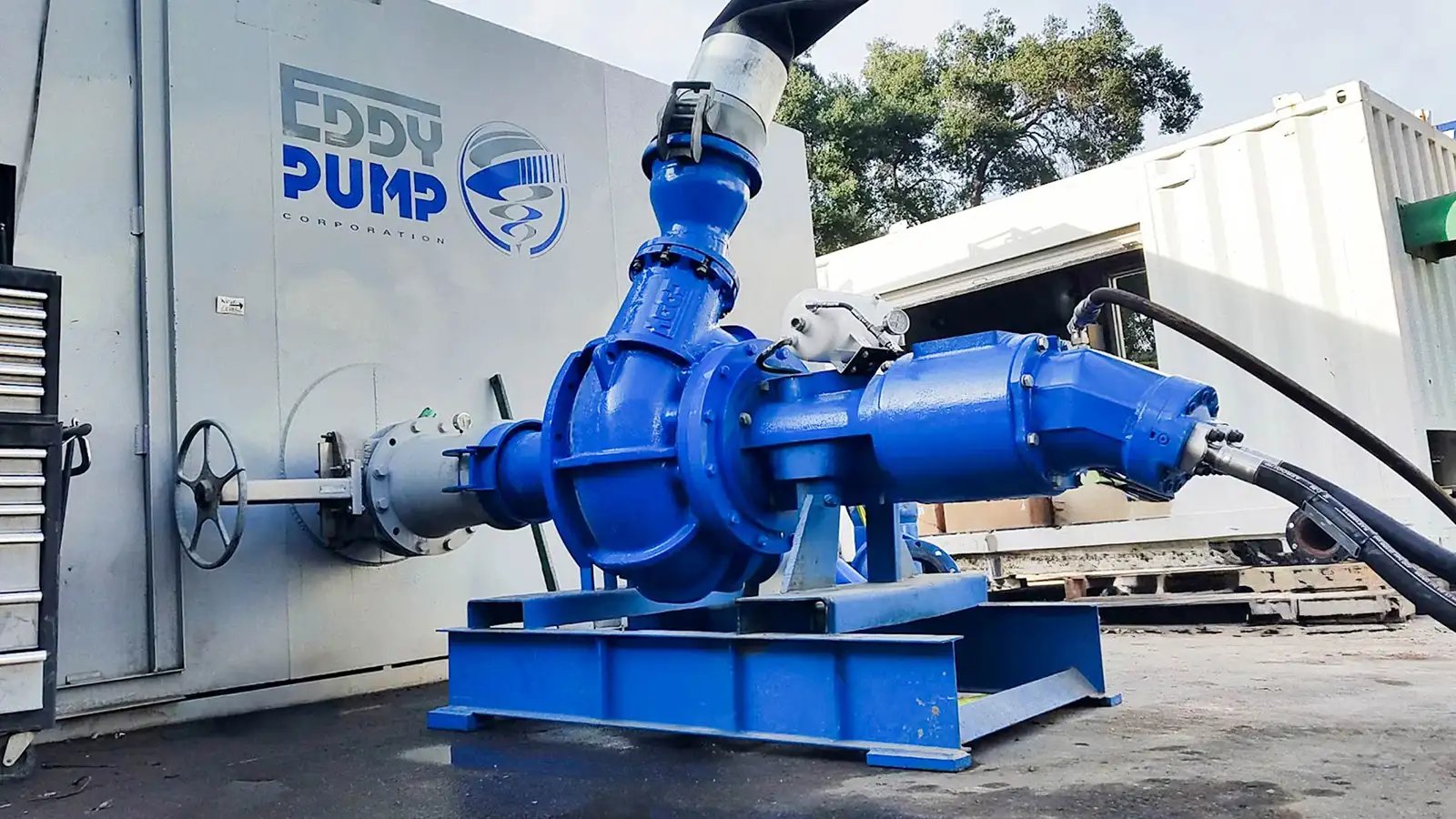
Several pump design features can help reduce shutdown frequency and maintenance burden:
Non-Clog Flow Path
A non-clog slurry pump design helps reduce blockages caused by oversized solids, debris, and inconsistent material composition. Fewer blockages mean fewer shutdowns for manual cleanout and restart.
Recessed Rotor Geometry
A recessed rotor design can reduce direct contact between the rotating element and abrasive solids. This helps reduce wear exposure on the rotating component and supports more stable performance in difficult slurry conditions.
Large Internal Clearances
Large internal clearances allow higher-solids slurry and larger material to pass through the pump with less restriction. This is especially important in dredging and mining applications where material size and density can change during operation.
Wear-Resistant Materials
Abrasive slurry gradually erodes internal pump surfaces. Wear-resistant materials and heavy-duty construction help extend component life and reduce the frequency of part replacement in severe service.
Simplified Maintenance Access
Even the best slurry pump needs maintenance. The difference is how often service is required and how long it takes. Pumps with easier inspection and replacement access can reduce downtime duration and make planned maintenance more practical.
System Matching
Pump reliability also depends on pipeline design, slurry velocity, suction conditions, discharge distance, elevation change, and solids concentration. A strong pump can still struggle if the system is poorly matched to the application.
How to Calculate Pump Downtime Cost Before Replacing Equipment
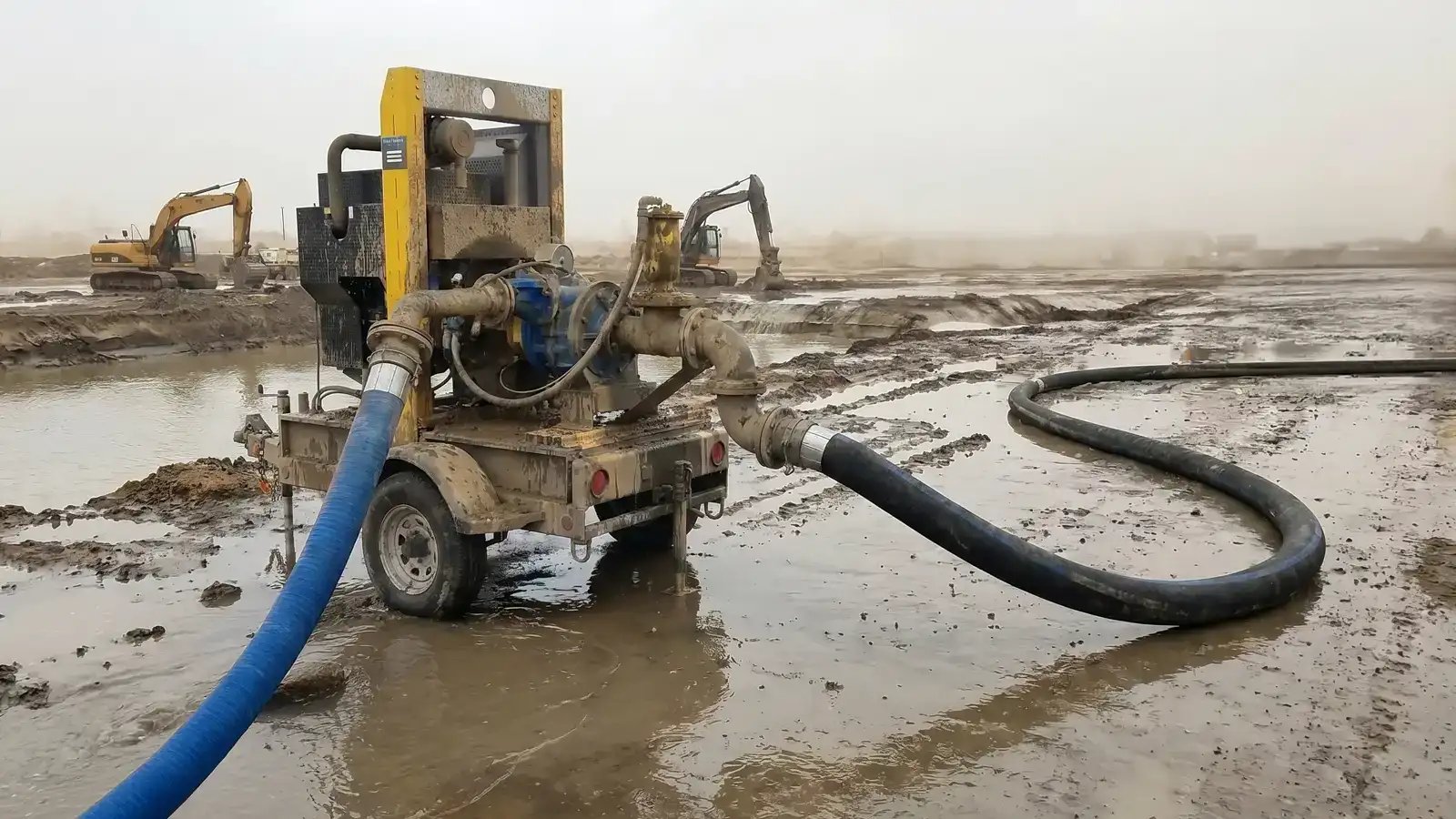
Before replacing a slurry pump or comparing new equipment, operations should calculate the actual cost of downtime. This helps prevent procurement decisions based only on purchase price.
Start with these inputs:
- Average production rate in tons per hour, cubic yards per hour, or gallons per minute.
- Estimated value of lost production during each shutdown.
- Number of operators, mechanics, and support personnel affected by the shutdown.
- Hourly cost of idle excavators, dredges, barges, trucks, generators, or rental equipment.
- Replacement parts, emergency repairs, overtime, and field service costs.
- Pipeline flushing, cleanup, restart labor, and extra fuel or power required after the shutdown.
- Schedule penalties, missed project windows, or environmental compliance risks, where applicable.
Then review downtime patterns over time. The most important question is not only what one failure cost. It is whether the same failure mode keeps repeating.
Recurring clogging, repeated seal failures, accelerated wear, frequent impeller replacement, or repeated pipeline cleanup may indicate that the pump design, system layout, or maintenance strategy is not matched to the application.
Pump Downtime and Total Cost of Ownership
Total cost of ownership looks beyond the initial pump purchase and evaluates the full cost of owning and operating the system. In dredging and mining slurry service, total cost of ownership should include purchase price, installation, power or fuel consumption, wear parts, maintenance labor, downtime frequency, lost production, and expected service life.
This does not mean every operation should buy the most expensive pump available. Lighter-duty applications with lower solids concentration, shorter operating cycles, or less abrasive material may not require the same severe-duty configuration as a mining tailings or high-production dredging system.
The goal is to match the pump to the real operating environment. A durable pump system can be the more economical choice when it reduces downtime, extends maintenance intervals, improves solids handling, and keeps production moving over time.
Practical Ways to Reduce Unplanned Slurry Pump Downtime
Reducing downtime usually requires both better equipment selection and better operating discipline. The pump matters, but so do suction conditions, pipeline design, maintenance planning, operator training, and spare parts strategy.
- Operations can reduce downtime by focusing on:
- Selecting pumps designed for high-solids, abrasive slurry service rather than clean-water transfer.
- Matching pump size, solids handling capability, and materials to the actual slurry conditions.
- Maintaining proper slurry velocity to reduce pipeline settling and restart problems.
- Monitoring wear components before efficiency loss turns into failure.
- Preventing cavitation through stable suction conditions and proper system design.
- Keeping critical wear parts available for planned maintenance windows.
- Tracking downtime causes so recurring issues can be addressed at the system level.
- Evaluating downtime cost as part of pump replacement and procurement decisions.
A reliable slurry pumping system is not built by choosing the largest pump or the lowest-priced pump. It is built by matching the pump, drive system, pipeline, materials, and maintenance strategy to the way the operation actually runs.
Why EDDY Pump Systems Are Built Around Uptime
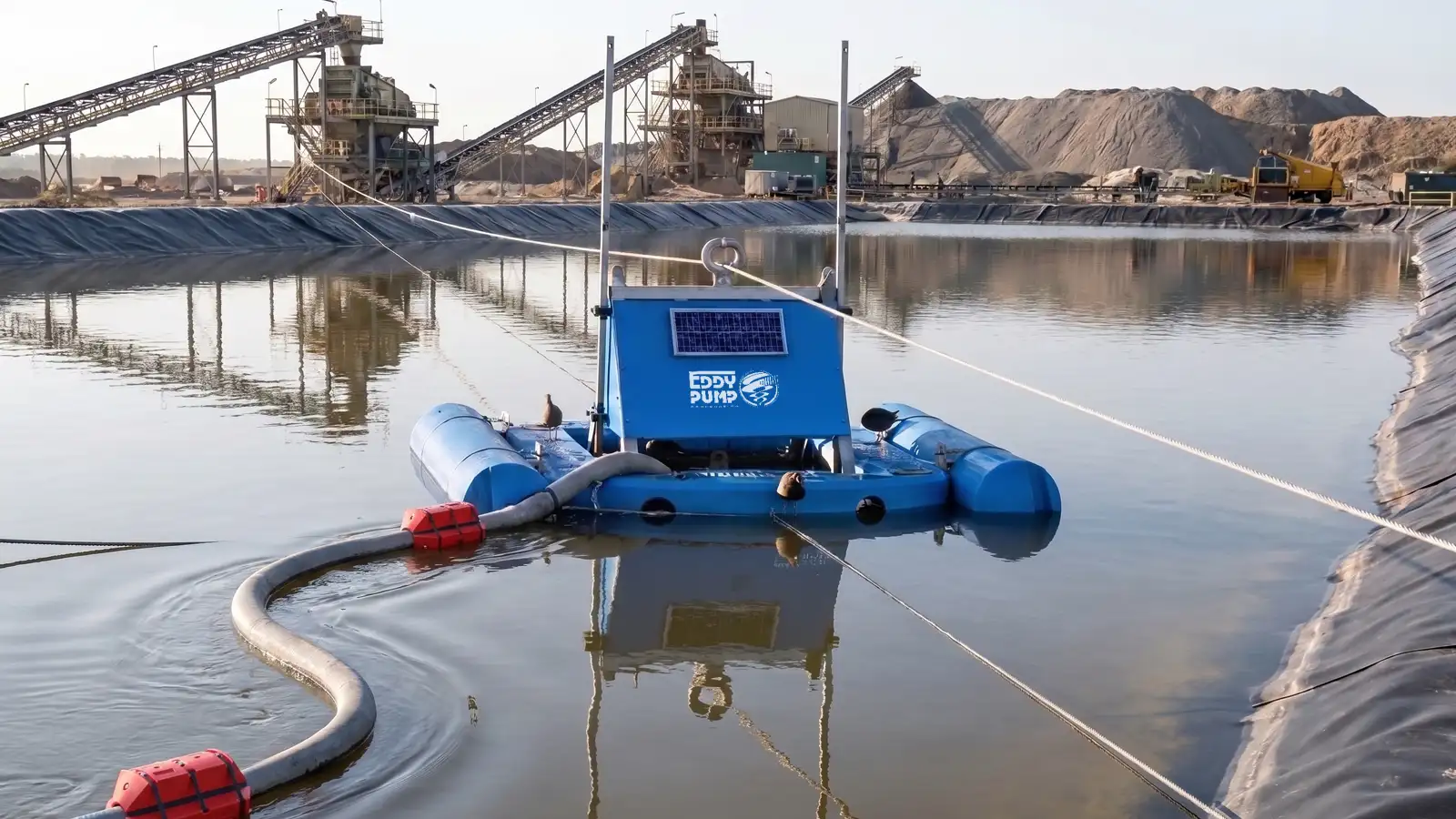
EDDY Pump equipment is designed for high-solids slurry, sludge, mining, dredging, wastewater, ash pond, and industrial material-handling applications where clogging and abrasive wear can create costly downtime. The EDDY Pump design is built around a non-clog flow path, recessed rotor technology, high-solids handling, and reduced internal wear compared to conventional pump configurations used outside their intended service range.
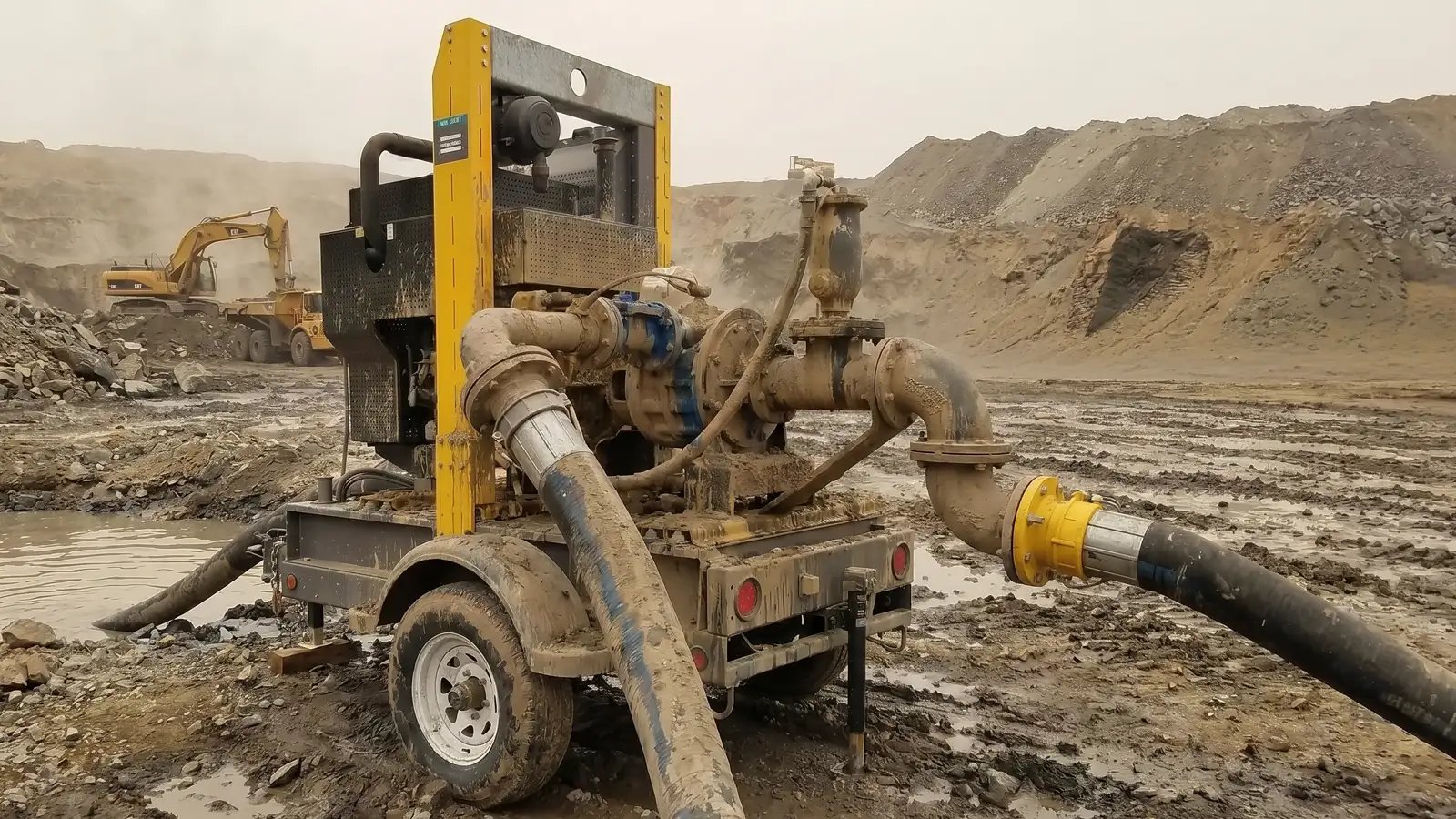
For dredging and mining operations, that design approach matters because uptime is directly tied to production. A pump system that handles variable solids more consistently, reduces clogging events, and extends wear life can help lower total cost of ownership by reducing the frequency and duration of shutdowns.
EDDY Pump systems are used across applications such as dredging, mining, tailings, ash ponds, industrial sludge, wastewater, aggregate, sand, gravel, and high-viscosity slurry transfer. For buyers comparing pump options, the key is to evaluate not only flow and head, but also solids behavior, maintenance access, downtime risk, and lifecycle cost.
Choosing a Pump Based on Long-Term Operational Reality
Pump downtime in dredging and mining operations affects far more than repair cost. It can interrupt production, idle crews and equipment, create pipeline cleanup problems, delay project schedules, and increase total cost of ownership over the life of the system.
In abrasive slurry applications, reliability is not a nice-to-have feature. It is a production requirement. The most expensive pump is not always the one with the highest purchase price. It is often the one that repeatedly stops the operation when material needs to keep moving.
The best pump system is the one matched to the slurry, the site, the pipeline, the maintenance team, and the production goal. When pump selection is based on long-term operational reality instead of upfront price alone, operations can reduce downtime risk, improve maintenance planning, and protect profitability over time.
For expert guidance on scheduling pump maintenance to reduce downtime, talk to an engineer from EDDY Pump.
Frequently Asked Questions
1. What is pump downtime cost?
Pump downtime cost is the total cost created when a pump stops operating. It includes repair costs, lost production, idle labor, inactive equipment, emergency maintenance, pipeline cleanup, restart costs, and project delays. In dredging and mining operations, these indirect costs can exceed the cost of the repair itself.
2. Why is slurry pump downtime so expensive in dredging and mining?
Slurry pumps often control the movement of sediment, tailings, sludge, or process material. When the pump stops, production may stop immediately while crews and equipment continue costing money. Solids can also settle in pipelines, making restart more difficult and extending the shutdown.
3. What causes slurry pumps to fail or shut down?
Common causes include abrasive wear, clogging, oversized solids, cavitation, seal problems, bearing stress, poor suction conditions, unstable slurry density, and incorrect pump selection. Many failures are caused by a mismatch between the pump design and the material being handled.
4. How can operators reduce unplanned slurry pump downtime?
Operators can reduce downtime by selecting pumps built for abrasive high-solids service, maintaining proper slurry velocity, preventing cavitation, monitoring wear parts, keeping critical spares available, and tracking recurring failure modes. System design and maintenance planning are just as important as pump selection.
5. Is the lowest-priced pump usually the cheapest option long term?
Not always. A lower-cost pump may be acceptable in lighter-duty service, but in severe slurry applications it can become more expensive if it creates frequent clogging, faster wear, higher maintenance labor, and repeated production shutdowns. Total cost of ownership is usually the better evaluation method.
6. When should a mining or dredging operation evaluate total cost of ownership?
Total cost of ownership should be evaluated whenever downtime is frequent, wear parts are being replaced often, pipeline cleanup is recurring, maintenance intervals are shortening, or production is being affected by pump reliability. These are signs that the true cost of the pump is higher than the purchase price.