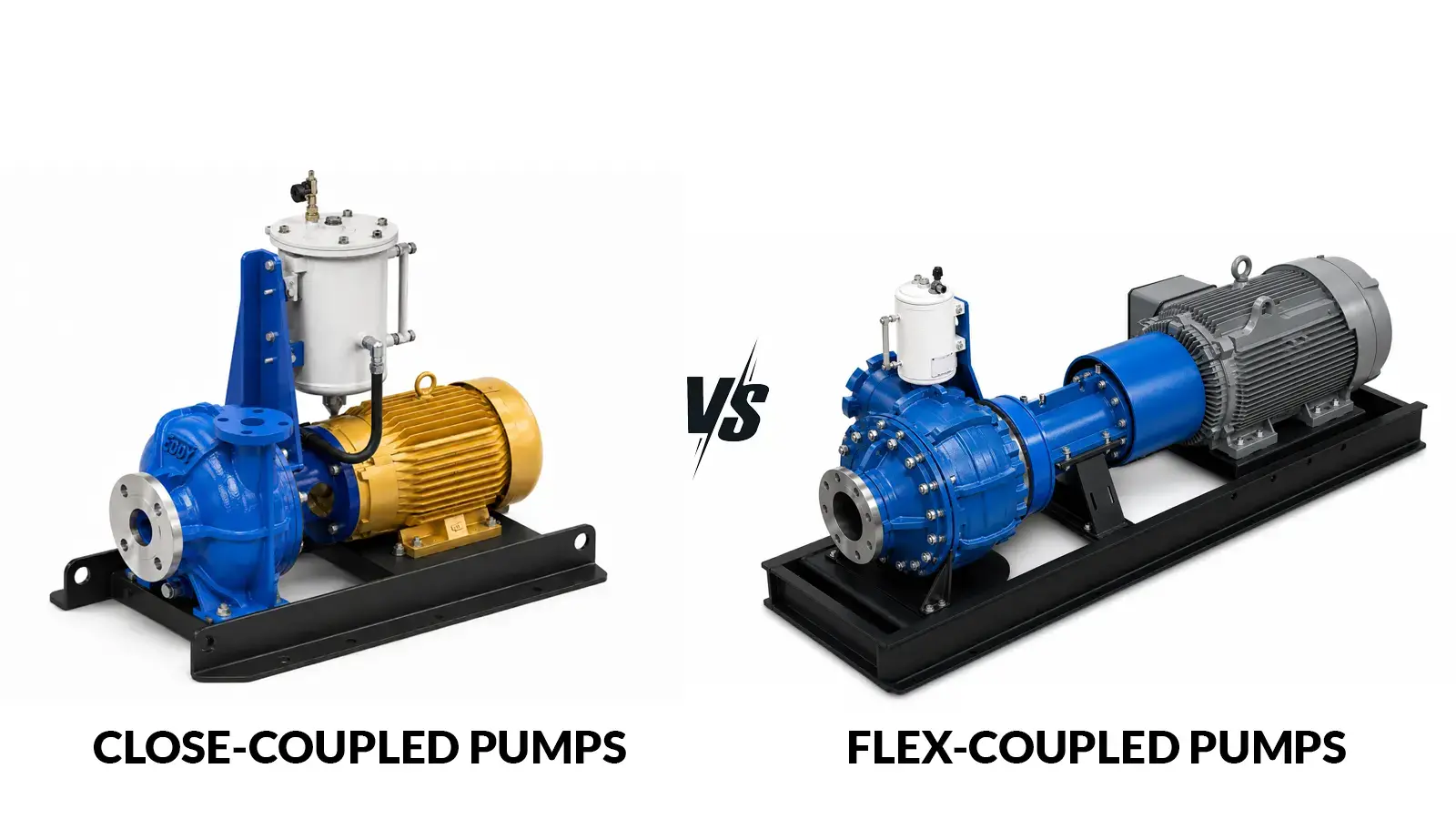

For someone new to pumps, the words close-coupled and flex-coupled can sound more complicated than they are. Think of it this way: the pump moves the material, and the driver provides the power. The coupling style describes how those two pieces are connected.
A close-coupled pump is compact because the pump and motor sit together in one tight assembly. A flex-coupled pump is more like a heavy-duty equipment package: the pump and motor are separate pieces connected by a flexible coupling on a base or skid. Both can be useful. The right choice depends on the application, the material, the available power, the space, and how much maintenance access the site needs.

For EDDY Pump applications, the decision usually starts with the slurry and duty point first, not the coupling style. Define the material, flow, head, solids size, suction conditions, and discharge distance. Then choose the right EDDY Pump slurry pump platform and power package.
Quick Answer
A close-coupled pump is a compact pump package where the pump is mounted directly to the motor. It is often used when space is limited, electric power is available, the duty is moderate, and simple installation matters.
A flex-coupled pump uses a separate pump shaft and driver shaft connected by a flexible coupling. It is usually better for heavier-duty slurry service, higher horsepower, larger motors, easier maintenance access, vibration control, and more driver flexibility.
A diesel self-priming pump should be treated as a separate selection path. It is not just a coupling choice. It is a power, priming, and mobility decision for remote sites, portable pumping, suction-lift applications, and jobs without reliable electric power.
Simple Example Before the Technical Details
Imagine three jobs:
- A small plant skid needs to move relatively light process water or thin slurry, and the customer has limited floor space. A compact close-coupled package may make sense if the pump is confirmed for the material.
- A mining operation needs to move abrasive tailings from a tank through a long pipe run. The pump will run hard, wear parts will need service, and the motor may be large. A flex-coupled or frame-mounted package is usually the better fit.
- A contractor needs to pump sediment from a remote pond where there is no electrical service, and the pump must sit on the bank above the liquid level. A diesel self-priming pump is the more relevant path because the job needs portability and self-priming, not just a different coupling.
What Is a Close-Coupled Pump?
A close-coupled pump keeps the pump and motor close together. In many designs, the pump casing bolts directly to the motor, and the impeller or rotating element is supported by the motor shaft or a short connected shaft. Because there is no separate baseplate-mounted coupling between the pump and motor, the package is smaller and usually simpler to install.
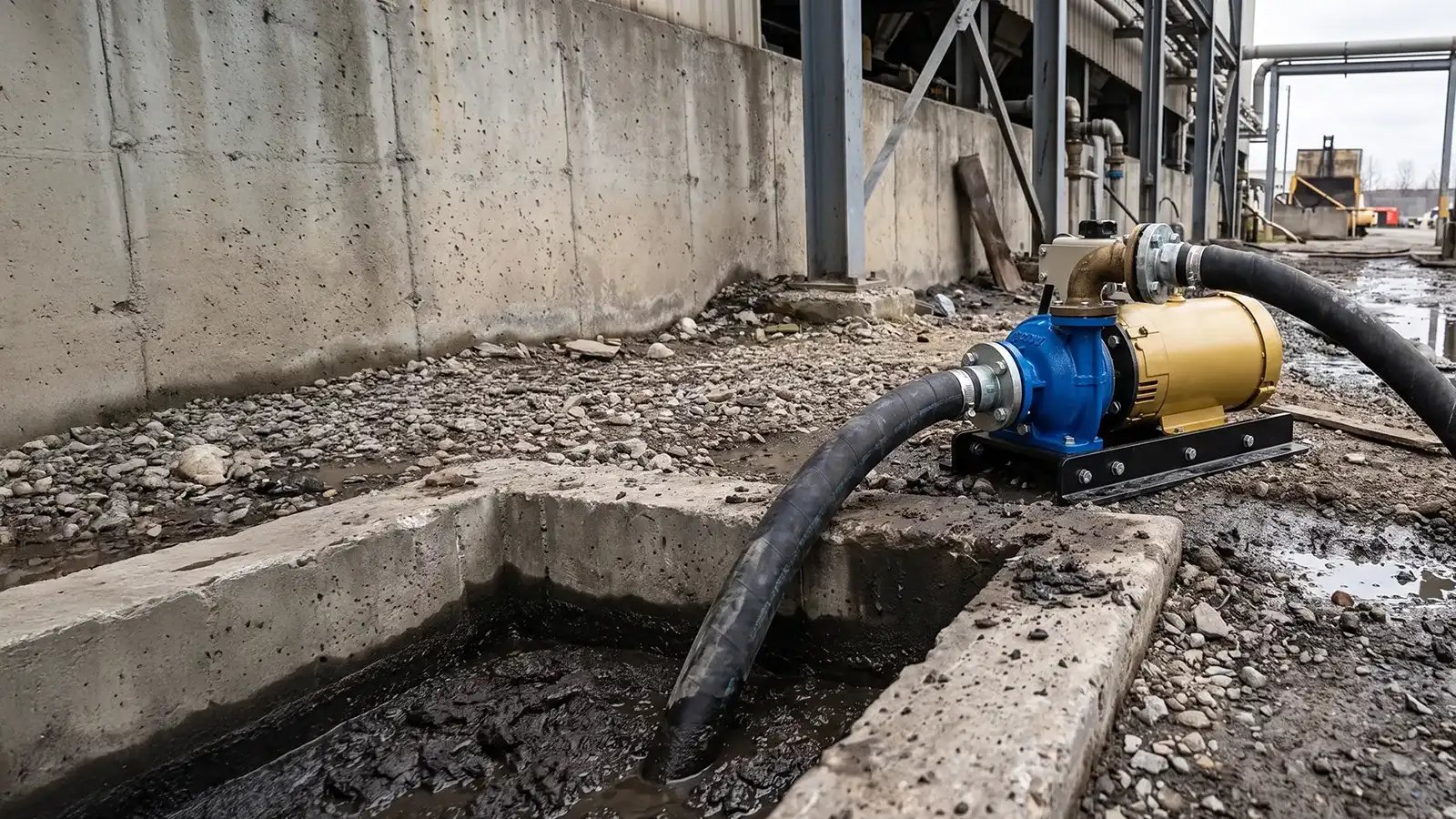
The beginner way to understand it: a close-coupled pump is the compact option. It takes up less space and removes the alignment work that comes with a separate pump and motor shaft. That can be useful in packaged systems, equipment skids, tight mechanical rooms, and lighter-duty plant applications.
The tradeoff is flexibility. Since the pump and motor are closely integrated, it may be harder to change drivers, work around heavy loads, or service the pump in demanding industrial slurry duty. For abrasive solids, high horsepower, or long run times, the compact option is not always the best long-term option.
When Close-Coupled Can Make Sense
- Space is limited and the installation needs a small footprint.
- Reliable electric power is already available at the site.
- The duty is moderate and the material is not extremely abrasive or heavy.
- The pump is part of a compact skid, package system, or plant utility area.
- Lower installed cost and simple startup are higher priorities than maximum driver flexibility.
What Is a Flex-Coupled Pump?
A flex-coupled pump uses a separate pump shaft and motor shaft connected by a flexible coupling. The pump and driver are usually mounted on a shared baseplate or skid. The coupling transfers torque from the motor to the pump while allowing a controlled amount of flexibility between the rotating components.
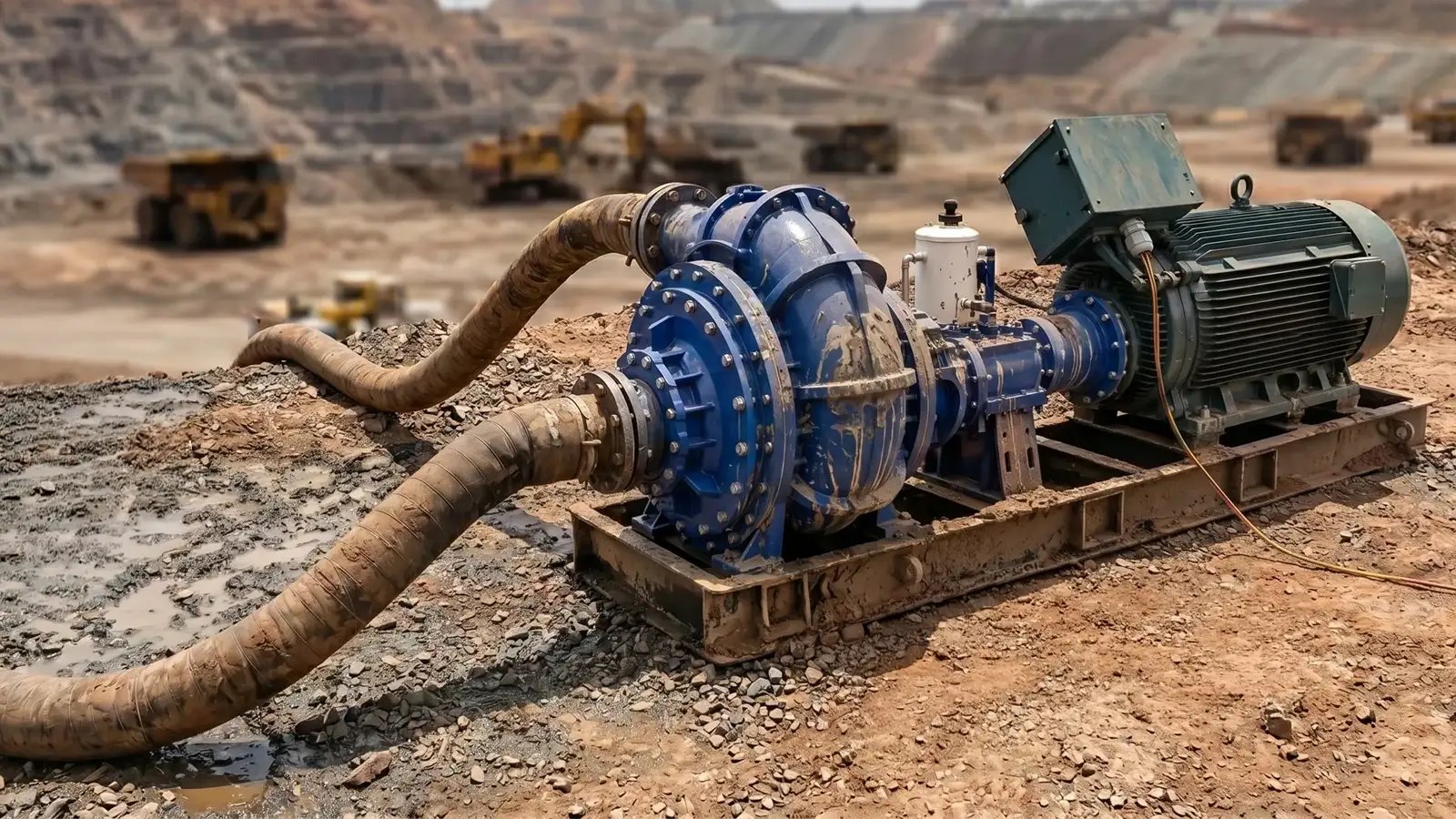
The beginner way to understand it: a flex-coupled pump is the more serviceable heavy-duty package. It takes more space and requires alignment, but it gives the system designer more room to handle horsepower, vibration, bearing loads, driver changes, and maintenance access.
For slurry applications, this can matter a lot. Abrasive slurry is hard on pumps. The easier it is to inspect seals, bearings, liners, rotors, couplings, and drivers, the easier it is to keep the system running. That is why heavy industrial, mining, dredging, wastewater sludge, ash, and tailings applications often favor more serviceable pump packages.
When Flex-Coupled Can Make Sense
- The pump will run in heavy-duty slurry, sludge, tailings, ash, sand, or abrasive sediment service.
- The motor or engine horsepower is larger, or the site may need different driver options later.
- Maintenance access is important because downtime is expensive.
- The installation needs a more robust base, bearing frame, alignment control, or vibration management.
- The pump may be used in mining, dredging, wastewater, power generation, oil and gas, chemical, sand and aggregate, or industrial transfer applications.
Close-Coupled vs. Flex-Coupled Pump Comparison
|
Question |
Close-Coupled Pump |
Flex-Coupled Pump |
|
How much space does it need? |
Smaller footprint. |
Larger baseplate or skid. |
|
How hard is it to install? |
Simpler installation; usually no shaft alignment between pump and motor. |
Requires proper alignment and base support. |
|
How easy is it to service? |
Compact, but access can be tighter. |
Usually easier access to pump, coupling, driver, and bearing frame. |
|
How flexible is the driver choice? |
Usually focused on an electric motor package. |
Can support more driver options and larger horsepower ranges. |
|
Where does it fit best? |
Compact plant skids, moderate duty, tight spaces. |
Heavy-duty slurry, high horsepower, abrasive solids, industrial duty. |
|
What is the main tradeoff? |
Space and simplicity, but less flexibility. |
More flexibility and serviceability, but more space and alignment work. |
Should Diesel Self-Priming Be a Separate Category?
Yes. Diesel self-priming should be separated because the buyer is usually trying to solve a different problem.
A person asking about close-coupled vs. flex-coupled pumps is asking how the pump connects to the driver. A person asking about diesel self-priming pumps is usually asking how to pump from a remote site, above the liquid source, without electrical power, or with a portable trailer or skid-mounted package.
EDDY Pump’s self-priming slurry pump path is especially useful when the pump and power unit remain on the surface and the suction hose goes into the slurry. That makes it a practical option for dredging, construction dewatering, mine dewatering, wastewater, industrial cleanouts, and other field applications where a submerged or flooded installation is not practical.
When Diesel Self-Priming Makes Sense
- The site is remote or does not have reliable electric power.
- The pump needs to sit on the surface, above the liquid or slurry source.
- The job moves from location to location and needs a trailer or skid-mounted package.
- The application requires fast deployment for dredging, bypass, construction, mine dewatering, or emergency response.
- The material contains solids, grit, sediment, or sludge that would create problems for light-duty trash or dewatering pumps.
Easy Selection Guide
|
Choose This Path |
Use It When |
Common Industries |
Example |
|
Close-coupled pump |
You need a compact electric package and the duty is moderate. |
Industrial plants, OEM skids, utilities, lighter process transfer. |
A compact skid moves thin sludge or process liquid inside a plant with limited floor space. |
|
Flex-coupled pump |
You need heavy-duty serviceability, higher horsepower, driver flexibility, or better access. |
Mining, dredging, wastewater, power generation, ash, tailings, sand and aggregate. |
A mine transfers abrasive tailings from a tank through a long pipeline and needs easy wear-part access. |
|
Diesel self-priming pump |
You need portable pumping, suction lift, remote power, or above-water installation. |
Construction, dredging, mine dewatering, wastewater bypass, emergency pumping. |
A contractor pumps sediment from a remote pond with no electric power and the pump sitting on shore. |
How This Applies to EDDY Pump
EDDY Pump does not start by asking only whether the package is close-coupled or flex-coupled. The better starting point is the application: What are you pumping, how abrasive is it, how large are the solids, how far does it need to move, what flow and head are required, and where can the pump physically sit?
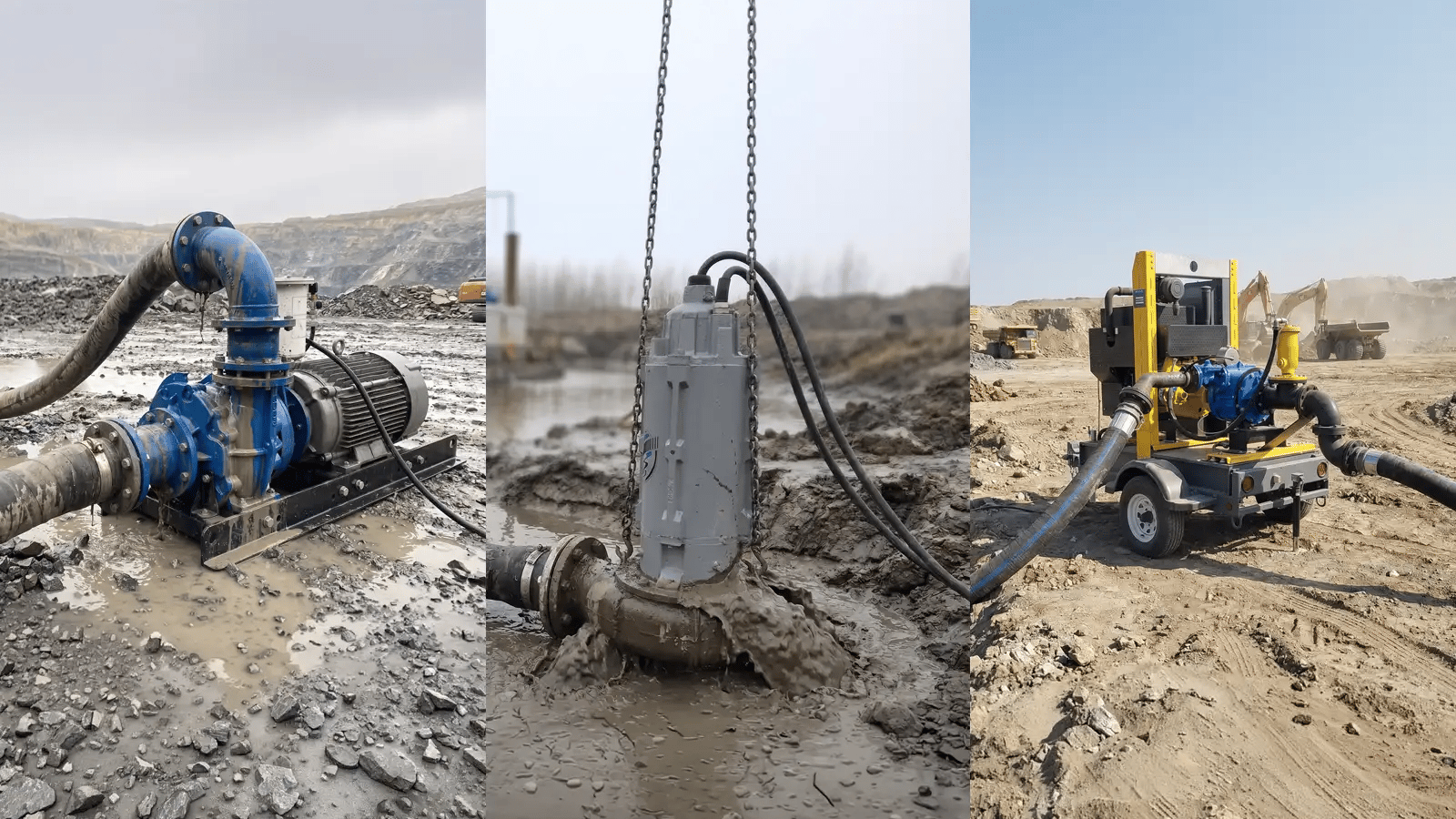
From there, the right EDDY Pump configuration can be selected. The EDDY Pump slurry pump family includes electric direct-drive, submersible electric, electric self-priming, diesel self-priming, hydraulic/HPU-powered, and booster-supported paths for demanding slurry, sludge, grit, sediment, mining, dredging, and industrial pumping applications.
For a fixed plant with a constant gravity-fed source, a flooded suction pump may be the best package. For pits, sumps, or wet wells, a submersible slurry pump can eliminate suction-lift limitations by sitting directly in the slurry. For remote work above the waterline, a self-priming pump may be the practical path. For long discharge distances, a booster pump may be needed to maintain pressure and flow.
Beginner-Friendly Rule of Thumb
Close-coupled = compact. Good when space and simplicity are the main concerns.
Flex-coupled = serviceable and heavy-duty. Good when the job is larger, harder, more abrasive, or more maintenance-sensitive.
Diesel self-priming = portable and field-ready. Good when the pump sits above the liquid source, moves between job sites, or does not have reliable electric power.
What to Send Engineering Before Choosing
The fastest way to choose the right package is to send the application details first. EDDY Pump engineering can then confirm the pump platform, driver, coupling/package style, and suction configuration.
- Material being pumped: slurry, sludge, sediment, tailings, ash, sand, grit, or other solids.
- Solids size, solids concentration, slurry density, abrasiveness, and whether the material settles or compacts.
- Required flow rate, total dynamic head, discharge distance, pipe size, and elevation change.
- Available power: electric, diesel, hydraulic power unit, or excavator/attachment power.
- Where the pump will sit: submerged, gravity-fed/flooded suction, above the liquid, trailer-mounted, or in-line booster location.
- Maintenance constraints: access, uptime requirement, available spare parts, and whether the pump must be moved between job sites.
For critical applications, request a pump curve review so the selected pump and package match the real duty point instead of a clean-water assumption.
FAQs
Is a close-coupled pump better than a flex-coupled pump?
Not always. Close-coupled pumps are compact and simple. Flex-coupled pumps are usually better for heavier-duty, higher-horsepower, or service-intensive applications. The right choice depends on the material, duty point, power, space, and maintenance requirements.
Is a flex-coupled pump the same as a frame-mounted pump?
In many industrial conversations, yes. A frame-mounted pump usually has its own bearing frame and is connected to the driver by a coupling on a baseplate or skid.
When should I use a diesel self-priming pump?
Use a diesel self-priming pump when the job is remote, portable, above the liquid source, or does not have reliable electric power. It is a power and deployment decision, not just a coupling decision.
Which configuration is best for slurry?
It depends on the slurry and the site. Abrasive, high-solids slurry often benefits from a more serviceable heavy-duty package, but the final choice should be based on flow, head, solids, suction conditions, driver type, discharge distance, and maintenance access.
Can a close-coupled pump handle slurry?
Sometimes, but it must be reviewed against the actual slurry. For abrasive, dense, high-solids, or large-particle material, the pump design, wear package, driver, and service access matter more than compactness.
Can EDDY Pump help choose the right package?
Yes. EDDY Pump can review the slurry, duty point, discharge distance, suction conditions, site layout, and power requirements to recommend the correct pump and power package.
Choosing between close-coupled, flex-coupled, and diesel self-priming pump packages is easier once the slurry and jobsite are clearly defined. Contact EDDY Pump to review your material, flow rate, discharge distance, suction conditions, power source, and maintenance requirements.