


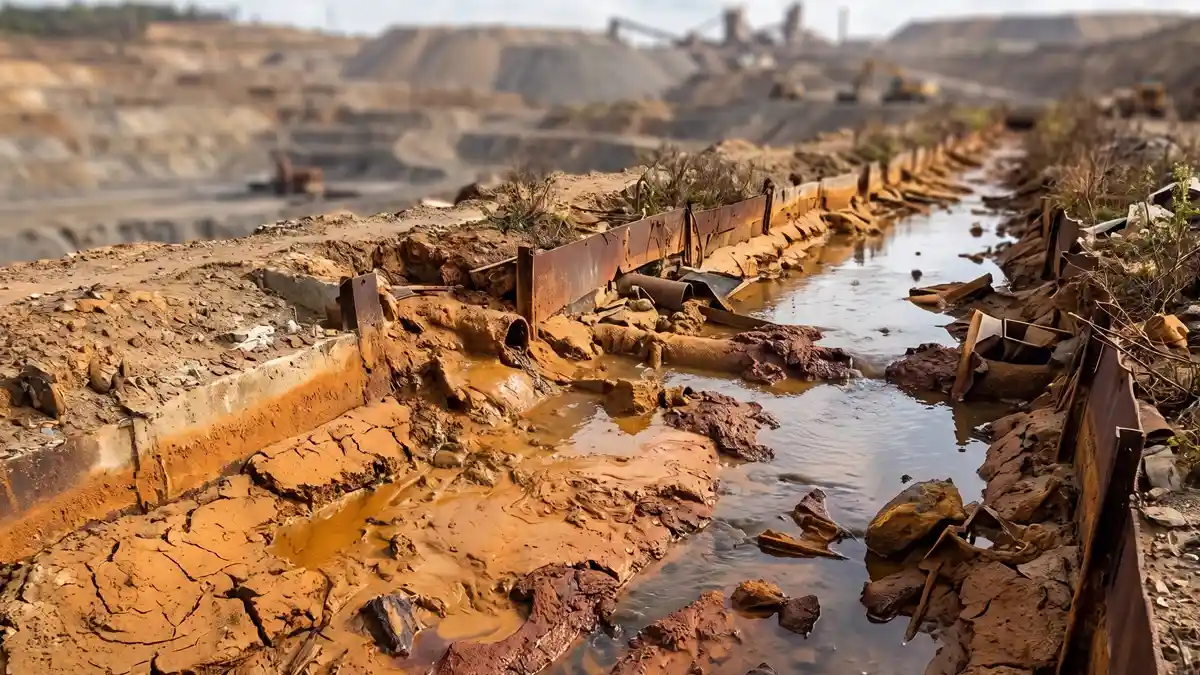

Sediment buildup in mine drainage canals does not wait for a convenient maintenance window. When flow velocity drops below a critical threshold, solids settle, channels narrow, and your drainage system loses the capacity it was designed to carry. Understanding hydraulic transport velocity gives you a practical framework for predicting where and when that sediment will deposit, and what it takes to keep your canals flowing.

This article explains what hydraulic transport velocity means in the context of mine canals, how it relates to sediment suspension, and why it matters for dredging performance. EDDY Pump builds dredge equipment and slurry pumps engineered for exactly this kind of high-solids, abrasive sediment removal in mining environments.
Key Takeaways: Hydraulic Transport Velocity in Mine Canals
- Hydraulic transport velocity is the minimum flow speed needed to keep sediment particles suspended and moving through a canal.
- Dropping below the critical velocity causes sediment deposition, reduced canal capacity, and increased flood risk at mine sites.
- Particle size, density, and canal geometry all influence the specific velocity threshold for a given mine drainage channel.
- EDDY Pump dredge systems handle sediment concentrations of 30 to 70 percent solids by volume during canal maintenance operations.
- Matching your dredging equipment to actual sediment characteristics and canal flow conditions prevents repeated buildup cycles.
What Is Hydraulic Transport Velocity in Mine Drainage Canals?
Hydraulic transport velocity is the minimum flow speed required to keep solid particles suspended in a moving fluid. In mine drainage canals, this velocity determines whether sediment stays in motion or settles to the canal floor.
When water moves fast enough, it generates turbulent energy that lifts and carries sand, silt, and heavier mine tailings along the channel. Drop below that threshold, and gravity wins. Particles begin depositing on the canal bed, starting a buildup cycle that progressively chokes flow capacity.
The concept originates from slurry pipeline engineering, where operators must maintain a velocity above the "critical deposition velocity" to prevent pipe blockages. The same physics apply to open canal flow, with adjustments for channel shape, roughness, and variable sediment loads.
Why Does Hydraulic Transport Velocity Matter for Mine Canals?
Mine drainage canals carry runoff loaded with abrasive particles, often ranging from fine clay to coarse gravel. If your canal velocity falls below the transport threshold, those solids accumulate. The channel cross-section shrinks. Flow backs up. Upstream infrastructure is at risk.
Sediment deposition in mine drainage canals creates a compounding problem. As the deposited layer grows, the remaining flow area decreases, which can further reduce velocity and accelerate more settling. This feedback loop turns a minor maintenance issue into an emergency dredging event.
For operations managers and maintenance teams, understanding this velocity threshold is the difference between scheduled, cost-effective canal cleaning and unplanned shutdowns that disrupt production targets.
What Factors Determine the Critical Velocity in a Mine Canal?
Several variables influence the exact velocity needed to keep sediment in suspension. No single number applies to every canal or every mine site.
Particle size and density are the primary drivers. Coarse, heavy sand particles need faster flow to stay suspended than fine silt. Specific gravity of the solids relative to the carrier water sets the baseline energy requirement.
Canal geometry matters. A wider, shallower channel distributes flow energy differently than a narrow, deep one. Bed roughness, slope, and any obstructions like culverts or grade changes also shift the critical threshold.
Sediment concentration plays a role as well. Higher slurry concentrations increase the effective density of the flow, which can alter turbulence patterns and change how particles interact with each other during transport.
How Sediment Deposition Affects Dredging Performance
When sediment accumulates faster than your canal system can flush it, you need mechanical removal. That is where dredging enters the picture. The nature of the deposited material, compacted sand versus loose silt versus mixed tailings, directly affects which dredging approach works.
Compacted sediment beds resist suction. A pump designed around water-based performance curves will lose output rapidly as solids concentration rises. Conventional centrifugal pumps with tight impeller clearances clog on the mixed debris common in mine canals: rocks, fibrous material, and dense mineral particles.
EDDY Pump's patented recessed impeller creates a fluid vortex that draws material into the pump hydrodynamically, without requiring solids to pass through tight clearances. This non-clog design handles abrasive mine sediment at concentrations of 40 to 70 percent solids by volume, which means fewer passes, less canal disruption, and faster return to design flow capacity.
How to Calculate Hydraulic Transport Velocity for Your Canal
Several empirical models exist for estimating critical deposition velocity. The Durand-Condolios equation and the Wilson's deposit-velocity model are among the most referenced in slurry transport engineering, as noted in research published by the American Society of Civil Engineers. Each relates particle diameter, specific gravity, pipe or channel diameter, and fluid properties to a minimum safe operating velocity.
For mine canals, start with your sediment characteristics. Collect samples to determine the particle size distribution (d50 and d90 values), specific gravity, and any cohesive properties. Canal surveys give you cross-sectional area, slope, and roughness coefficients.
Feed those values into an open-channel adaptation of the critical velocity equations. Your target operating velocity should exceed the calculated critical value by a safety margin, typically 10 to 20 percent, to account for flow variability and changing sediment loads.
What Happens When Canal Velocity Drops Below the Transport Threshold?
The immediate result is sediment buildup. Heavier particles settle first, forming a bed layer that grows over time. Finer particles follow as the remaining flow area shrinks and turbulence decreases.
Operationally, this means reduced drainage capacity. During storm events or high-flow periods, an undersized canal cannot handle peak discharge. Overtopping and localized flooding become real risks, with consequences for mine roads, processing areas, and environmental compliance.
Maintenance costs escalate because reactive dredging on an emergency timeline is more expensive and more disruptive than planned sediment removal. Equipment mobilization, operator scheduling, and production interruptions all compound the cost.
How EDDY Pump Dredge Equipment Addresses Canal Sediment Removal
The core challenge in canal dredging is moving dense, abrasive material efficiently without constant equipment downtime. Most conventional dredge pumps are engineered around water. They lose performance as solids concentration rises.
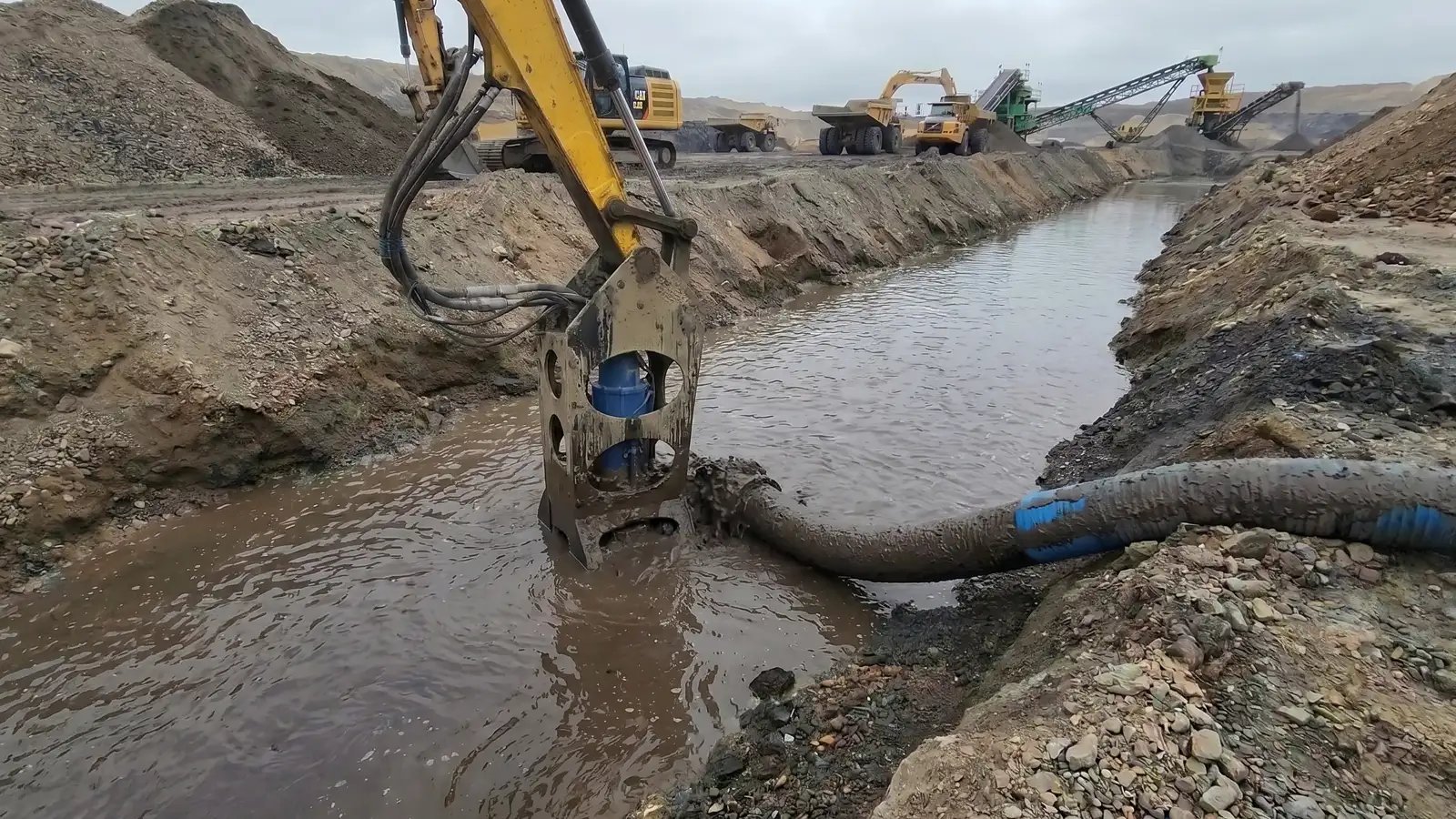
EDDY Pump took a different approach. The dredge equipment line uses the patented recessed impeller to generate an eddy current that pulls material into the pump without mechanical contact between solids and the impeller face. This reduces wear and eliminates the clogging that stops conventional pumps in high-solids conditions.
For mine canal applications, the Excavator Pump Attachment converts your existing excavator into a dredging system, using the machine's hydraulic power to drive the pump. The Dredge Sled slides along the canal floor, pumping settled material directly from the bed. Both configurations handle the mixed, abrasive sediment typical of mine drainage canals.
EDDY Pump has completed more than 5,000 projects across mining, dredging, wastewater, and marine construction, including work for the US Navy and major mining operations like Rio Tinto. That project history informs every configuration recommendation.
Strategies for Maintaining Adequate Flow Velocity in Mine Canals
Keeping your canal above the critical transport velocity starts with design. Channel slope, cross-sectional shape, and lining material all affect how fast water moves and how much energy is available to carry sediment. Discharge piping such as HDPE dredge pipe also factors into system performance when planning sediment transport from the canal to a disposal area.
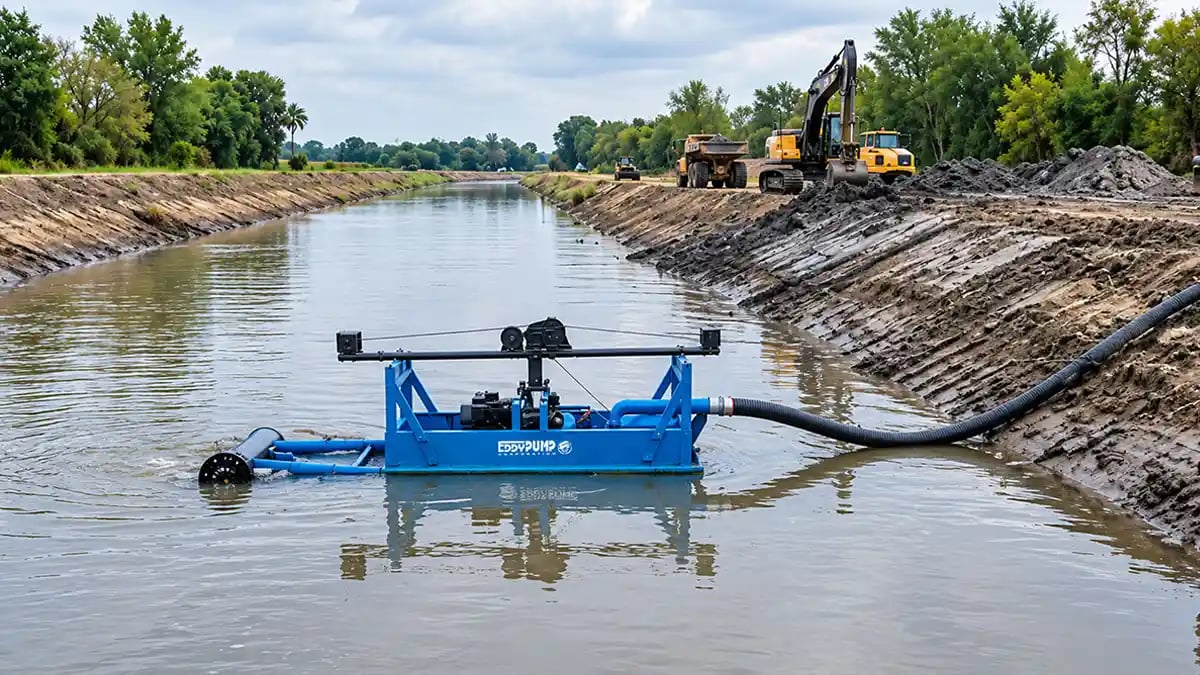
Routine monitoring catches velocity drops before they become deposition problems. Flow measurement stations at key points along the canal give you real-time data on whether you are approaching the critical threshold.
Scheduled canal dredging removes accumulated sediment before it reaches the point where it restricts capacity. Matching your dredging frequency to actual sediment loading rates, rather than relying on a fixed calendar schedule, keeps costs in line with actual conditions.
In Conclusion: Match Your Dredging Approach to Your Canal's Sediment Conditions
Hydraulic transport velocity is not an abstract engineering concept. It is a measurable, site-specific threshold that controls whether your mine drainage canal works as designed or slowly fills with sediment. Understanding the variables that affect it, including particle size, density, canal geometry, and flow rate, lets you predict deposition and plan removal before it becomes an emergency.
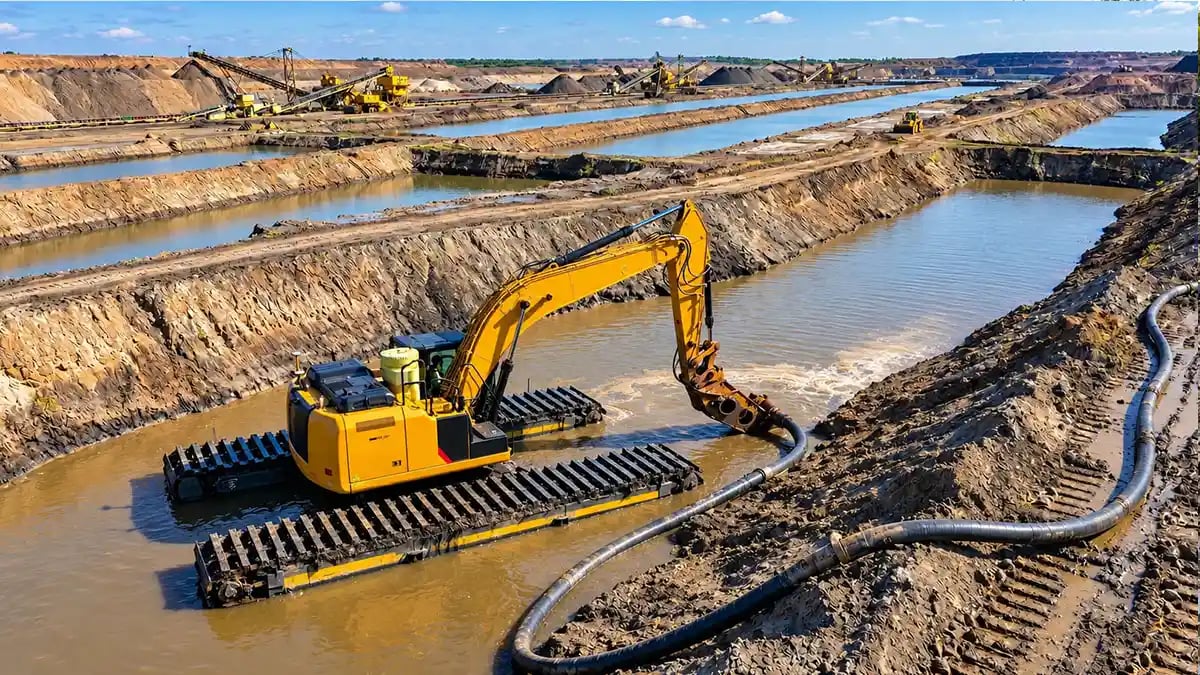
When it is time to remove accumulated sediment, the material being pumped defines the equipment you need. EDDY Pump's dredging systems are purpose-built for high-solids, abrasive slurry at concentrations conventional pumps cannot handle. Call 619-404-1916 or visit eddypump.com to speak with an engineer about your canal sediment removal project. Have your sediment characterization data, canal dimensions, and target production rate ready.
FAQs About Hydraulic Transport Velocity in Mine Canals
What is the difference between hydraulic transport velocity and critical deposition velocity?
Hydraulic transport velocity is the general term for the minimum flow speed that keeps particles moving. Critical deposition velocity is the specific threshold below which solids begin settling out of the flow.
In practice, the two terms are often used interchangeably in canal and pipeline design discussions.
How does sediment particle size affect dredging equipment selection?
Larger, denser particles need pumps with wider solids passage and higher suction capacity. EDDY Pump handles solids up to 11 inches in diameter through its recessed impeller design, making it effective for the mixed coarse material found in mine canals.
Can you increase canal velocity without dredging?
Yes, narrowing the channel cross-section or increasing the canal slope raises velocity. Adding canal liners reduces bed roughness and energy losses. These modifications help prevent deposition but do not remove material already settled on the canal floor.
How often should mine drainage canals be dredged?
Dredging frequency depends on sediment loading rates, canal capacity, and seasonal flow patterns. EDDY Pump's engineering team can review your site data and recommend a dredge equipment configuration and maintenance schedule matched to your specific canal conditions.
What role does slurry concentration play in canal sediment transport?
Higher slurry concentrations increase the effective density of the flow, which changes turbulence characteristics. At elevated solids concentrations, inter-particle collisions can actually help keep material suspended, but they also increase wear on channel linings and pump components.